M2508
Educational Tips for Farmers: Polioencephalomalacia (Polio) in Small Ruminants
Causes of Polioencephalomalacia (PEM)
Polioencephalomalacia (also called polio or PEM) is a non-infectious nutritional disease caused by a malfunction of the rumen, which causes thiamine deficiency. Thiamine, or vitamin B1, helps to keep the nervous system healthy. Animals with thiamine deficiency experience neurological symptoms.
PEM is common in young ruminants (kids and lambs) as they transition from milk to solid diets, especially those fed a high-grain diet.
Elevated dietary sources of sulfur can also cause polio, as can overdose of amprolium (Corid), a coccidiosis treatment.
Signs
- Partial or complete blindness
- Dilated pupils
- Loss of body control
- Inability to stand
- Seizures
- Head as far back as possible
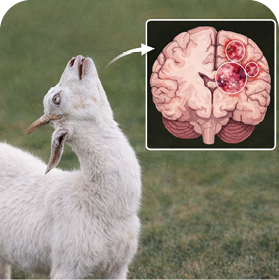
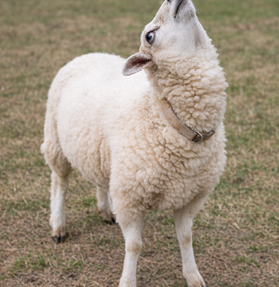
Images generated by Microsoft Copilot.
Diagnosis
- Physical symptoms
- At necropsy, flattening of the gyri of the brain and coning of the cerebellum may be present.
Prevention and Control
- Provide adequate dietary fiber.
- A general rule of thumb is that sheep and goats should consume 2–4% of their body weight on a dry matter basis.
- Sheep and goats can be fed 0.5 pounds of roughage per 100 pounds of body weight.
- Use the proper dosage for amprolium treatments.
- Make dietary changes gradually.
- Avoid water high in sulfur and excess feeds high in sulfur, such as corn, molasses, and sugar beet byproducts.
Treatment Plan
- Most importantly, work with your veterinarian on treatment plans!
- Injectable thiamine. To correct a thiamine deficiency, thiamine must be administered multiple times a day over several days. One dose or one dose a day will not correct the problem.
- Intravenous products and anti-inflammatories as prescribed by your veterinarian.
The information given here is for educational purposes only. References to commercial products, trade names, or suppliers are made with the understanding that no endorsement is implied and that no discrimination against other products or suppliers is intended.
M2508 (POD-04-26)
By Allison Miner, Bachelor of Science Graduate; Lindsey Dearborn, Master of Science Graduate; Leyla Rios, PhD, Assistant Professor, Animal and Dairy Sciences; and Michael Pesato, DVM, Four State Veterinary Services.
The Mississippi State University Extension Service is working to ensure all web content is accessible to all users. If you need assistance accessing any of our content, please email the webteam or call 662-325-2262.
Download
M2508
Educational Tips for Farmers: Polioencephalomalacia (Polio) in Small Ruminants
177.34 KB
Departments
Authors
-
 Assistant Professor
- Animal & Dairy Science