M2506
Educational Tips for Farmers: Effects of Moldy Feed or Hay Offered to Small Ruminants
What Are Mycotoxins?
- Toxins are naturally produced by mold.
- Mycotoxins can be found in moldy hay and feedstuffs, even when mold is not visually obvious.
- Deoxynivalenol (DON) and zearalenone (ZEN) are the mycotoxins of concern for small ruminant producers.
- ZEN is commonly found in corn, so have corn tested for ZEN levels yearly.
- Mycotoxins cause mycotoxicosis.
Signs of Mycotoxicosis
- Reduced feed intake causing an overall decline in animal performance.
- Over 15% reduction in milk production in lactating animals.
- Diarrhea, hemorrhaging, displaced abomasum, liver damage, and kidney damage.
- Death.
Signs of Ingesting Moldy Feed Not Containing Mycotoxins
- Reduced feed intake, decreased growth, and reduced milk production.
- Lower immune response to diseases or parasites.
- Difficulty with digestion.
- 5–10% performance loss.
- Increased rate of abortion.
- Respiratory disorders.
- Listeriosis, a disorder caused by the bacteria Listeria monocytogenes, which is found in moldy feed. Listeriosis causes loss of coordination, circling, fever, blindness, depression, loss of appetite, and salivation. It can lead to convulsions. Without early detection and veterinary intervention, death almost always occurs within 1–2 days.
Diagnosis
Diagnosing mold toxicity in a live animal is difficult. Diagnosis is possible if—
- moldy feed is found.
- the animal’s symptoms match those of mold toxicity.
However, other illnesses cause similar symptoms.
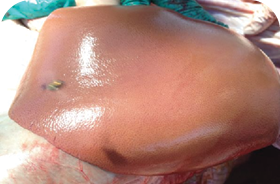
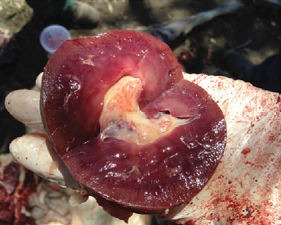
Diagnosis is commonly made at necropsy, where the following can be seen:
- Pale, enlarged liver.
- Striped pattern in the cortex (outer margin) of the kidneys.
Treatment
- If you suspect mycotoxicosis, listeriosis, or other mold-related disorders, call your veterinarian as soon as possible!
- There are no effective treatments for mycotoxicosis or other mold-related disorders in small ruminants.
- In cases of listeriosis detected early, high doses of antibiotics (penicillin) may help reduce an animal’s symptoms, although the prognosis for full recovery is guarded; veterinary intervention is highly recommended.
- Remove suspected feed or hay immediately and test for mold.
Prevention
Prevent mold toxicity with these management practices:
- Check/test feed, feed bags, and hay for mold.
- Properly store grain and hay.
- Immediately remove moldy feed.
M2506 (POD-04-26)
By Melanie Calhoun, Bachelor of Science Graduate; Lindsey Dearborn, Master of Science Graduate; Leyla Rios, PhD, Assistant Professor, Animal and Dairy Sciences; and Michael Pesato, DVM, Four State Veterinary Services.
The Mississippi State University Extension Service is working to ensure all web content is accessible to all users. If you need assistance accessing any of our content, please email the webteam or call 662-325-2262.
Download
M2506
Educational Tips for Farmers: Effects of Moldy Feed or Hay Offered to Small Ruminants
166.96 KB
Departments
Authors
-
 Assistant Professor
- Animal & Dairy Science