M2507
Educational Tips for Farmers: Johne's Disease (JD) or Paratuberculosis in Sheep and Goats
Johne’s disease (JD) is a wasting disease caused by the bacteria Mycobacterium avium paratuberculosis (MAP), which can be zoonotic.
Life Cycle
- MAP enters the body when the animal ingests bacteria shed through feces, colostrum, and milk.
- Infection with MAP causes the small intestine to swell. This immune response prevents the animal from absorbing nutrients.
- JD progresses through four stages.
Stage I. Silent, subclinical, nondetectable infection
- No clinical signs
- Undetectable in a blood test
- No shedding
Stage II. Subclinical shedders
- No clinical signs
- May be detectable in a blood test
- Small amount of shedding in feces
Stage III. Clinical disease
- Weight loss
- Detectable
- Large amount of shedding in feces
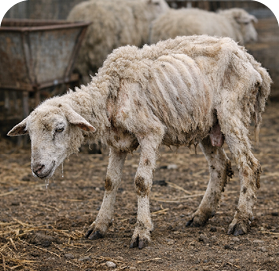
Stage IV. Emaciated animals with fluid diarrhea
- Emaciation, dehydration, intermittent diarrhea
- Detectable
- Extreme shedding in feces
Signs
- Chronic weight loss despite a normal appetite.
- Exercise intolerance.
- Decreased production.
- Diarrhea and submandibular edema (“bottle-jaw”; more common in cattle than in small ruminants).
Diagnosis
- Most often diagnosed at necropsy.
- Enlarged intestinal lymph nodes and thickened intestinal wall.
- Bacterial culture and blood tests.
- Not very accurate in small ruminants.
Prevention and Control
- Avoid manure contamination.
- Don’t give lambs/kids colostrum from a JD-positive ewe/doe.
- Maintain a closed herd.
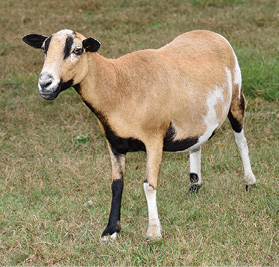
- Conduct annual blood testing.
- Testing is especially important when a positive animal is found in a herd.
- Blood tests are the most accurate way to diagnose JD in an animal.
- Cull infected animals.
- Till the pasture; MAP can live on the ground for up to 1 year.
Treatment Plan
- Immediately isolate the animal.
- Wear PPE such as gloves to avoid contamination.
- Euthanize the infected animal.
- Perform a necropsy to confirm JD diagnosis.
- Properly dispose of the animal and all items that had contact with it.
- Follow the prevention and control protocol and monitor the flock/herd for signs of JD.
- Always consult a veterinarian if an animal is suspected of having Johne’s disease.
M2507 (POD-04-26)
By Harlea LaFrain, Bachelor of Science Graduate; Lindsey Dearborn, Master of Science Graduate; Leyla Rios, PhD, Assistant Professor, Animal and Dairy Sciences; and Michael Pesato, DVM, Four State Veterinary Services.
The Mississippi State University Extension Service is working to ensure all web content is accessible to all users. If you need assistance accessing any of our content, please email the webteam or call 662-325-2262.
Download
M2507
Educational Tips for Farmers: Johne's Disease (JD) or Paratuberculosis in Sheep and Goats
210.32 KB
Departments
Authors
-
 Assistant Professor
- Animal & Dairy Science