M2503
Educational Tips for Farmers: Animal Identification/Tags for Sheep and Goats
Different Forms of Identification
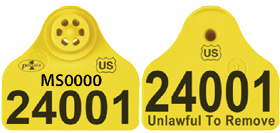
There are many forms of animal identification, including tagging, tattooing, ear notches, brands, leg bands, and more. Most of the time, identification is species and breed specific. The common form of identification in sheep and goat production is ear tags. Ear tags are plastic or metal tags placed in the ear of an animal. Ear tags are used to identify animals, keep records, and better manage the herd.
Tagging Materials
- You need a premises ID number and a scrapie flock ID, which can be obtained from the Board of Animal Health (msstatevet@mdac.ms.gov or 888-646-8731).
- Scrapie tags can be bought directly from approved tag manufacturers, using these numbers.
- You can include management information in your tags, such as the year and the numeric order in which the animals are born.
- Tagging is beneficial because it allows producers to see an animal from a distance and look up its records.
What Is Scrapie?
Transmissible spongiform encephalopathy, or scrapie, is a fatal, degenerative neurological disease. It affects the central nervous system and results in production loss.
Why Tag for Scrapie?
The National Scrapie Eradication Program was created to control and, if possible, eliminate this fatal disease. This program requires sheep and goats to be identified by tagging before leaving the farm where they were born. This tagging allows disease records to be tracked, so that the origin of a sick animal can be traced.
Tagging Tools
- New ear tags
- Tag applicator
- Antiseptic lubricant or any disinfectant solution
- Animal restraints
- A clean workspace
Process
- Restrain the animal properly.
- Use a new, clean tag.
- Load the male and female parts of the tag in the tagging gun.
- Use an antiseptic lubricant on the tag to prevent infection.
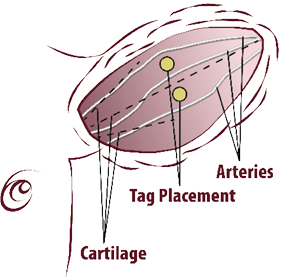
- Place the tag in the proper location.
- Press down hard and fast until the tag is securely in place in the ear.
M2503 (POD-03-26)
By Maggie Dillahunty, Undergraduate Student; Larry Leon, Graduate Student; Leyla Rios, PhD, Assistant Professor, Animal and Dairy Sciences; Angeliki Polles, DVM; and Jim Watson, DVM, State Veterinarian, Mississippi Board of Animal Health.
The Mississippi State University Extension Service is working to ensure all web content is accessible to all users. If you need assistance accessing any of our content, please email the webteam or call 662-325-2262.
Download
M2503
Educational Tips for Farmers: Animal Identification/Tags for Sheep and Goats
143.47 KB
Departments
Authors
-
 Assistant Professor
- Animal & Dairy Science