M2505
Educational Tips for Farmers: Dairy Goat Versus Dairy Cow
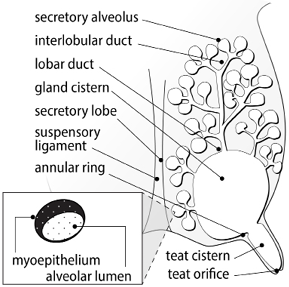
Dairy Goat Udder Anatomy
- 70% of milk is stored in the udder/gland cistern.
- 30% of milk is stored in the alveoli.
- Goats have two teats.
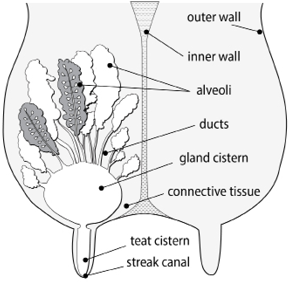
Dairy Cow Udder Anatomy
- 60% of milk is stored in the alveoli.
- 20% of milk is stored in the ducts.
- 20% of milk is stored in the gland cistern.
- Dairy cows have four teats.
Dairy Goat Versus Dairy Cow Milking
- Cows require stimulation to move the milk from the alveoli to the cistern. This is accomplished with oxytocin or the presence of the calf, depending on the breed.
- With goats, milking is easier because most of the milk is stored in the gland’s cistern, which makes it easier to release.
- Goats are smaller and easier to handle than cows; however, they are more social and playful, which can make milking difficult.
Other Differences
- Goat milk has more cytoplasmic fragments, similar to human milk, and more milk fat globules.
- Bioactive components secreted with goat milk include epidermal growth factor (EGF), polyamine, and free amino acids.
- Goat milk is considered hypoallergenic. It has lower levels of the protein alpha-s1 casein than cow milk, making it easier to digest.
- The iron and calcium components of goat milk are easier to absorb than those of cow milk.
- The composition ranges of cow and goat milk may vary depending on factors such as breed, diet, and lactation stage.
- Goat milk contains prebiotic oligosaccharides, which are carbohydrates that feed good gut bacteria.
| Variable | Goat Milk | Cow Milk |
|---|---|---|
| Solids (%) | 12.0–15.4 | 12.3–15.6 |
| Fat (%) | 3.2–6.0 | 2.7–4.8 |
| Protein (%) | 3.0–3.8 | 2.8–3.9 |
| Casein (%) | 2.4–2.8 | 2.0–3.0 |
| Casein/Protein (%) | 70–80 | 65–79 |
| Lactose (%) | 3.6–4.8 | 4.2–5.2 |
| Ash (%) | 0.7–0.9 | 0.6–0.8 |
| Energy (MJ/kg) | 2.93–3.49 | 2.72–3.39 |
| Somatic cell count (× 10^3 cells/mL) | 200–1000 | < 750 |
| pH | 6.6–6.8 | 6.6–6.8 |
M2505 (POD-03-26)
By Jill DeGayner, Bachelor of Science Graduate; Leyla Rios, PhD, Assistant Professor, Animal and Dairy Sciences; and Carlos Alvarado, PhD, Dairy Product Specialist, Langston University.
The Mississippi State University Extension Service is working to ensure all web content is accessible to all users. If you need assistance accessing any of our content, please email the webteam or call 662-325-2262.
Download
M2505
Educational Tips for Farmers: Dairy Goat Versus Dairy Cow
132.67 KB
Departments
Authors
-
 Assistant Professor
- Animal & Dairy Science