M2502
Educational Tips for Farmers: Copper Bolus for Parasite Control in Sheep and Goats
What Is a Copper Bolus?
A gelatin capsule filled with copper oxide wire particles (CuO, “COWP”) that settle in the abomasum and slowly release copper locally.
Why Use It in Sheep and Goats?
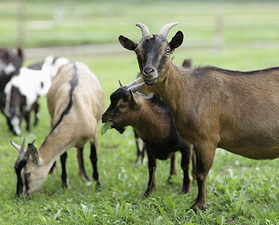
- Reduces barber pole worm (Haemonchus contortus) burdens and lowers fecal egg count within 7–14 days after treatment; effect is strongest when H. contortus predominates.
- Can augment dewormers to improve efficacy where drug resistance exists.
Mechanism of Action (Copper)
Local abomasal action: CuO particles release ionic copper that creates an unfavorable micro-environment for adult barber pole worms, reducing worm counts and egg shedding; systemic dewormer-like effects are not expected.
Dosing
Route of administration: oral, as boluses
- Kids/Lambs: 0.5–1.0 grams per animal.
- Adult goats: 2–4 grams single bolus used in multiple studies; 4–5 grams shown effective in mature goats.
- Adult sheep: typically 1–2 grams; use lowest effective dose and monitor.
Administration (Safe Technique)
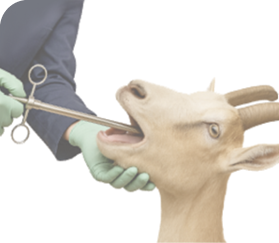
- Restrain the head; keep the neck straight and mouth level.
- Using a goat/sheep bolus gun, place over the tongue, aiming to the back of the mouth (avoid the cheek pouch).
- Trigger smoothly, hold the mouth closed a few seconds, and massage the throat to encourage swallowing.
- Confirm the capsule wasn’t spit out.
- Rinse the gun, store boluses dry, and repack large boluses into smaller gelatin capsules if needed.
When to Safely Administer a Dose or Re-dose
- Anthelmintic effect is short (3–4 weeks); do not re-dose earlier than 4–6 months.
- If repeating, based on FAMACHA/FEC and copper status.
Danger of Toxicity
Use only on animals with poor FAMACHA scores. If repeating, base your decision on FAMACHA/FEC and copper status.
Real risk: Copper from any source accumulates in the liver, especially in sheep; a later stress event can trigger a hemolytic crisis (anemia, jaundice, red/coffee-colored urine) and death.
Species difference: Sheep clear excess copper less efficiently and are more susceptible to toxicity than goats. Always dose conservatively in sheep.
Do not use copper sulfate for worm control. It is more toxic and less appropriate than CuO particles.
Risk still depends on total copper intake and bolus repeating. Before taking this step, consult with a veterinarian.
The information given here is for educational purposes only. References to commercial products, trade names, or suppliers are made with the understanding that no endorsement is implied and that no discrimination against other products or suppliers is intended.
M2502 (POD-03-26)
By Juan Pablo Chaparro, International Intern; Larry Leon, Graduate Student; Santiago Cornejo, PhD, Assistant Professor; and Leyla Rios, PhD, Assistant Professor, Animal and Dairy Sciences. Copper bolus administration image generated by ChatGPT (2025).
The Mississippi State University Extension Service is working to ensure all web content is accessible to all users. If you need assistance accessing any of our content, please email the webteam or call 662-325-2262.
Download
M2502
Educational Tips for Farmers: Copper Bolus for Parasite Control in Sheep and Goats
97.74 KB
Departments
Authors
-
 Assistant Professor
- Animal & Dairy Science