M2496
Educational Tips for Farmers: Benefits of Raised Barns for Goats and Sheep
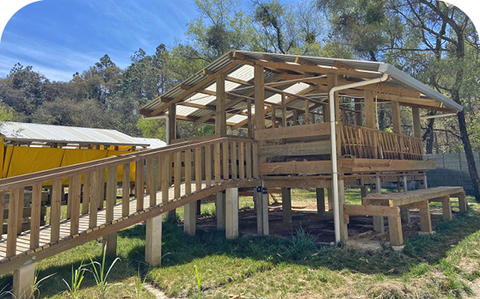
Less Exposure to Parasites
Fecal pellets containing larvae from parasites can fall through the slats. This interrupts the life cycle of the common parasites that affect sheep and goats (both nematodes/worms and coccidias).
Little Accumulation of Urine and Moisture
Urine can fall freely from the floor. The lack of moisture can help prevent hoof and other health issues, such as coccidiosis.
Sheep and goats living in wet environments (from water or urine) have a high risk of developing respiratory illnesses from pathogens and/or ammonia.
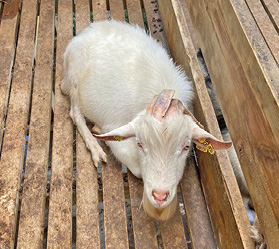
Ability to Easily Collect Urine and Feces
The urine and feces can be collected under the raised barn, allowing for easy disposal or composting. These sub-products also can be used as organic fertilizers in other businesses, such as landscaping companies or plant nurseries.
Increased Ventilation
Raised barns allow increased ventilation, which will combat the negative effects of the high heat index in Mississippi during the summer.
Less Organic Buildup
Raised barns have less organic buildup, so they require less cleaning. The lack of feces accumulation will have the added benefit of keeping the animals clean.
Consideration
Although raised barns offer many benefits, it is important to consider issues that may arise during the winter. Tarps or other light, durable material could be used on the walls during the colder months. These walls could easily be removed and reapplied to combat the Southeast’s fluctuating temperatures.

Important Tip!
Hay can be used on top of the slatted floor when the ewes or does are pregnant or during early kidding/lambing season. Maintaining clean, dry, and well-ventilated bedding reduces the risk of foot scald and foot rot in sheep and goats.
Acknowledgments: Thanks to the Dairy Goat Farm-Fundación Mario López Estrada and the Project “Cabras para la Prosperidad” (Goats for Prosperity), from Farmers to Farmers, Huehuetenango, Guatemala.
M2496 (POD-02-26)
By Nicolas Marchant, DVM student, College of Veterinary Medicine; Lindsey Dearborn, 2023 Master’s Graduate, Animal and Dairy Sciences; and Leyla Rios, PhD, Assistant Professor, Animal and Dairy Sciences.
The Mississippi State University Extension Service is working to ensure all web content is accessible to all users. If you need assistance accessing any of our content, please email the webteam or call 662-325-2262.
Download
M2496
Educational Tips for Farmers: Benefits of Raised Barns for Goats and Sheep
380.72 KB
Departments
Authors
-
 Assistant Professor
- Animal & Dairy Science