P2988
Slotted Inlet Pipes
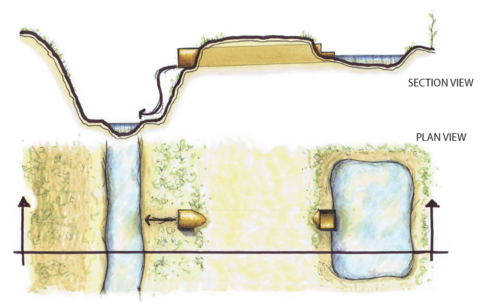
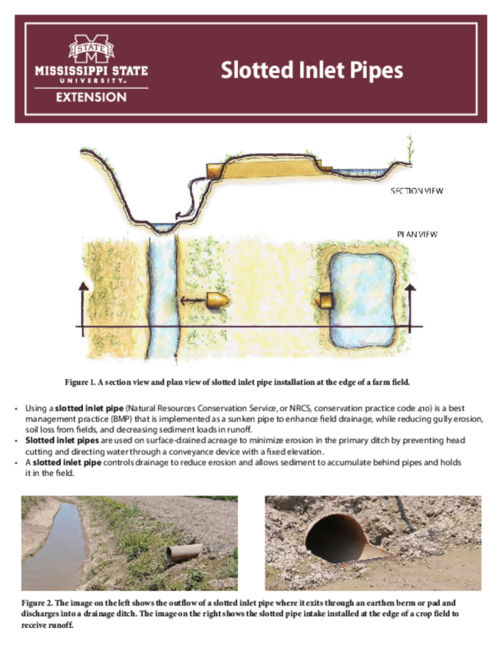
- Using a slotted inlet pipe (Natural Resources Conservation Service, or NRCS, conservation practice code 410) is a best management practice (BMP) that is implemented as a sunken pipe to enhance field drainage, while reducing gully erosion, soil loss from fields, and decreasing sediment loads in runoff.
- Slotted inlet pipes are used on surface-drained acreage to minimize erosion in the primary ditch by preventing head cutting and directing water through a conveyance device with a fixed elevation.
- A slotted inlet pipe controls drainage to reduce erosion and allows sediment to accumulate behind pipes and holds it in the field.
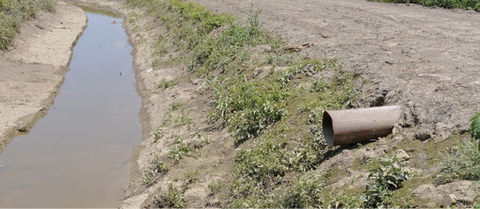
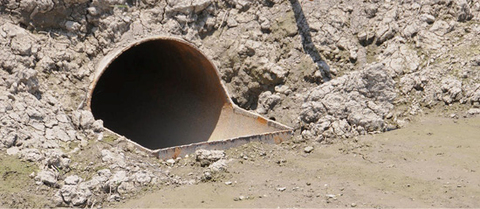
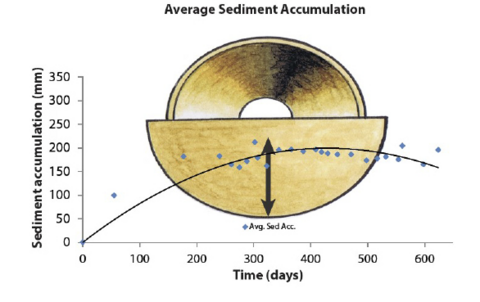
The chart above shows that, over time, slotted inlet pipes require maintenance—just like any other sediment-trapping BMP—to maintain maximum effectiveness. As sediment accumulates, slotted inlet pipes become less effective. To ensure their effectiveness, a scheduled clean-out about once a year (396 days) may maintain the maximum amount of sediment accumulation.
The amount of phosphorus held by a slotted pipe structure will depend on three dominate variables:
- pipe catchment area
- pipe retention area
- soil type
Pipes tested by the Mississippi State University Research and Education to Advance Conservation and Habitat (REACH) program retained between 7.3 and 41.6 pounds of phosphorus. It is possible that slotted-board riser pipes could achieve the same benefits as slotted pipes if a board is left in the slot.
For more information, contact your local NRCS office or Beth Baker at beth.baker@msstate.edu, or visit the MSU Extension Mississippi Land Stewards web page.
References
Kröger, R., Prince Czarnecki, J. M., Tank, J. L., Christopher, S. F., & Witter, J. D. (2015). Implementing Innovative Drainage Management Practices in the Mississippi River Basin to Enhance Nutrient Reductions. Journal of the American Water Resources Association, 51(4), 1020–1028.
Kröger, R., Littlejohn, K. A., Pierce, S. C., Henderson, J., Brandt, J., Flora, C., Poganski, B. H., & Prevost, J. D. (2013). Evidence toward sediment accumulation characteristics of slotted inlet pipes as best management practices on agricultural landscapes. Ecological Engineering, 51, 249–255.
The information given here is for educational purposes only. References to commercial products, trade names, or suppliers are made with the understanding that no endorsement is implied and that no discrimination against other products or suppliers is intended.
Publication 2988 (POD-03-26)
By Beth Baker, PhD, Associate Professor and Assistant Director, Wildlife, Fisheries, and Aquaculture; Austin Omer, former Extension Associate, Wildlife, Fisheries, and Aquaculture; and Robert Kröger, PhD, Covington Civil and Environmental LLC.
The Mississippi State University Extension Service is working to ensure all web content is accessible to all users. If you need assistance accessing any of our content, please email the webteam or call 662-325-2262.
Download
P2988
Slotted Inlet Pipes
740.09 KB
Departments
Authors
-
 Assoc Professor & Assistant Di
- Wildlife, Fisheries & Aquaculture