P4208
Production of Certified Organic Blueberries in the Southeast
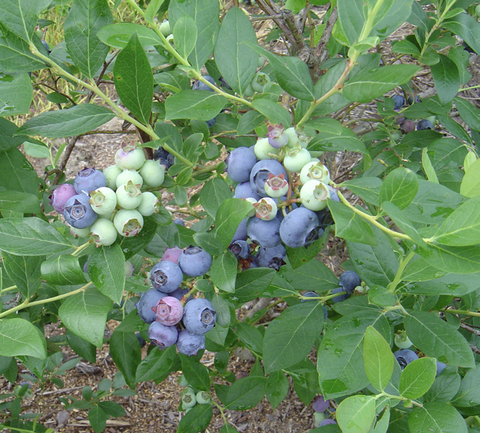
Organic blueberry production can be a rewarding but often challenging undertaking. This is especially true in areas in the eastern United States, where high amounts of rainfall and humidity can lead to elevated disease and insect populations. There are options when considering this type of production system, but what does “certified organic production” mean?
In short, an organic certification is a verification that the blueberry fruit (or any fruit) is produced according to United States Department of Agriculture (USDA) organic standards. These standards must be meticulously followed to ensure compliance. Growing crops organically can be an attractive proposition because of consumer willingness to pay a premium for the product. This publication covers some of the necessary considerations for organic production of blueberries.
Species and Planting Site
Rabbiteye blueberries are the most amenable to organic production in the Southeast. This species of blueberry is native to the Southeast and usually has fewer pest problems than other cultivated blueberry species. Organic highbush and southern highbush blueberry production is possible but requires more intensive management than rabbiteye blueberries. There are numerous cultivar options for all of these blueberry types, many of which can be found in Mississippi State University Extension Publication 1758 Establishment and Maintenance of Blueberries.
Organic blueberry production starts in the planning phase. This includes properly preparing the planting site for new bushes as well as keeping the soil in good shape for long-term production. Choose a location with full sunlight and good drainage. Creating berms or raised beds often can help if soil drainage is less than desirable. Avoid heavy clay soils or low, frequently saturated areas as these locations can have many problems. It is important to ensure proper water drainage, enhance organic matter, and adjust soil pH before planting because it is far more difficult, if not impossible, to correct these issues once bushes are in the ground.
Get a soil test well in advance of planting to allow for soil improvements to fully take place and have the desired effect. Blueberry bushes like high levels of organic matter in the soil; ideally, organic matter should exceed 3 percent. Unfortunately, many soils in the South do not have this amount of naturally occurring organic matter, so low-pH organic soil amendments like pine bark are used in blueberry plantings. Organic matter enhances beneficial soil microbial communities that may help stave off root rot diseases and harmful nematodes.
Irrigation is another important aspect of blueberry management. Blueberries need 1 to 2 inches of water per week by rainfall and/or irrigation during the growing season, especially when the crop is on the bush.
Soil pH should fall between 4.5 and 5.5 because levels outside this range can lead to poor plant growth and stress due to lack of available nutrients. Also, in general, blueberry bushes grow best on land that was not in previous crop production because this land is unlikely to have residual nutrient, pesticide, and pest levels that may be detrimental to plant longevity. If the land was previously in blueberries, replanting blueberries will likely increase soil-borne pests like nematodes, which make it difficult to successfully produce organic blueberries. If replanting an entire field is necessary, the site must be rotated away from blueberries for at least 1 year according to USDA National Organic Program (NOP) rules. However, at least 3 years would be more effective to disrupt insect and pathogen life cycles and improve the suitability of the site.
Pest Control
Pest control is probably the most difficult management task in certified organic blueberry production. The primary pests are weeds, insects, and pathogens (diseases).
The NOP sets rules for how to use NOP-approved pesticides. NOP-approved pesticides (e.g., fungicides, herbicides, and insecticides) are usually less effective than conventional products. The cost and risks of applying NOP-approved pesticides must be balanced against the anticipated benefits. Under NOP rules, preventive (cultural and biological) management options must be attempted before resorting to approved pesticides. The Organic Materials Review Institute (OMRI) reviews products, approves those that meet NOP standards, and maintains a list of OMRI-approved products.
This publication provides Southeast-specific information on NOP-approved weed, disease pathogen, and insect management options for blueberry production and addresses the issues most encountered under the unique growing conditions of the Southeast. Another recommended integrated pest management (IPM) resource for commercial organic blueberry production is available in the Southeast Regional Organic Blueberry Pest Management Guide.
Organic Weed Management
Weeds aggressively compete with blueberry bushes for water and nutrients—so much so that without proper control, the life expectancy of the blueberry plant will be greatly reduced. Weeds also harbor insect pests and disease pathogens that can interfere with maintenance tasks. As is the case with conventional production systems, there is no completely effective organic herbicide, so cultural and physical methods must also be used to disrupt weed competition.
A key step to get ahead of weeds, especially in an organic management system, is to eliminate hard-to-control weed species, such as Johnsongrass, pigweed, and wild blackberries, before planting. It may take months to years of repeated cultivation to accomplish this. Planting cover crops may be another option, but that also takes time. Cover crops can be used to create unfavorable conditions for weeds while also adding organic matter back to the soil.
During the establishment phase and beyond, mulch is recommended. Mulch helps control weeds, moderates soil temperatures, adds organic matter back to the soil as it breaks down, and conserves soil moisture. Pine bark mulch is best because it is acidic and helps to maintain a low soil pH. Other options such as pine straw or leaves could also work.
Mulch should be no deeper than 6 inches but at least 3 inches. Mulch that is too deep may limit plant root development, whereas too little mulch will not prevent weeds from emerging. Mulch must be replenished as it deteriorates, so applications every 2 or 3 years are necessary. The mulch should cover the entire plant row, approximately 4 feet wide.
Plastic or landscape fabric mulch can also be used. Even though both are petroleum-based products, NOP rules allow them to be used as long as they are removed before any deterioration of the product. Landscape fabric is allowed to be reused if it has not reached the point of breakdown, whereas plastic mulch must be discarded and reapplied every year. Alternatively, another type of mulch can be applied in place of plastic mulch if yearly replacement becomes too burdensome. Landscape fabric, while convenient, does not add organic matter back to the soil and can increase soil temperatures around the roots.
For any mulch used, additional hand weeding will be necessary to maintain weed-free beds. Flame weeding and organic herbicides can be effective, but multiple applications will be necessary as they tend to be effective only on short, young weeds. There are no systemic herbicides labeled for organic production, which makes weed control one of the most challenging management tasks.
Row middles are most commonly managed with a seeded cover crop, grass, or natural regrowth of existing vegetation. After blueberry bushes are initially planted, the row middles can be seeded with perennial grass types that are not invasive or competitive with the bushes. Grass row middles facilitate access to the bushes, decrease weed invasion into the rows, and minimize soil erosion. If existing vegetation is used, it must be managed to keep invasive weeds from becoming established.
There are a few organic products with mostly post-emergence activity against weeds, but they are not as effective as conventional herbicides. This means more applications per season.
Organic Insect Management
The easiest way to manage an insect pest in any production system is to prevent, reduce, and suppress any building populations. This is especially important for organic blueberry insect management, which must be based on IPM strategies to have any reasonable chance of success. Insect IPM encompasses three major principles:
- Understand the insect pest and crop system relationship. This includes correctly identifying the pest, understanding its life cycle and feeding preferences, knowing the types of plant injury caused by the insect, and determining whether it is of economic concern to the crop, along with plant health and physiology.
- Scout and monitor. Monitor problematic insect populations regularly and supplement with trapping as needed, as most management decisions have limited timelines.
- Management. Selecting the right approach is equally important, as the overuse of insecticides can lead to resistant insect pest populations, where populations of pests with short life cycles readily become resistant and require new approaches to suppress populations below established economic thresholds.
Any insecticide, organic or conventional, has the potential to negatively impact beneficial insects, including pollinators. As much as possible, avoid insecticide use during bloom; if not possible, apply insecticides in the evening when bees are not visiting flowers. Remember that organic pesticides must be handled with the same precautions as any other pesticide, and the pesticide label must be followed to minimize undesired impacts.
Prevention is the best approach to reduce the impact of insect pests in the blueberry planting area, so be intentional when selecting cultivars. Mulch not only benefits the plants but also can help reduce insect pest populations (e.g., spotted wing drosophila). Sanitation is key—remove fruits that have fallen to the ground and debris and other weeds to reduce primary and secondary insect populations. Pruning plants to help open the canopy promotes natural enemy movement into the canopy to reduce insect pest populations, while also exposing pests to less favorable weather conditions. Placing traps in the field when fruits are near ready for harvest gives insight into population levels needed for management.
Organic Disease Management
Disease management in an organic production system requires multiple management practices to achieve acceptable levels.
Disease-resistant cultivars are the foundation of any organic disease management program. When available, choose cultivars that have disease resistance to the blueberry diseases known to commonly occur in your area. Obtain clean, pathogen-free plants from reputable sources. Do not plant blueberry plants that exhibit symptoms of disease.
Plant only in well-drained soils and preferably in a location that was not previously planted to blueberries or that is not known to have a history of soil-borne pathogens, such as nematodes, Phytophthora spp. (Phytophthora root rot), or Ralstonia solanacearum (bacterial wilt).
Good air circulation can help reduce foliage diseases. Wider plant spacing and regular pruning to keep the canopy open helps increase air circulation. Managing weeds near the bases of bushes and within the rows will further increase these benefits.
Reducing plant stress will result in more vigorous plants that can better tolerate many disease problems. Provide sufficient water when needed in periods of drought and balanced nutrition based on soil or tissue analysis reports.
Mulching can reduce the development of mummy berry, which can cause significant yield losses. If mummy berry was a problem in previous years, remove and destroy fallen berries or apply a few inches of natural mulch over the fallen berries; covering berries with the mulch helps reduce the dispersal of spores produced from the mushroom-like structures that develop from mummified berries.
In some instances, such as when disease is limited within a planting or with certain diseases, proper removal and destruction of infected branches, twigs, or entire plants may be the best course of action.
Avoid working with plants or harvesting berries when plants are wet. Avoid damaging berries when harvesting. Harvest berries in a timely manner before they become overripe. Store berries at appropriate storage temperatures (32–35°F and 85–90 percent relative humidity) in a timely manner to minimize postharvest pathogen development.
Remove old, weak, and dead branches at the end of the season. This will help eliminate potential sources of inoculum and help with canopy management.
Various fungicides labeled for use against blueberry diseases are available and approved for use in organic production. These products work best when applied preventively (before disease onset) and when disease pressure is low. Apply approved fungicides only when disease has been confirmed and if other management practices have not been successful.
Sulfur and copper fungicides are the backbones of most fungicide programs in organic blueberry production; even so, these fungicides are not as effective as many synthetic fungicides used in conventional production systems. Biological fungicides may also help reduce disease, but the efficacy of these products can be variable from year to year and location to location, depending on environmental conditions and disease severity.
Regularly scout and monitor plants throughout the season for symptoms and signs of disease. Use MSU Extension Publication 4170 A Photo Guide to Common Diseases of Blueberry in the Southeast and the MyIPM Fruit & Nut app (available in the Apple or Google Play stores) for help recognizing potential symptoms and signs of disease. Many diseases have similar symptoms that could easily be mistakenly identified in the field. At the first indication of disease, submit samples to your local diagnostic laboratory to determine which disease is present.
Organic blueberry growers can be successful, but organic pesticide products are not as effective as conventional products. Growers may need to educate consumers about cosmetic blemishes that do not change the edible nature of the fruit but may not meet large-market standards.

This project is supported through the United States Department of Agriculture (USDA) Transition to Organic Partnership Program (TOPP). TOPP is a program of the USDA Organic Transition Initiative and is administered by the USDA Agricultural Marketing Service (AMS) National Organic Program (NOP).
The information given here is for educational purposes only. References to commercial products, trade names, or suppliers are made with the understanding that no endorsement is implied and that no discrimination against other products or suppliers is intended.
Publication 4208 (POD-07-26)
By Eric Stafne, PhD, Extension/Research Professor, Coastal Research and Extension Center; Jermaine Perier, PhD, Assistant Professor, Central Mississippi Research and Extension Center; Rebecca Melanson, PhD, Associate Extension Professor, Central Mississippi Research and Extension Center; Haley Williams, Research Associate I, Coastal Research and Extension Center; Jenny Ryals, Research Associate II, Coastal Research and Extension Center; and Patricia Knight, PhD, Research Professor, Coastal Research and Extension Center, and Director, Coastal Horticulture Research.
The Mississippi State University Extension Service is working to ensure all web content is accessible to all users. If you need assistance accessing any of our content, please email the webteam or call 662-325-2262.
Download
P4208
Production of Certified Organic Blueberries in the Southeast
526.31 KB
Authors
-
 Extension/Research Professor
- CREC-Coastal Research & Ext Center
-
 Assistant Professor
- Central MS Research & Ext Center
-
 Associate Extension Professor
- Central MS Research & Ext Center