M2512
Educational Tips for Farmers: White Muscle Disease in Sheep and Goats
White muscle disease is a nutritional disorder caused by selenium and/or vitamin E deficiency. This deficiency is more common in goats than in sheep because goats require more selenium.
Predisposing Factors
While selenium is not essential for forage growth, it is essential for animal health. Deficiency occurs when animals are fed inadequate, low-quality hay and low-selenium forages. White muscle disease affects the cardiac and skeletal muscles. This disease affects kids and lambs more severely than older animals because they have naturally low body reserves and grow rapidly.
Clinical Signs
- Reproductive losses
- Decrease in milk production
- Poor growth
- Weak newborns that are unable to sit up or stand and suckle
Diagnosis
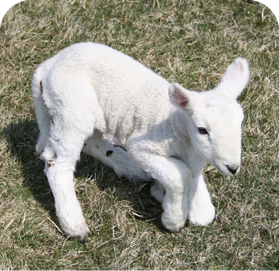
White muscle disease is diagnosed by observing symptoms such as pain when walking that results from skeletal muscle damage. Damage can range from mild to severe and may result in stiffness, a hunched appearance, and difficulty standing. Blood tests are measure selenium and vitamin E levels to confirm the diagnosis.
Prevention
Selenium has a very narrow range between toxicity and deficiency. Sheep and goat diets should contain selenium at 0.10 ppm to 0.30 ppm. To prevent selenium overconsumption, add selenium to a salt/mineral mix. Consult a veterinarian for specific dosage requirements.
Follow these tips to help prevent selenium deficiency:
- Feed good-quality hay.
- Supplement pregnant ewes and does to reduce newborn deficiency; give vitamin E and selenium subcutaneously 4–6 weeks before lambing/kidding.
- Supplement newborns if needed; give injectable vitamin E and selenium if the ewes or does were unvaccinated or if newborns show signs of weakness. Administer subcutaneously or give oral gels at the proper dosage requirements.
- Always consult a veterinarian before providing supplements.
Impact
White muscle disease is a common nutritional disorder that primarily occurs in animals raised on selenium-deficient soils in the United States on the East Coast, in the Great Lakes region, and in the Northwest. This nutritional disorder also results from vitamin E deficiency in animals that are fed poor-quality hay. It causes muscle fiber degeneration and respiratory issues and can result in death.
References
Schoenian, S. (2018). White muscle disease in small ruminants. The Ohio State University College of Food, Agriculture, and Environmental Sciences.
Schoenian, S. (2002). White muscle disease (WMD)-stiff lamb disease-nutritional muscular dystrophy. Barbados Blackbelly Sheep Association International.
The information given here is for educational purposes only. References to commercial products, trade names, or suppliers are made with the understanding that no endorsement is implied and that no discrimination against other products or suppliers is intended.
M2512 (POD-10-26)
By Allie Woeber, Bachelor of Science Graduate; Larry Leon, PhD Candidate; and Leyla Rios, PhD, Assistant Professor, Animal and Dairy Sciences. Reviewers: Rhonda Vann, PhD, Research Professor, and Santiago Cornejo, PhD, Assistant Professor, Animal and Dairy Sciences.
The Mississippi State University Extension Service is working to ensure all web content is accessible to all users. If you need assistance accessing any of our content, please email the webteam or call 662-325-2262.
Download
M2512
Educational Tips for Farmers: White Muscle Disease in Sheep and Goats
129.47 KB
Departments
Authors
-
 Assistant Professor
- Animal & Dairy Science
-
 Graduate Research Assistant
- Animal & Dairy Science