P4199
Effective Scoring Metrics for Livestock Employee Training
As the founder of the CowSignals training program, Jan Hulsen, says, “Cows send out useful information every moment of the day. You just need to know how to read [them].” By developing a thorough understanding through careful observation of a cow’s natural behaviors and how those interact with their environment, producers can create a structured, concrete system to observe and evaluate cows. This will allow you to better meet cows’ needs and improve their health, welfare, and productivity.
Develop Specific, Numerical Scoring Rubrics and Checklists
CowSignals uses systematic observation to guide cow management based on normal behavior, including but not limited to nutrition, mobility, fertility, milk quality, cow comfort, and housing. The questions “What do I see?” “What is the cause?” and “What does it mean?” are the foundation that guides the development of checklists and scoring cards for employees to follow.
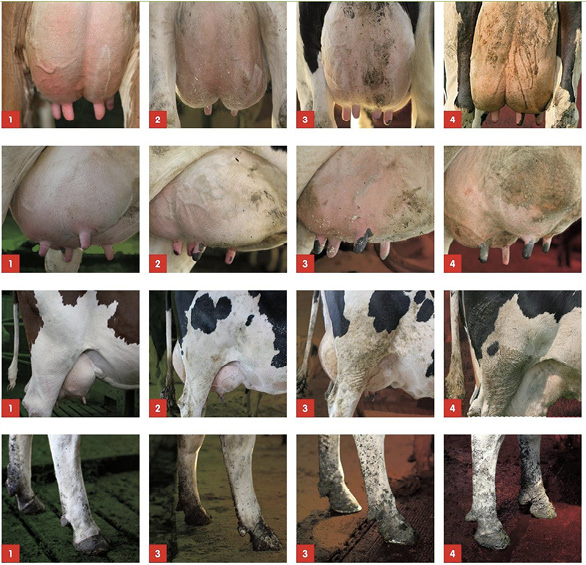
Employee scoring tools answer the first question: “What do I see?” For example, workers may be asked to score cows based on udder and lower rear leg cleanliness using the rubric in Figure 1. While there is some room for interpretation, this tool allows the manager and employee to have a more productive conversation, not just about whether the cows were dirty or not, but how dirty and what specific level of cleanliness might be a threshold for action. This leads to the next questions: “Why is she dirty, and what do we need to do to address it?”
Hygiene scoring (Figure 1) is an example of an accessible, daily scoring routine that can be adopted at many checkpoints throughout the farm. The standard is that no more than 10 percent of the herd should score a 3 or 4 for udder hygiene, no more than 15 percent for the upper leg, and no more than 20 percent for the lower leg.
Other Examples of Scoring Systems
Heat Scoring
Heats can be scored using the checklist shown in Table 1; a score between 50 and 100 indicates a cow may be in heat, while a score above 100 indicates she most likely is in heat.
| Signal | Score |
|---|---|
| Vaginal mucus | 3 |
| Restlessness/fighting | 5 |
| Jumped by others, not standing still | 10 |
| Sniffing and licking vulva of another cow | 10 |
| Resting chin on rump of another cow | 15 |
| Jumping other cows | 35 |
| Jumping front end of other cows | 100 |
| Standing heat | 100 |
Manure
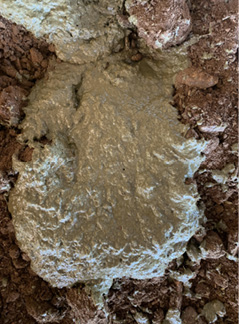
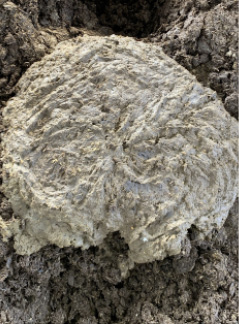
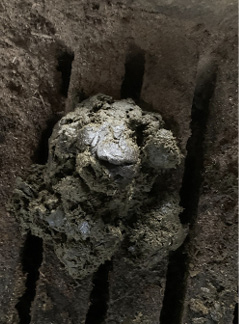
As described in Table 2, manure scoring can be used to identify sick cows, nutritional changes or imbalances, or metabolic diseases like ketosis. In this case, 3 is a “good” score.
| Score 1 | Score 2 | Score 3 | Score 4 | Score 5 |
|---|---|---|---|---|

| 
| 
| 
| 
|
| Watery manure that is barely recognisable as manure. This manure comes from cows that are very sick. | A thin porridge consistency that is recognizable as manure. When manure lands on a hard surface, the splatter goes a long way. This occurs when pasturing young, rich grass and when there is some imbalance in the ration. | A thick porridge consistency forming a pile of 2–3 cm depth. A soft plopping sound can be heard when the manure lands. Boot test: When the boot is lifted, there is no footprint left in the pile, and the manure doesn’t stick to the boot. This is the ideal consistency for manure. The ration is visibly digested. | The manure is thick and makes a heavy plopping sound when landing. It is well formed and stacks in rings. The height is a finger’s length or more. Boot test: When the boot is lifted, the manure sticks to the sole and a footprint is left behind. This indicates that there is an imbalance in the ration. For dry cows and heifers, this manure is acceptable, but always check the composition of the ration anyway. | Stiff balls of manure (similar to horse manure). Boot test: An impression of the sole is left on the top of the manure. Dry cows and heifers often pass this type of manure. In milking cows, check that the ration is balanced and adjust accordingly. Check individual cows for disease (ketosis). |
Teat End Score
The teat end score (Figure 2) is used to assess whether cows are being overmilked. If scores are high, milking units using automatic takeoffs may need to be adjusted and vacuum levels checked. If units are manual, employees may need to be retrained. This is an excellent score to connect the “What do you see?” question to the bigger picture: If cows are overmilked, a callus forms, and if a callus forms, proper cleaning is hard to accomplish; these dry, cracked, and often dirty teat ends can lead to milk quality issues.
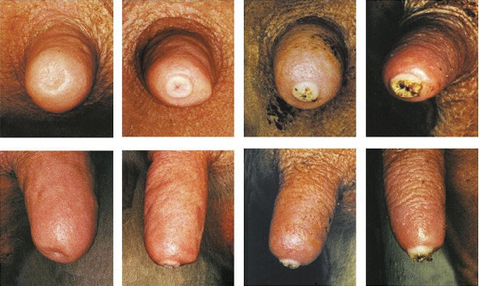
- Score 1: no ring
- Score 2: smooth or lightly rough ring
- Score 3: moderately rough rings with a few fronds of keratin
- Score 4: very rough rings with many fronds of keratin
Training Employees and Building a Regular Scoring Routine
While these scoring methods are powerful tools, it is essential to see the “bigger picture” of each cow in terms of overall health, welfare, and production. They each yield data that can support informed decision-making, but they require training and consistency to be of use.
One of the primary barriers to the use of CowSignals is that it requires experience and attention to detail. Another issue may be the time required to correctly identify and use the “cow signs.” Relying on employee observation as part of a scoring system requires managers to invest time in initial and ongoing training to ensure that scoring is accurate, consistent, and well aligned across staff.
The first step in training employees in systematic observation should be an overview of the general principle of using CowSignals: using the questions “What do I see?” “What is the cause?” and “What does it mean?” as a framework for understanding the natural behavior of the cow. In addition, making sure employees can connect how each scoring system relates to the bigger picture of animal welfare, productivity, and profitability can help give meaning to the work of observation and data collection. For example, when training to assess body condition score (BCS) at different production stages, it may be helpful to explain the importance of body condition at transition, and the impact of metabolic disease in fresh cows.
Managers should also provide hands-on training, where scoring techniques are demonstrated and then practiced with direct feedback. Consistency is essential so that a manure score of 3, for example, represents the same thing to everyone on the team. Providing employees with checklists, score cards, and/or posters at appropriate locations throughout the dairy where the observation will be carried out will also help achieve greater consistency.
Creating a set of standard operating procedures (SOPs) that pair with the score cards and checklists will help empower workers to address issues when needed. Here is an example: An employee tasked with observing a pen of transition cows notices manure that is very solid and gives it a score of 5, which is cause for concern in a transition pen. Since the employee understands this may indicate ketosis, they can then follow the farm’s protocol for reporting the finding, perform ketosis testing using blood or milk samples, and follow the SOPs for treatment.
Once you have built a system of scoring, checklists, and SOPs, decide when and what to score, and implement a regular schedule. Weigh the costs and benefits of time spent versus impact of having the data. This is highly context-dependent—a specialty cheese maker with a small herd may have a different threshold for milk quality than a commodity shipping dairy, and so may choose different frequency or emphasis.
The valuable information cows provide can be the basis for a system that is proactive, preventive, and good for animal welfare, productivity, and profitability.
References
Hulsen, J. (2006). CowSignals (1st ed.). Roodbont Publishers B.V.
Hulsen, J. (2020). CowSignals checkbook: Working on health, production, and welfare. Roodbont Publishers.
Petrovski, K. R., Cusack, P., Malmo, J., & Cockcroft, P. (2022). The value of “cow signs” in the assessment of the quality of nutrition on dairy farms. Animals, 12(11), 1352.
Rovai, M., Carroll, H., Foos, R., Erickson, T., & Garcia, A. (2016). Dairy tool box talks: A comprehensive worker training in dairy farming. Frontiers in Public Health, 4(136).
CowSignals Training Company is an independent training organization specializing in health, welfare, and sustainability to secure “happy cows, happy farmers, happy planet.”
The information given here is for educational purposes only. References to commercial products, trade names, or suppliers are made with the understanding that no endorsement is implied and that no discrimination against other products or suppliers is intended.
Publication 4199 (POD-07-26)
By Jessica Halfen, PhD, Assistant Extension/Research Professor, and Holly Bristle, Graduate Research Assistant, Animal and Dairy Sciences. Reviewed by Alexandre Pedroso, PhD, CowSignals Expert/Senior Consultant, Plenteous Consultoria, and Barbara Roqueto dos Reis, PhD, Assistant Professor, Coastal Research and Extension Center.
The Mississippi State University Extension Service is working to ensure all web content is accessible to all users. If you need assistance accessing any of our content, please email the webteam or call 662-325-2262.
Download
P4199
Effective Scoring Metrics for Livestock Employee Training
654.01 KB