P3263
Tailwater Recovery and On-Farm Storage Reservoir: Nutrient Runoff Mitigation and Reuse Potential
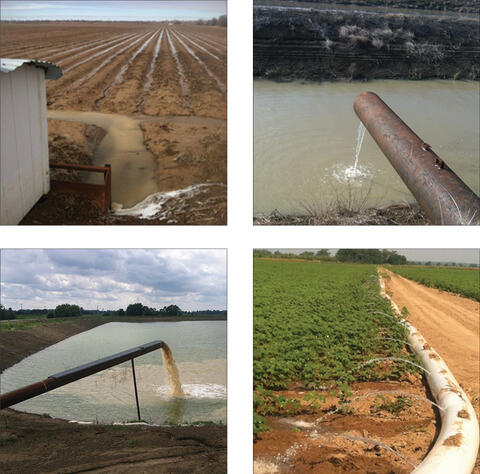
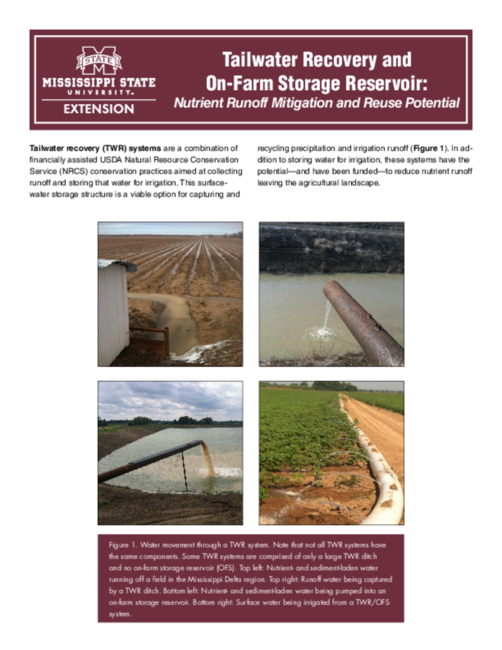
Tailwater recovery (TWR) systems are a combination of financially assisted USDA Natural Resource Conservation Service (NRCS) conservation practices aimed at collecting runoff and storing that water for irrigation. This surface-water storage structure is a viable option for capturing and recycling precipitation and irrigation runoff (Figure 1). In addition to storing water for irrigation, these systems have the potential—and have been funded—to reduce nutrient runoff leaving the agricultural landscape.
Preventing Nutrient Runoff
Biological
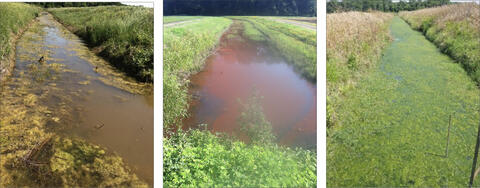
Plant and microbial activity impact the water leaving agricultural fields. Biological activity occurs naturally in agricultural drainage ditches and also may occur in TWR systems. Plants and algae take up nutrients required for their growth (Figure 2). Microorganisms also play a central role in nutrient transformation and removal. When oxygen is not present, microorganisms in the soil can carry out a process called denitrification to reduce nitrogen in the water and return it to the air.
Physical
Holding water on the landscape in a TWR system allows the heavier sediment and sediment-bound phosphorus to settle out of the water. This also allows time for biological processes to take place to reduce nitrogen. Finally, by recycling this water onto the landscape, TWR systems prevent sediment and nutrients from leaving the farm landscape (Table 1).
| Source | Sediment | Phosphorus | Nitrogen |
|---|---|---|---|
| Runoff (lb) | 550,911 | 449 | 1,972 |
| Captured (lb) | 270,579 | 179 | 1,087 |
Sediment and Nutrient Runoff
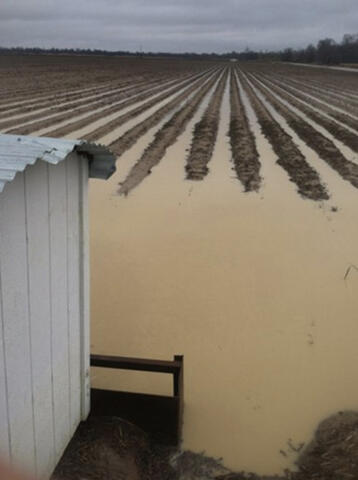
Sediment and nutrient runoff from agricultural fields occurs year-round with precipitation and irrigation events. However, there are times of the year when more sediment and nutrient loss occurs. Figure 3 shows sediment, phosphorus, and nitrogen field runoff occurring from March to July each year. Most of the field runoff coincides with precipitation in the Mississippi Delta region. Runoff events occurring in March to July also overlap with the primary growing season in the region (Figure 4).

TWR System Sediment and Nutrient Capture Performance
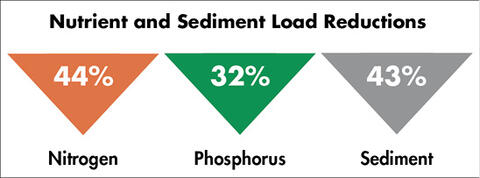
Results show that TWR systems do not reduce concentrations of sediment and nutrients in captured runoff; however, loads of sediment and nutrients are reduced (Figure 5). The impact TWR systems have on load reductions is substantial and is comparable to nutrient-loading goals of state and federal agencies. Captured nutrients are available in TWR system water for irrigation; however, the loads of nutrients are too little to reduce fertilizer application rates.
Nutrients Available for Irrigation Reuse
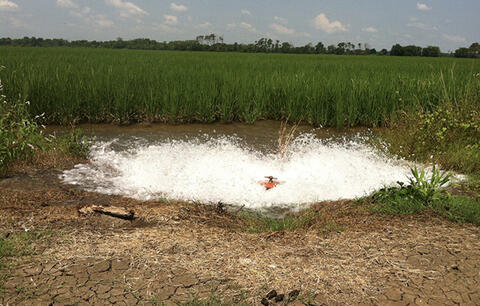
Runoff captured by a TWR system is stored and reused as irrigation water, allowing potentially available nutrients to be put back into the field to meet crop needs (Figure 6). Results from this study showed relatively low nutrient values available per acre in TWR water stores (Table 2). The available amount of nutrients will fluctuate throughout the year with changes in temperature, precipitation, and fertilizer inputs in the field.
| Year | Phosphorus | Nitrogen | Inorganic Nitrogen |
|---|---|---|---|
2014 (lb/ac) | 0.9 | 9.0 | 1.4 |
2015 (lb/ac) | 0.7 | 4.0 | 1.3 |
Mean (lb/ac) | 0.8 | 6.5 | 1.3 |
Summary
Tailwater recovery systems are a combination of conservation practices that can provide water-quality and water-conservation benefits, but they also require economic investments. The cost of TWR implementation is higher than other conservation practices to achieve similar nutrient-reduction benefits. Other conservation practices to help achieve water-quality goals include controlled drainage and developing a comprehensive nutrient management plan. Consult your county USDA-NRCS agent for more details on conservation practices.
References
Omer, A. R., Miranda, L., Moore, M. T., Krutz, J., Prince Czarnecki, J. M., Kröger, R., … Allen, P. J. (2018). Reduction of suspended solids and nutrient loss from agricultural lands by tailwater recovery systems. Journal of Soil and Water Conservation, 73(3), 284–297.
Omer, A. R., Moore, M. T., Krutz, J., Kröger, R., Prince Czarnecki, J., Baker, B., & Allen, P. J. (2017). Potential for recycling of suspended solids and nutrients by irrigation of tailwater from tailwater recovery systems. Water Science and Technology: Water Supply, 18(2).
The information given here is for educational purposes only. References to commercial products, trade names, or suppliers are made with the understanding that no endorsement is implied and that no discrimination against other products or suppliers is intended.
Publication 3263 (POD-01-26)
By Beth Baker, PhD, Associate Extension Professor and Assistant Director of Extension for Environmental Stewardship, and Austin Omer, PhD, former Extension Associate, Wildlife, Fisheries, and Aquaculture.
The Mississippi State University Extension Service is working to ensure all web content is accessible to all users. If you need assistance accessing any of our content, please email the webteam or call 662-325-2262.
Download
P3263
Tailwater Recovery and On-Farm Storage Reservoir: Nutrient Runoff Mitigation and Reuse Potential
804.72 KB
Departments
Authors
-
 Assoc Professor & Assistant Di
- Wildlife, Fisheries & Aquaculture