P4175
Forgotten Foods: Common Purslane
Plant Overview
Common purslane (Portulaca oleracea) is a non-native summer annual plant commonly found in disturbed areas, such as flower beds, roadsides, and cultivated fields. Although often considered a nuisance in North America, common purslane has been used as food and medicine for more than 4,000 years and is still used today in Latin America, Europe, Asia, and the Mediterranean.
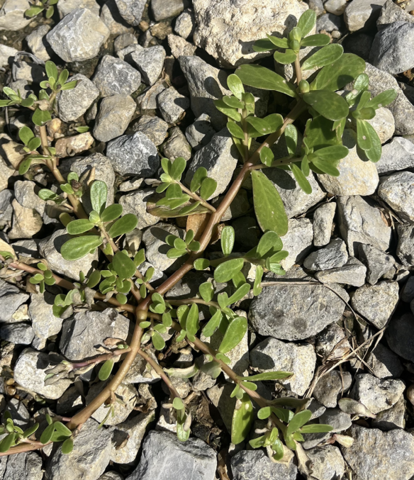
Common purslane is a succulent plant and contains 94 percent water. It grows from a central taproot and produces clusters of oval leaves that grow from reddish prostrate stems, forming thick mats along the ground. Leaf clusters and yellow flowers grow at stem joints and terminals. The flowers are self-pollinating, with five to four heart-shaped petals. Seed pods are later produced and filled with tiny black seeds. A single plant produces up to 240,000 seeds that can remain viable in the soil for more than 40 years.
Common purslane is considered very nutritious because it contains high levels of omega-3 fatty acids and vitamins A, C, and E, as well as calcium, magnesium, and iron. The entire plant is edible, having a mild, tangy flavor and crunchy texture. Common purslane is often served raw in salads, sautéed in oils, or cooked in soups and breads.
In addition to its nutritional value, common purslane has health-promoting properties, including anti-inflammatory, antioxidant, and neuroprotective effects. The World Health Organization considers common purslane one of the most widely used medicinal plants worldwide.
Note: Any medicinal use information shared in this publication is for educational purposes only. Consult with a physician for any medical advice or treatment.
Poisonous Plant Look-Alike: Prostrate Spurge
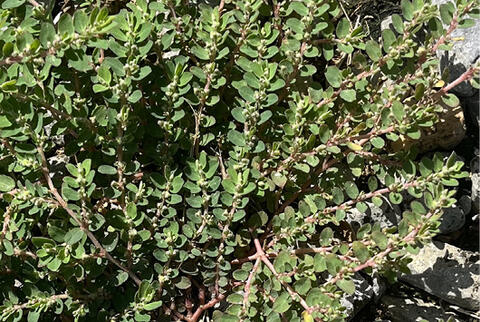
Prostrate spurge (Euphorbia maculate) is a native, summer annual plant that is a “look-alike” for common purslane. However, it is poisonous and can cause vomiting and diarrhea in humans and animals. In addition, its milky white sap can cause skin rashes and irritation.
The best way to identify prostrate spurge from common purslane is to break off a small stem piece from the plant. If a milky, white sap begins to seep from the broken stem, the plant is prostrate spurge. If the sap is clear, the plant is common purslane. Also, prostrate spurge flowers are whitish pink, and common purslane flowers are yellow.
Common Purslane Recipe: Purslane Walnut Bread
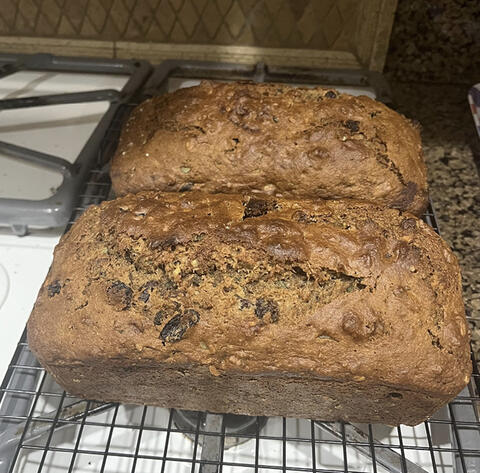
Ingredients
- 4 eggs
- 1 cup packed brown sugar
- 1/2 cup olive oil
- 2 cups unsweetened applesauce
- 2 tablespoons cinnamon
- 1 tablespoon vanilla
- 3 cups purslane leaves and stems, finely chopped
- 1 cup walnuts, coarsely chopped
- 1 cup mixed raisins
- 2 cups whole wheat flour
- 1 cup white flour
- 2 teaspoons baking soda
- 2 teaspoons baking powder
Steps
- Combine eggs, brown sugar, olive oil, applesauce, cinnamon, and vanilla in a large bowl and mix well.
- Add purslane, nuts, and raisins, and mix thoroughly.
- Add the flours, baking soda, and baking powder, and mix until combined.
- Pour batter into greased and floured loaf pans and bake at 350°F for 75 minutes.
- Let the loaves rest for 15 minutes, then turn out on a wire rack and cool.
References
Wisconsin Horticulture, Division of Extension. (2025, January 25). Common purslane, Portulaca oleracea. University of Wisconsin–Madison Division of Extension.
Li, Y. (2024). Nutritional values, bioactive compounds and health benefits of purslane (Portulaca oleracea L.): A comprehensive review. Food Science and Human Wellness, 13(5), Article 100820.
The information given here is for educational purposes only. References to commercial products, trade names, or suppliers are made with the understanding that no endorsement is implied and that no discrimination against other products or suppliers is intended.
Publication 4175 (POD-02-26)
By Sherry Bell, PhD, Associate Extension Professor, Central Mississippi Research and Extension Center.
The Mississippi State University Extension Service is working to ensure all web content is accessible to all users. If you need assistance accessing any of our content, please email the webteam or call 662-325-2262.
Download
P4175
Forgotten Foods: Common Purslane
166.61 KB
Departments
Authors
-
 Associate Extension Professor
- Central MS Research & Ext Center