P4232
Forgotten Foods: American Elderberry
Plant Overview
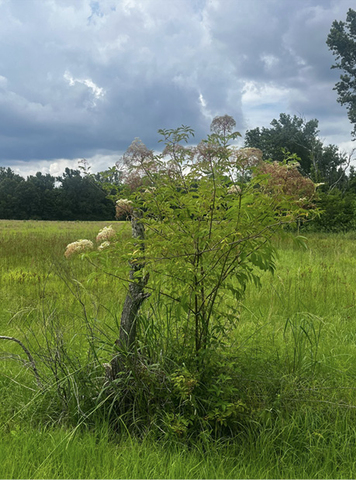
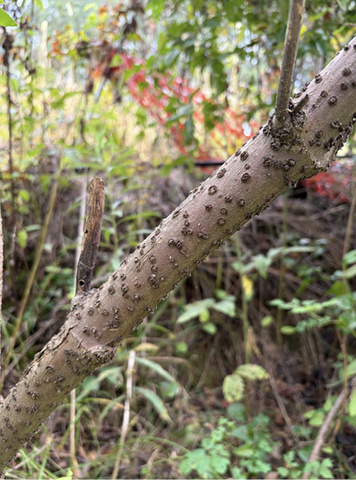
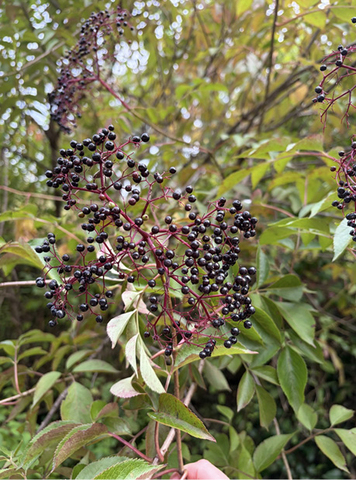
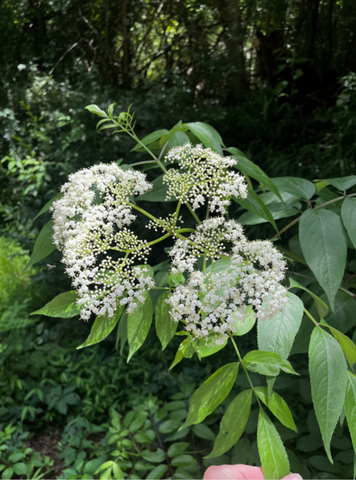
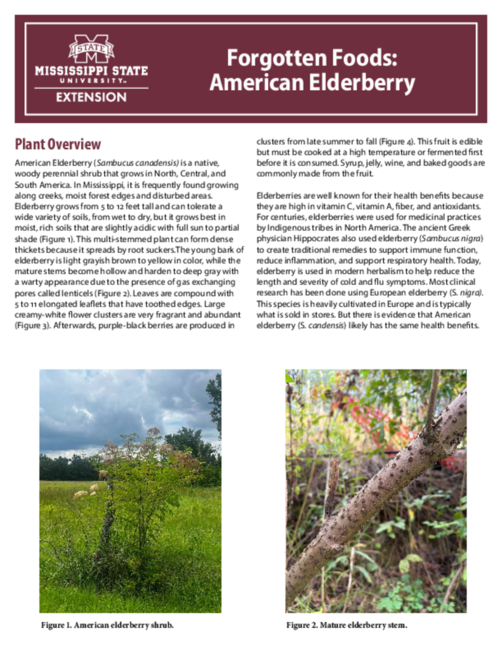
American Elderberry (Sambucus canadensis) is a native, woody perennial shrub that grows in North, Central, and South America. In Mississippi, it is frequently found growing along creeks, moist forest edges and disturbed areas. Elderberry grows from 5 to 12 feet tall and can tolerate a wide variety of soils, from wet to dry, but it grows best in moist, rich soils that are slightly acidic with full sun to partial shade (Figure 1). This multi-stemmed plant can form dense thickets because it spreads by root suckers.The young bark of elderberry is light grayish brown to yellow in color, while the mature stems become hollow and harden to deep gray with a warty appearance due to the presence of gas exchanging pores called lenticels (Figure 2). Leaves are compound with 5 to 11 elongated leaflets that have toothed edges. Large creamy-white flower clusters are very fragrant and abundant (Figure 3). Afterwards, purple-black berries are produced in clusters from late summer to fall (Figure 4). This fruit is edible but must be cooked at a high temperature or fermented first before it is consumed. Syrup, jelly, wine, and baked goods are commonly made from the fruit.
Elderberries are well known for their health benefits because they are high in vitamin C, vitamin A, fiber, and antioxidants. For centuries, elderberries were used for medicinal practices by Indigenous tribes in North America. The ancient Greek physician Hippocrates also used elderberry (Sambucus nigra) to create traditional remedies to support immune function, reduce inflammation, and support respiratory health. Today, elderberry is used in modern herbalism to help reduce the length and severity of cold and flu symptoms. Most clinical research has been done using European elderberry (S. nigra). This species is heavily cultivated in Europe and is typically what is sold in stores. But there is evidence that American elderberry (S. candensis) likely has the same health benefits.
Poisonous Plant Look-Alike: Pokeweed
Pokeweed (Phytolacca americana) is a native, herbaceous perennial plant that grows throughout the majority of North America. Every part of the plant is considered toxic to humans and livestock. Although historically the young leaves and tender stems were boiled and eaten as “poke sallet” in the American South. Strict boiling guidelines must be followed to remove plant toxins and avoid poisoning. Today, this practice is generally discouraged by health professionals.
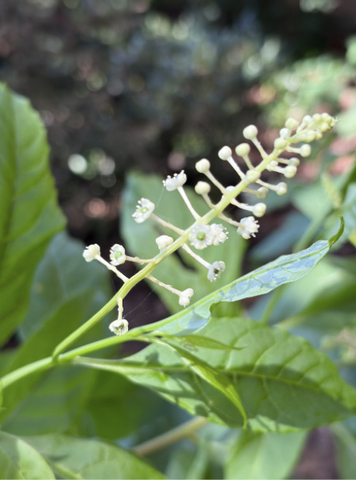
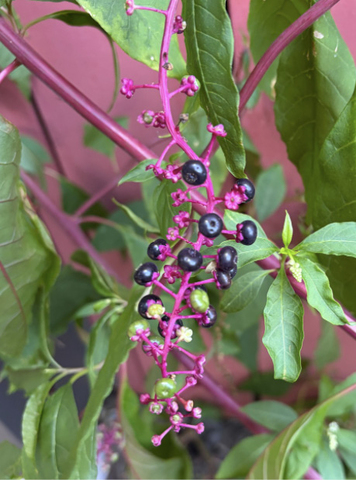
Pokeweed grows across a wide variety of soils and is often found in cleared areas, pastures, and along forest edges. Pokeweed can grow from 4 to 10 feet tall, and its stems are smooth and reddish-purple in color. Leaves are a smooth bright green and have an unpleasant odor when crushed. White blooms are produced throughout the early summer to last fall (Figure 5). Later, long, drooping clusters of dark purple berries form (Figure 6). Berries are a preferred food for birds and other wildlife that unknowingly help to re-seed more pokeweed across landscapes.
Elderberry Syrup Recipe
Elderberry syrup can be used as an herbal supplement, or simply as a sweet flavoring to complement foods like ice cream, baked goods, and drinks. Fresh or dried elderberries can be used when making syrup. If you do not have access to fresh elderberries, dried ones can generally be purchased online or at your local herbal shop. But dried elderberries are frequently imported from Europe and North Africa where European elderberries (S. nigra) are heavily cultivated.
Ingredients
- 2 cups of fresh or frozen elderberries or 1 cup dried elderberries (stalks removed)
- 2 cups of water for simmering
- 1 cup sugar or honey
- grated lemon rind and cinnamon stick for flavoring (optional)
Supplies
bowl, saucepan, potato masher, cheesecloth, fine mesh strainer, funnel, and glass containers with lids
Instructions
Soak fresh or dried elderberries in water in a covered bowl overnight. Place it in the refrigerator to prevent spoilage.The next day, remove all impurities from the elderberries (e.g., stems and insects), then strain off the water.
- In a saucepan, add elderberries and 2 cups of water, along with optional spices.
- Place the filled saucepan on heat and bring to a boil, then reduce to a simmer. Cover the pot with a lid that is ajar to allow steam to escape.
- Simmer for 30–45 minutes until the liquid has been reduced by half and is a deep purple color.
- Remove from heat, allow liquid to sit and cool for 15 minutes.
- Use a potato masher to mash the cooked berries to further release beneficial compounds.
- Drape cheesecloth over the bowl’s edges, then place a fine mesh strainer on top. Pour the cooked elderberry mixture through the strainer and cheesecloth. With a spoon, press down on the remaining solids in the cheesecloth to extract as much liquid as possible.The strained liquid should equal 2 cups of concentrated elderberry solution.
- Stir in 1 cup of sugar or honey until it is fully combined.Use a funnel to pour the elderberry syrup into clean glass containers with lids.
- Properly store the filled container in a refrigerator; the syrup should remain fresh for 3–4 months. For longer storage, elderberry syrup can be poured into ice cube trays and frozen. The ice cubes can be stored for 6–12 months and be used as needed.
References
Bulatovic-Danilovick, M. (2022). Elderberry–A new old crop. West Virginia University Extension.
Corliss, J. (2025). What are the health benefits of elderberry? Harvard Health Publishing.
Mocanu, M. L., & Amariei, S. (2022). Elderberries–A source of bioactive compounds with antiviral action. Plants, 11(6), 740.
Note: Any medicinal use of information shared in this publication is for educational purposes only. Consult a physician for any medical advice or treatment.
Publication 4232 (POD-10-26)
By Sherry Bell, PhD, Associate Extension Professor, Central Mississippi Research and Extension Center.
The Mississippi State University Extension Service is working to ensure all web content is accessible to all users. If you need assistance accessing any of our content, please email the webteam or call 662-325-2262.
Download
P4232
Forgotten Foods: American Elderberry
1.27 MB
Departments
Authors
-
 Associate Extension Professor
- Central MS Research & Ext Center