P4218
Salad on the Go
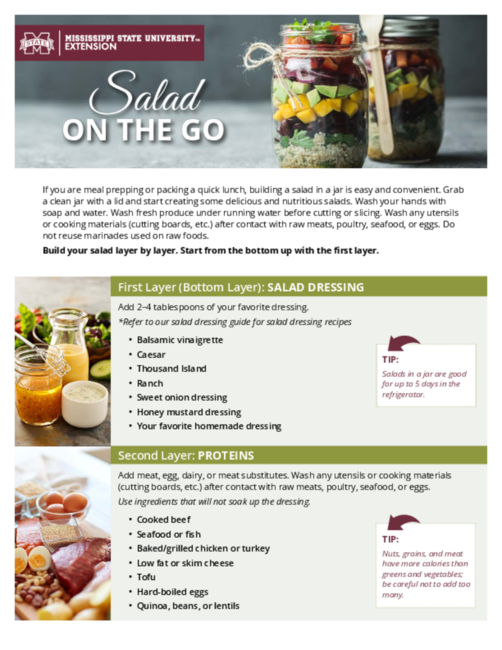
If you are meal prepping or packing a quick lunch, building a salad in a jar is easy and convenient. Grab a clean jar with a lid and start creating some delicious and nutritious salads. Wash your hands with soap and water. Wash fresh produce under running water before cutting or slicing. Wash any utensils or cooking materials (cutting boards, etc.) after contact with raw meats, poultry, seafood, or eggs. Do not reuse marinades used on raw foods.
Build your salad layer by layer. Start from the bottom up with the first layer.
First Layer (Bottom Layer): Salad Dressing
Add 2–4 tablespoons of your favorite dressing.
*Refer to our salad dressing guide for salad dressing recipes
- Balsamic vinaigrette
- Caesar
- Thousand Island
- Ranch
- Sweet onion dressing
- Honey mustard dressing
- Your favorite homemade dressing
Tip:
Salads in a jar are good for up to 5 days in the refrigerator.
Second Layer: Proteins
Add meat, egg, dairy, or meat substitutes. Wash any utensils or cooking materials (cutting boards, etc.) after contact with raw meats, poultry, seafood, or eggs.
Use ingredients that will not soak up the dressing.
- Cooked beef
- Seafood or fish
- Baked/grilled chicken or turkey
- Low fat or skim cheese
- Tofu
- Hard-boiled eggs
- Quinoa, beans, or lentils
Tip:
Nuts, grains, and meat have more calories than greens and vegetables; be careful not to add too many.
Third Layer: Vegetables and Fruits
(Make as colorful as possible)
Wash fresh produce before cutting or slicing. Add vegetables and fruits of choice except greens as they will be the next layer.
Keep drier fruits and vegetables toward the top to prevent greens from wilting. Pack tightly, leaving room for your greens and toppings.
- Apple
- Avocado
- Beets
- Berries
- Broccoli
- Citrus
- Cucumber
- Dried fruit
- Edamame
- Herbs
- Kimchi
- Mushrooms
- Olives
- Peas
- Pear
- Radish
- Red onion
- Sauerkraut
- Seaweed salad
- Shredded cabbage
- Shredded carrots
- Sprouts
- Sweet potato
- Tomato
Fourth Layer: Greens
Add the greens.
Feel free to add multiple kinds of greens. Do not be afraid to mix it up. Greens are low-calorie, so you can add as much as you want.
- Arugula
- Collard greens
- Dandelion
- Iceberg
- Kale
- Microgreens
- Mixed greens
- Mustard greens
- Romaine
- Spinach
Before preparing this recipe, be sure to check food
safety notices on the FDA website.
Tip:
If you are using a green like collards or kale, use thinly sliced.
Fifth Layer: Crunch
Add the crunchy items.
This includes the nuts and seeds and regular toppings that you choose for your salad. Do not add any items that may get soggy in the fridge.
- Almonds
- Cashews
- Peanuts
- Pecans
- Pepitas (pumpkin seeds)
- Sunflower seeds
- Walnuts
- Water chestnuts
- Sesame seeds
Screw the lid on the jar and refrigerate for up to 3 to 5 days.
Tip:
Pecans are easily accessible in our state and a good source of nutrients.
Salad Combinations
SALAD 1
- Reduced-fat ranch
- Lettuce
- Grilled or baked chicken
- Avocado
- Boiled egg
- Roma tomatoes
- Cheese
Salad 2
- Sesame Ginger Vinaigrette
- Romaine
- Shredded Cabbage
- Shredded Carrot
- Edamame
- Salmon
- Cucumber
- Kimchi
- Almonds
Salad 3
- Olive oil and vinegar
- Cucumber
- Cherry tomato
- Onion
- Fresh herbs
Salad 4
- Reduced-fat ranch
- Turkey
- Tomato
- Banana peppers
- Pickles
- Black olives
- Mixed greens
Salad 5
- Lemon vinaigrette
- Chicken
- Tomato
- Apple
- Iceberg lettuce
- Dried cranberries
- Pecans
Salad 6
- Honey balsamic vinaigrette
- Grilled or baked chicken
- Tomato
- Onion
- Avocado
- Blackberries
- Butter lettuce
- Walnuts
- Feta
Salad 7
- Italian dressing
- Salami
- Red onion
- Cherry tomatoes
- Roasted red peppers
- Olives
- Brussels sprouts
- Provolone
- Pepperoncini
- Parmesan
- Mozzarella
Tip:
You can season your salads with salt-free seasonings. Check out MSU Extension Publication 3586 Nutrition and Wellness: Salt-Free Spice Blends.
References
American Heart Association. (2026). Fats in foods.
American Heart Association. (2026). Effects of excess sodium infographic.
Harvard Health Publishing. (2018). Salad greens: Getting the most bang for the bite.
Publication 4218 (POD-10-26)
By Qula Madkin, MS, RDN, LD, CDCES, Extension Instructor, Biochemistry, Nutrition, and Health Promotion; Sharon Nettles, Extension Agent I, Yazoo County; and Nia Ballard, Extension Associate I, Biochemistry, Nutrition, and Health Promotion.
The Mississippi State University Extension Service is working to ensure all web content is accessible to all users. If you need assistance accessing any of our content, please email the webteam or call 662-325-2262.
Download
P4218
Salad on the Go
551.04 KB
Departments
Authors
-
 Extension Instructor
- Biochemistry Nutrition Health Promo
-
 Extension Agent I
- MSU Extension- Yazoo County