P4180
Lawn Burweed (Soliva sessilis) Control in Turfgrass
Lawn burweed (Soliva sessilis), also called sticker weed, spurweed, Onehunga-weed, jo-jo weed, bindi weed, or burweed, is a troublesome winter annual weed throughout Mississippi and many temperate and subtropical environments throughout the world. The plant originates in South America and is best known for the sharp, spiny seed burs that form in spring, which can make walking barefoot across a lawn painful.
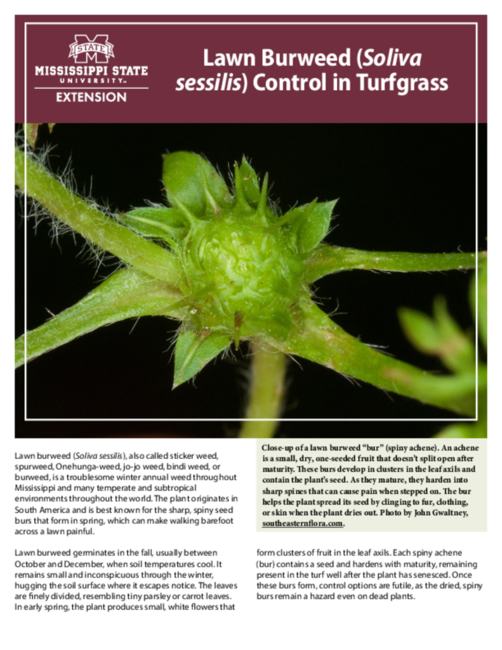
Lawn burweed germinates in the fall, usually between October and December, when soil temperatures cool. It remains small and inconspicuous through the winter, hugging the soil surface where it escapes notice. The leaves are finely divided, resembling tiny parsley or carrot leaves. In early spring, the plant produces small, white flowers that form clusters of fruit in the leaf axils. Each spiny achene (bur) contains a seed and hardens with maturity, remaining present in the turf well after the plant has senesced. Once these burs form, control options are futile, as the dried, spiny burs remain a hazard even on dead plants.
Download the PDF for the full publication.
The information given here is for educational purposes only. References to commercial products, trade names, or suppliers are made with the understanding that no endorsement is implied and that no discrimination against other products or suppliers is intended.
Publication 4180 (POD-04-26)
By Jay McCurdy, PhD, Turfgrass Extension Specialist and Professor, Plant and Soil Sciences.
The Mississippi State University Extension Service is working to ensure all web content is accessible to all users. If you need assistance accessing any of our content, please email the webteam or call 662-325-2262.
Download
P4180
Lawn Burweed (Soliva sessilis) Control in Turfgrass
702.05 KB
Departments
Authors
-
 Professor and Head
- Agricultural Science & Plant Protec