P2788
Conducting Camera Surveys to Estimate Population Characteristics of White-Tailed Deer
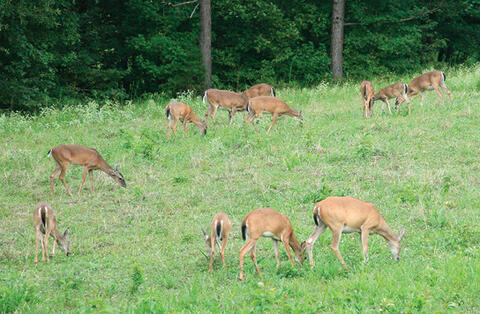
White-tailed deer management has become increasingly popular among private landowners and leaseholders. More than ever, hunters play an active role in the management of deer populations. Too often, though, deer management practices are interpreted simply as planting supplemental food plots or implementing a feeding program. While these practices can certainly be an important component of deer management, equally important are harvest management practices designed to change deer population characteristics.
Much of the information needed to make management decisions regarding deer populations can be gleaned from a properly conducted game camera survey. Population characteristics, such as age structure, adult sex ratio, fawn crop, and even population density, can be estimated from a thorough camera survey. What started as an interesting gadget for hunters to use to photograph deer and other wildlife species has since become an important survey instrument for deer managers. In some situations, game camera surveys can photographically record 80 to 90 percent of the deer herd, which is more than sufficient to develop reliable herd management information. When compared with other survey methods, game camera surveys provide the best potential for a reliable, cost-effective method to estimate deer population characteristics.
Download the PDF for the full publication.
The information given here is for educational purposes only. References to commercial products, trade names, or suppliers are made with the understanding that no endorsement is implied and that no discrimination against other products or suppliers is intended.
Publication 2788 (POD-07-26)
By Bill Hamrick, Senior Extension Associate, Wildlife, Fisheries, and Aquaculture; Bronson Strickland, PhD, Extension Professor (retired); Steve Demarais, PhD, Professor (retired); William McKinley, Deer Program Coordinator, Mississippi Department of Wildlife, Fisheries, and Parks; and Bob Griffin, MDWFP (retired).
The Mississippi State University Extension Service is working to ensure all web content is accessible to all users. If you need assistance accessing any of our content, please email the webteam or call 662-325-2262.
Download
P2788
Conducting Camera Surveys to Estimate Population Characteristics of White-Tailed Deer
6.74 MB
Departments
Authors
-
 Senior Extension Associate
- Wildlife, Fisheries & Aquaculture