P3250
Unlocking the Language of the Wild Turkey
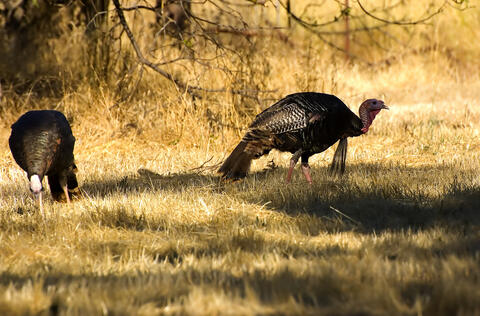
Nothing stirs a hunter’s soul quite like the thundering gobble of a wild turkey echoing through the stillness of a spring morning. It has been heard through the hills and vales of this country for eons, whether people were here to witness it or not.
Wild turkeys were abundant when settlers of the New World arrived, but the population diminished as they were hunted for food. Now, with the hard work of conservation groups such as the National Wild Turkey Federation, the majestic bird has once again reached high population levels. As a result, more hunters want to challenge their prowess against this woodland creature.
When recreational turkey hunting became popular, not much research was available regarding “calling” birds. Hunters were told that, in order to call the turkey into gun range, only three yelps—no more and no less—should be made on any call. After these three yelps, the hunter was to put the call down and not pick it up again until 15 minutes had passed. Once the allotted time had passed, then and only then could the hunter make another three yelps, wait another 15 minutes, and so on. If the turkey gobbled in the middle of a calling sequence, then the hunter should be ready for the gobbler to arrive on the scene in a matter of moments. While this method might work sometimes, more research has shown it is not the only or best way to call a wild turkey.
Through the years, we have continued to learn more and more about the language of the wild turkey. Observations of turkey communication have allowed hunters to become increasingly successful in the spring woods. We now know the different vocalizations that turkeys use every day and what they mean. The language of the wild turkey is not extensive and should not be feared; it is a simple call-and-response from one bird to another.
Hunting the wild turkey not only involves good woodsmanship (knowing the woods), but it also requires knowing how and when to speak to the bird. One of the fascinations that turkey hunting offers is the ability to engage in a conversation with gobblers (males) and hens (females). Your education as a hunter should include knowing the vocabulary of each in order to fully understand and enjoy the experience.
The key to unlocking the language of the wild turkey is to know the differences and similarities between the calls that hens and gobblers make. One of the best times to experience these is in the springtime, which is the mating season for wild turkeys. One of the main ways turkeys seek mates is through their calls.
The following sections discuss each of the mating calls and their meanings, along with some tips you can use to increase your odds of “bagging your bird.”
Gobblers
The Gobble
The gobble of the wild turkey invokes images of a strutting bird with all feathers displayed. The gobble is primarily a locator call. The male is saying to the females, “Hey, I am over here!” At first, gobbles are light and made while the turkey is still in the tree. He stands on his roost limb, craning his neck in order to see any approaching hens. Turkeys will gobble at just about anything—owls, crows, planes, trains, and yes, even automobiles. The gobble is his calling card and, on a really good morning, it is not uncommon to hear a turkey gobble 100 times or more.
The Spit and Drum
Contrary to the name, these sounds have nothing to do with saliva or percussion instruments. The spit and drum are normally (but not exclusively) used in conjunction, which is why they are described together. The gobbler normally spits and drums while he is strutting (displaying) for the hens. The spit actually sounds more like the gobbler is exhaling a short burst of air that sounds like the word “chick.” The drum sound is rather hard to explain—it’s best to hear a turkey actually doing it—but it is a low rumble that oscillates up and down, sounding like “vrrrrrrrummmmph.” If you have ever heard a car stuck in the mud from a distance, this is similar to what this vocalization sounds like. These are low-volume sounds, so when you hear a turkey spitting and drumming, he is probably very close.
Hens
The Cluck and Purr
There are many variations of the cluck and purr when it comes to talking turkey. Clucks can imply different meanings based on tone and timing. A low-toned cluck followed by soft purrs usually indicates a turkey is in a content mood. Clucks and purrs are normally heard at sunrise while turkeys are still on the roost or after they fly down and are feeding. A louder cluck and purr may indicate that the turkey has seen something alarming. A turkey emitting these sounds rarely calms down and will normally leave the area. Gobblers can sometimes be heard clucking and purring, but usually only young males that have not reached full maturity.
The Cutt
The cutt is probably the most exciting call in the line of communication between the hen and the gobbler. Cutts are short, machine gun-like clucks. Cutts indicate that the female is ready to breed. Gobblers are normally very responsive to cutts and will gobble over and over in response.
The Putt
Not to be confused with the cutt, the putt sounds just like it’s spelled. The putt is issued as a warning to all other turkeys that it is time to vacate the area and to do so quickly. The putt is duller sounding than a cluck but tends to have more volume.
The Yelp
The yelp is the best-known sound of the turkey language. It is the one sound that every hunter tries to replicate. Originally, yelps were thought to be very short; however, increased exposure to hen turkeys proves that yelps can be from one to unlimited repetition. Yelps usually have two notes. The first note is in an upper register and sounds something like “ye.” The second note falls into a deeper tone and sounds like “yauk” (rhymes with “chalk”). To complete the yelp, put the two words together: “ye yauk.” Congratulations—you just made your first yelp!
Try saying this several times, keeping in mind that turkeys usually keep a constant rhythm. It may be fast or slow, but it doesn’t change in the middle. A common yelp would be in 4/4 time. This would be counted as 1, 2, 3, 4, 1, 2, 3, 4 (repeat). Remember, you don’t have to have the best-sounding yelp, but you better have a well-timed one. If you have a metronome, set it to this timing and start yelping. I bet you never knew that turkeys were such good musicians!
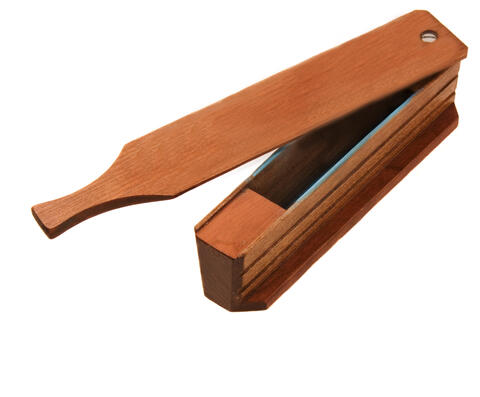
To unlock and speak the language of the wild turkey is to experience nature in a way people seldom do. Get a call or use your mouth, and learn the various calls and how to make them. Go out into the spring woods and “talk turkey.”
Publication 3250 (POD-10-25)
Reviewed by Reid Nevins, Extension Specialist I, from the original by John Long, PhD, former Assistant Extension Professor, Center for 4-H Youth Development.
The Mississippi State University Extension Service is working to ensure all web content is accessible to all users. If you need assistance accessing any of our content, please email the webteam or call 662-325-2262.
Download
P3250
Unlocking the Language of the Wild Turkey
257.33 KB
Departments
Authors
-
 Extension Specialist I
- Ctr 4-H Youth Development