P3008
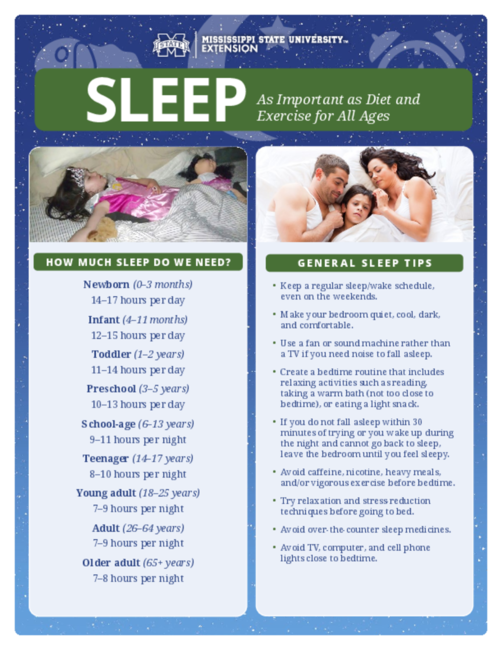
Sleep: As Important as Diet and Exercise for All Ages
How Much Sleep Do We Need?
| Age | Hours Needed |
|---|---|
| Newborn (0–3 months) | 14–17 hours per day |
| Infant (4–11 months) | 12–15 hours per day |
| Toddler (1–2 years) | 11–14 hours per day |
| Preschool (3–5 years) | 10–13 hours per day |
| School-age (6–13 years) | 9–11 hours per night |
| Teenager (14–17 years) | 8–10 hours per night |
| Young adult (18–25 years) | 7–9 hours per night |
| Adult (26–64 years) | 7–9 hours per night |
| Older adult (65+ years) | 7–8 hours per night |
General Sleep Tips
- Keep a regular sleep/wake schedule, even on the weekends.
- Make your bedroom quiet, cool, dark, and comfortable.
- Use a fan or sound machine rather than a TV if you need noise to fall asleep.
- Create a bedtime routine that includes relaxing activities such as reading, taking a warm bath (not too close to bedtime), or eating a light snack.
- If you do not fall asleep within 30 minutes of trying or you wake up during the night and cannot go back to sleep, leave the bedroom until you feel sleepy.
- Avoid caffeine, nicotine, heavy meals, and/or vigorous exercise before bedtime.
- Try relaxation and stress-reduction techniques before going to bed.
- Avoid over-the-counter sleep medicines.
- Avoid TV, computer, and cell phone lights close to bedtime.
Sleep Hygiene
Not sleeping enough on a regular basis and not getting good sleep each night is related to a number of physical, social, cognitive, and behavioral problems:
- Obesity
- Diabetes
- High blood pressure
- Cancer
- Alzheimer’s
- Increased sickness
- Increased accidents
- Reduced response time
- Increased anger/aggression
- Misbehavior
- Shorter attention
- Reduced learning
- Reduced memory
- Poorer test performance
- Increased depression/anxiety
Nutrition Information
Some foods may help you rest, while others make it hard to get good rest.
Good Snack Ideas
Snack on a combination of carbohydrates and proteins before bed:
- Toast with peanut butter
- Cereal with milk
- Crackers with cheese
Snacks to Avoid
- Coffee
- Soft drinks
- Chocolate
- Spicy or sugary foods
Caffeine takes a few hours to get out of your system, so be sure you are not having it too close to bedtime.
Eating too much or having a heavy meal before bed can disturb sleep.
Helpful Links
Sleep Education (American Academy of Sleep Medicine)
Sleep for Kids (The National Sleep Foundation)
Sleep Center Directory (American Academy of Sleep Medicine)
For More Information
Dr. Lori Staton, Professor of Human Sciences
(662) 325-1295, Lstaton@humansci.msstate.edu
Publication 3008 (POD-11-25)
The Mississippi State University Extension Service is working to ensure all web content is accessible to all users. If you need assistance accessing any of our content, please email the webteam or call 662-325-2262.
Download
P3008
Sleep: As Important as Diet and Exercise for All Ages
571.97 KB
Authors
-
 Professor
- School of Human Sciences