P4223
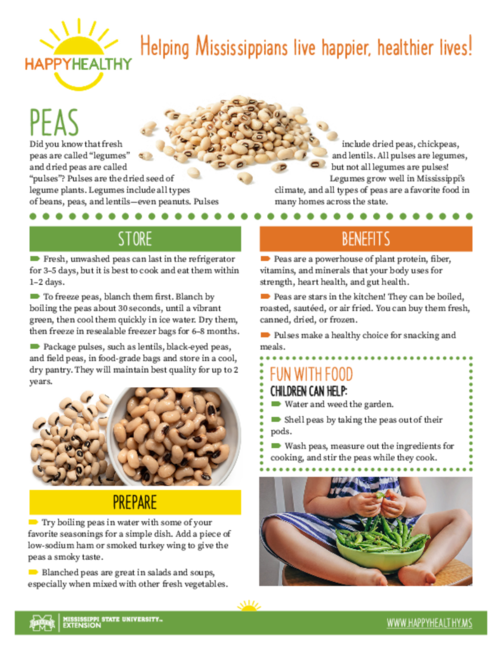
HappyHealthy Fact Sheet: Peas

Helping Mississippians live happier, healthier lives!
Did you know that fresh peas are called “legumes” and dried peas are called “pulses”? Pulses are the dried seed of legume plants. Legumes include all types of beans, peas, and lentils—even peanuts. Pulses include dried peas, chickpeas, and lentils. All pulses are legumes, but not all legumes are pulses! Legumes grow well in Mississippi’s climate, and all types of peas are a favorite food in many homes across the state.
Store
- Fresh, unwashed peas can last in the refrigerator for 3–5 days, but it is best to cook and eat them within 1–2 days.
- To freeze peas, blanch them first. Blanch by boiling the peas about 30 seconds, until a vibrant green, then cool them quickly in ice water. Dry them, then freeze in resealable freezer bags for 6–8 months.
- Package pulses, such as lentils, black-eyed peas, and field peas, in food-grade bags and store in a cool, dry pantry. They will maintain best quality for up to 2 years.
Prepare
- Try boiling peas in water with some of your favorite seasonings for a simple dish. Add a piece of low-sodium ham or smoked turkey wing to give the peas a smoky taste.
- Blanched peas are great in salads and soups, especially when mixed with other fresh vegetables.
Benefits
- Peas are a powerhouse of plant protein, fiber, vitamins, and minerals that your body uses for strength, heart health, and gut health.
- Peas are stars in the kitchen! They can be boiled, roasted, sautéed, or air fried. You can buy them fresh, canned, dried, or frozen.
- Pulses make a healthy choice for snacking and meals.
Fun with Food
Children Can Help:
- Water and weed the garden.
- Shell peas by taking the peas out of their pods.
- Wash peas, measure out the ingredients for cooking, and stir the peas while they cook.
Black-Eyed Peas and Rice
- 2 medium celery stalks
- 1/2 large red bell pepper
- 1 medium onion
- 2 cloves garlic
- 1 6-ounce slice smoked, lean, low-sodium ham
- 1 tablespoon canola oil
- 1 teaspoon dried thyme
- 1 1/3–3 1/2 cups low-sodium chicken broth*
- 2 cups instant brown rice
- 1/4 teaspoon cayenne pepper, or to taste
- Pinch each of salt and pepper
*The amount of broth needed depends on the type of instant rice you use. Check your package to find out how much you need.
- Wash your hands well with soap and warm water for at least 20 seconds.
- Wash and cut celery and bell pepper into small pieces; peel and cut onion into small pieces.
- Peel and mince garlic.
- Cut ham into small pieces.
- In a colander, rinse and drain black-eyed peas.
- Heat oil in a large pot over medium heat. Add celery, bell pepper, onion, garlic, and thyme. Cook, stirring occasionally, until vegetables are softened, 5–7 minutes.
- Add broth to pot. Bring to a boil. Add rice. Reduce heat to a simmer. Cover and cook for 10 minutes.
- Stir in ham, peas, cayenne, salt, and pepper. Simmer, uncovered, for 5 minutes. Remove from heat. Cover and let stand 5 minutes before serving.
- Refrigerate leftovers within 2 hours.
Hummus Spread
- 2 15.5-ounce cans chickpeas or cannellini beans
- 1 tablespoon minced garlic
- 2 tablespoons vegetable oil
- 2 tablespoons lemon juice
- 1 teaspoon paprika (1/2 in recipe, 1/2 as garnish)
- 1–2 tablespoons water (optional)
- 1/4 teaspoon ground cumin (optional)
- Wash your hands well with soap and warm water for at least 20 seconds.
- Drain and rinse beans and add to a medium mixing bowl. Mash beans with a fork or potato masher.
- Peel and mince garlic. Add garlic, oil, lemon juice, and 1/2 teaspoon paprika and continue to mash beans.
- If hummus mixture is too thick, add water.
- Top with paprika and cumin.
- Refrigerate leftovers within 2 hours.
This material was funded by USDA's Supplemental Nutrition Assistance Program - SNAP. This institution is an equal opportunity provider.
Publication 4223 (POD-09-26)
By Kelli Whitten, Mississippi State University Extension Service.
The Mississippi State University Extension Service is working to ensure all web content is accessible to all users. If you need assistance accessing any of our content, please email the webteam or call 662-325-2262.
Download
P4223
HappyHealthy Fact Sheet: Peas
614.6 KB
Departments
Authors
-
 Regional Registered Dietitian
- Extension Delta Region