P2989
Disaster Preparedness for Pet Owners
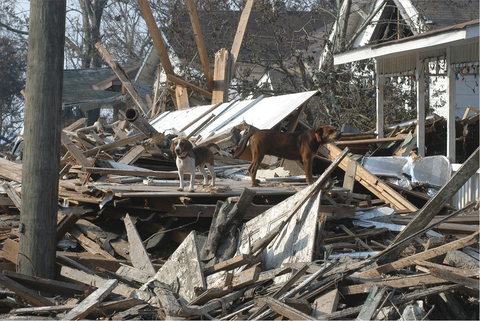
Residents of Mississippi and neighboring states are well aware of the risks posed by hurricanes, winter storms, tornadoes, straight-line winds, and floods. Most also are aware of the potential for manmade hazards such as fires, toxic spills, or even deliberate acts of terrorism. Although many people are aware of these risks, few actually have a disaster plan for their families and homes. Even fewer have plans that include their pets.
Not having a disaster plan can be dangerous for pets, as well as for their families and first responders. The aim of this publication is to help pet owners develop an emergency preparedness plan that includes their pets and the necessary items they may need to quickly respond in the event of a disaster.
Keep Your Pet Prepared
Just as people should always be prepared for a disaster, we should keep our pets prepared for an unexpected event. First, be sure your pets are microchipped for permanent identification and that they wear a collar at all times with your current contact information. Also include an alternate emergency contact such as your veterinarian if possible. Proper identification is essential for reunification in the event your pet gets lost.
In addition, dogs and cats should always be kept up-to-date on their vaccines. If your pet has to be evacuated and sheltered with other animals, it may be more susceptible to infectious diseases and conditions. The most important vaccine is the rabies vaccine, since your pet may be more likely to come into contact with other pets and possibly even wildlife if sheltered or lost.
Be sure to keep up with preventive medications to control internal and external parasites so your pet will be protected from fleas, ticks, and other parasites in outdoor or adverse environments.
Create a Disaster Kit for Your Pet
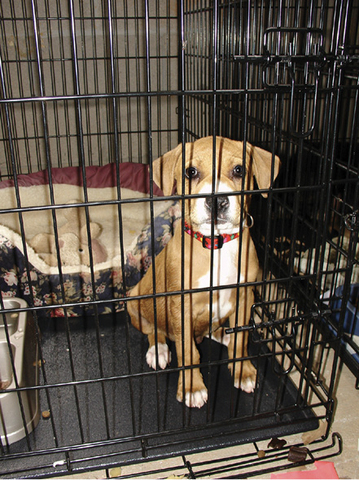
Regardless of the nature of the disaster, it is important to have a disaster kit with basic supplies that are important for a pet’s safety and well-being. Include the following in a pet’s disaster kit:
- An appropriately sized carrier or cage with your current contact information. This can be used to safely transport your pet, and it also can serve as a temporary means of housing.
- Copies of important papers (emergency telephone numbers, rabies vaccination certificate, vaccination record, microchip information, drug/vaccine/food allergies, list of current medications with doses, etc.).
- A current photo of the pet.
- Enough of the pet’s food in sturdy containers to last for a minimum of 3 days. Canned food is preferred for its storability and moisture content if your pet is not on a special diet, so be sure to include a can opener and utensils in your kit.
- Clean water to last for a minimum of 3 days.
- Extra leashes/collars.
- A muzzle or gauze. A long piece of gauze can be wrapped around the animal’s snout and tied behind its ears to create a temporary muzzle.
- Bowls for food and water.
- Medications to last for a minimum of 3 days.
- Sanitation supplies (cat litter, plastic bags, etc.).
- A basic first aid kit.
- Pet comfort items (blankets, towels, toys, etc.).
All of these supplies should be kept in a waterproof container that is easy to transport and appropriately labeled with your current contact information.
Plan for Evacuation
Depending on the nature of the disaster, you may have only minutes to react. Other disasters may provide several days of warning. Disasters that offer you sufficient time to evacuate require similar planning and supplies as those that happen much more quickly. In either case, you must be prepared to evacuate to a safer location with your pets and all the necessary supplies, or shelter in place.
Evacuating without your pet is never recommended unless your life is in immediate danger, as an area unsafe for you is also unsafe for your pet. When faced with any sort of disaster, planning and preparation could save valuable time and could even save lives.
Certain events, such as hurricanes, blizzards, wildfires, and toxic spills, may offer substantial time to evacuate from dangerous areas. In these cases, evacuate the area with your pet. There are several options for you when evacuating from your home, and knowing about these facilities beforehand will save considerable time.
Some evacuation facilities may not allow pets (with the exception of service animals). If evacuation facilities do not have the ability to accommodate companion animals, pet owners are advised to contact boarding facilities, veterinary hospitals, pet-friendly hotels, or family members who reside outside of the affected area. Several websites list specific locations of pet-friendly hotels. Ideally, you should identify these temporary sheltering areas before a disaster is eminent. In any case, it is important for you to have your pet’s disaster kit, carrier, and other essential items readily accessible before it’s time to evacuate.
When there is little time to react to a disaster, as is the case with tornadoes, flash floods, earthquakes, or manmade hazards, the safest thing to do is to shelter in place. Attempting to outrun or escape from a rapidly approaching event can prove to be disastrous. Furthermore, large numbers of vehicles on the road driven by those attempting to flee can impede first responders attempting to respond.
You should find a central room with no windows on the lowest floor of your home. Separate dogs and cats, and put smaller animals in cages or carriers to keep them from injuring themselves or others while frightened. Also, remove chemicals, plants, and other substances that may be hazardous to your pet before bringing your pet into the safe room.
Make sure small spaces, such as air conditioning ductwork or spaces behind large appliances and furniture, are adequately sealed in order to prevent small pets from becoming trapped. Lastly, ensure that your pet’s disaster kit is readily accessible as evacuation may be likely if the surrounding area is deemed unsafe or if your home sustains structural damage.
In the past, companion animals were not widely considered a crucial part of disaster preparedness and recovery by local, state, and federal governments. With the recognition and advancement of the human-animal bond, legislators have taken note from their constituents with regards to the safety and well-being of pets during and after disasters. The Pet Evacuation and Transportation Standards (PETS) Act was written following Hurricane Katrina to ensure that local emergency planners address animal concerns during and after a disaster. The PETS Act includes pets such as dogs, cats, birds, rabbits, rodents, and turtles that are traditionally kept in the home. Reptiles (other than turtles), amphibians, fish, farm animals and horses, insects, spiders, and animals used for racing or commercial purposes are not covered by the PETS Act. Pet owners are encouraged to contact their local emergency management agency for information regarding animal disaster plans for their specific area before any potential disaster event.
Unfortunately, owners may become separated from their pets during disasters. It is imperative that pet owners not enter affected areas or attempt to return to their homes until they are given permission to do so by emergency management authorities. Entering a disaster area or returning to a damaged home is dangerous for pet owners, and it also can endanger first responders who may have to rescue the pet owners themselves.
If separated from your pet, contact animal control, your local animal shelters, area veterinary hospitals, and the pet’s microchip company. Social media platforms (Facebook, Instagram, and Twitter) have also been used in recent events to reunite owners with their pets. In large events, your local emergency management agency may establish a temporary pet shelter, so be sure to check with them, as well.
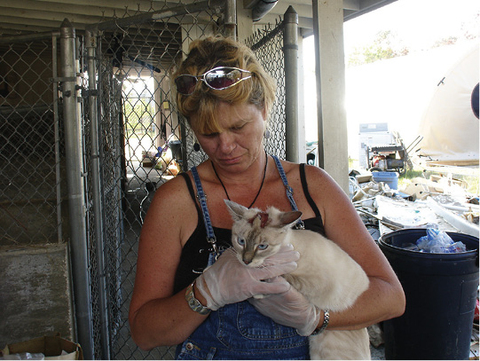
Once a displaced pet has been recovered, it is critical to seek veterinary care immediately as the animal may have been exposed to a variety of toxic substances, disease-carrying insects, and other communicable diseases that could be life-threating to the pet as well as people. Examples of these potential communicable diseases include rabies, leptospirosis, hepatitis (A and E), ringworm, intestinal parasites, bacteria associated with raw sewage, and toxic chemicals that may have contaminated the animal’s fur.
Summary
Taking the time to develop a plan for your pet before a disaster strikes will help minimize negative health outcomes and prevent displacement. Maintaining the human-animal bond during a disaster situation is a tremendous source of comfort and stability for both the owner and the pet. Both owners and animals will likely become overwhelmed by stress if a pet becomes displaced, injured, or lost. Developing a disaster plan and assembling a pet disaster kit may require time and money, but it will be worth it in the wake of a disaster.
For additional information about disaster preparedness for your family and your pets, consult with your local veterinarian, county Extension agent, emergency management agency representative, or local or national humane society. Information is available online, as well, from the Mississippi State University Extension Service, Mississippi Emergency Management Agency, Centers for Disease Control and Prevention (CDC), and Federal Emergency Management Agency (FEMA).
Additional Resources
Animal Management in Disasters. SE Heath. Mosby, Inc., St. Louis, MO 1999.
AVMA Emergency Preparedness and Response Guide. American Veterinary Medical Association.
Disaster Preparedness. Mississippi State University Extension.
Disaster Preparedness for Your Pet. Centers for Disease Control and Prevention.
Disaster Recovery. Mississippi State University Extension.
IS-10.a: Animals in Disasters: Awareness and Preparedness. Federal Emergency Management Agency, Independent study program.
IS-11.a: Animals in Disasters: Community Planning. Federal Emergency Management Agency, Independent study program.
Pet and Animal Emergency Planning. U.S. Department of Homeland Security.
Prepare for Emergencies: Pets. The American Red Cross.
Publication 2989 (POD-04-26)
By Carla L. Huston, DVM, PhD, DACVPM (Epidemiology), Extension Veterinarian, and Kyle C. Johnson, MS, MPH, Mississippi State University College of Veterinary Medicine student.
The Mississippi State University Extension Service is working to ensure all web content is accessible to all users. If you need assistance accessing any of our content, please email the webteam or call 662-325-2262.
Download
P2989
Disaster Preparedness for Pet Owners
998.5 KB
Authors
-
 Prof/Dir/Enh Cln Educ/Ext Vet
- CVM Pathobiology/Population Med Dep