P4210
Cottage Yarrow (Achillea millefolium) for the Farmer Florist
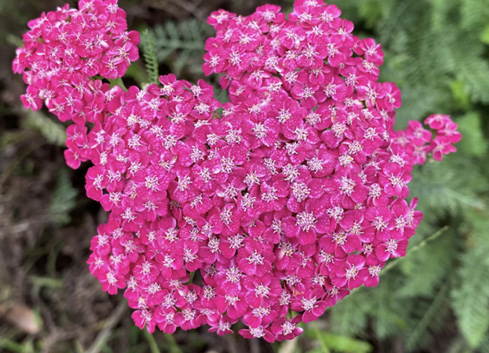
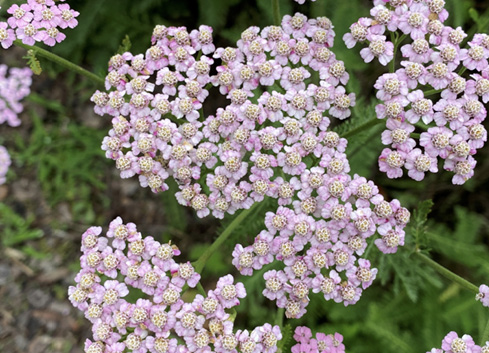
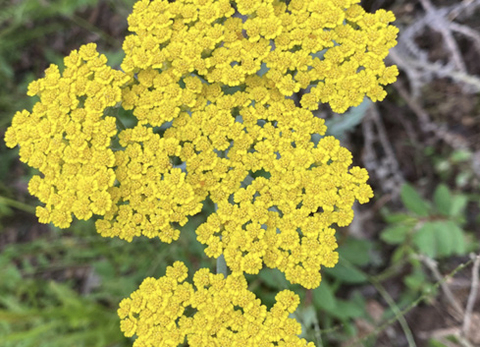
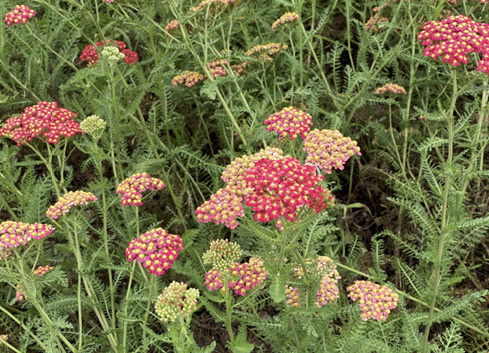
Cottage yarrow (Achillea millefolium) is a hardy herbaceous perennial valued by farmer florists for its broad range of flower colors, strong stems, drought tolerance, and versatility as both a fresh and dried cut flower. A member of the Asteraceae family, yarrow produces flat-topped flower clusters suitable for garden-style bouquets, market bunches, wedding work, and dried floral products. Colors include white, cream, yellow, peach, pink, rose, crimson, and terracotta. Another popular yarrow, Achillea filipendulina, is more upright, has a stronger structural habit, and spreads less aggressively than A. millefolium.
Yarrow has become increasingly important in local flower farming because it tolerates heat, lower fertility conditions, and variable moisture better than many traditional cut flowers. The crop is also attractive to pollinators and fits well within sustainable, low-input flower farming systems.
Description
Cottage yarrow forms fern-like foliage and upright flowering stems topped with broad corymbs of many small composite flowers. Plants typically grow 18–36 inches tall depending on cultivar and production conditions. Flowers may be harvested fresh or dried.
Common characteristics include:
- Strong stems
- Mid-spring peak flowering
- Rhizomatous perennial habit
- Aromatic foliage
- Pollinator friendly
- Suitability for fresh and dried design work
Production
Climate and Site Selection
Yarrow performs best in full sun and well-drained soils. It is adapted to a wide range of climates and is tolerant of drought once established. Overfertilization and wet soils can lead to weak stems and crown decline.
Recommended conditions include:
- Full sun
- Well-drained sandy or loamy soils
- Moderate fertility
- Good air circulation
- Soil pH of approximately 6.0–7.0
In the Southeast, raised beds and drip irrigation are beneficial because prolonged wet conditions can increase the risk of crown and root diseases.
Propagation
Yarrow may be propagated from seed, division, or cuttings.
Seed Production
Seeds are commonly started indoors 6–8 weeks before the last frost date. Light aids germination, so seeds should be lightly pressed into the media rather than deeply covered. Yarrow germinates best in media held at a temperature range of 65°F–72°F with even moisture and high light conditions. Germination occurs in approximately 10–14 days. The transplants may be planted outdoors after frost danger passes.
Vegetative Division
Established crowns may be divided every 2–3 years to maintain vigor and improve flowering.
Spacing
Space yarrow 9–18 inches between plants and 18–36 inches between rows. But if there is turf between the rows, consider the amount of space needed for mowers. Tighter spacing may increase stem length but can also reduce airflow, increasing the chance for disease.
Insects and Disease
Aphids, mealybugs, thrips, and spittlebugs are the main pests of yarrow. Infestations can result in lower stem quality and distorted growth. Diseases are more prevalent in conditions of excessive moisture. They include powdery mildew, root rots, stem rots, and fungal leaf spots.
Irrigation
Although drought-tolerant, consistent irrigation improves stem quality and flowering. Drip irrigation is preferred over overhead irrigation to reduce foliar diseases. Avoid excessive moisture, particularly during winter dormancy.
Fertility
Yarrow generally requires modest fertility levels. Excess nitrogen may produce weak stems and lodging, the permanent bending, breaking, or flattening of stems. There may also be reduced flower quality and excessive vegetative growth. Moderate, balanced fertility programs are usually sufficient.
Harvest and Postharvest Handling
Harvest yarrow when its flower clusters are mostly open but before pollen shed becomes excessive. Stems harvested too immaturely may wilt prematurely, while overmature flowers may shatter. Harvest during the cooler morning hours. Remove the lower foliage and hydrate the cut stems immediately by placing them into clean water with floral preservative solution. Many growers pack yarrow in 10-stem bunches. But if the flowers are small, 25 stems may be better for sales to retail florists.
Vase Life
Allan Armitage and Judy Laushman indicate vase life generally ranges from 3–4 days depending on cultivar, harvest maturity, and storage conditions. Factors that improve yarrow vase life include rapid hydration, proper sanitation, clean buckets, cool storage, and properly mixed commercial floral preservatives.
Storage
Store cut yarrow at 34°F–38°F under high humidity. Keep the stems upright within the buckets to reduce stem curvature. Achillea can be kept in refrigeration for up to one week.
Dried Flower Use
Yarrow is widely used as a dried flower. Harvest the stems when the flowers are fully colored but before browning begins. Strip the lower leaves from the stems and gather stems into small bunches secured with rubber bands. As the stems dry and lose moisture, they shrink in diameter; rubber bands tighten accordingly and help maintain secure bundles throughout the drying process. Hang the bundles upside down in a dark, ventilated area. Dried stems are suitable for wreaths, bouquets, and arrangements.
Design Applications
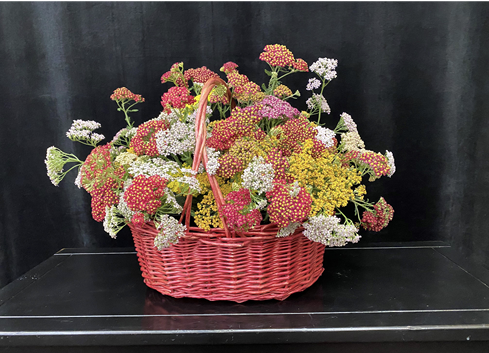
The garden look of yarrow makes it a good candidate for basket arrangements. This design uses a brick of fresh-flower foam in a plastic container inside the wicker basket. This design is well-suited for informal events such as daytime, outdoor weddings, and home-based graduation parties. Consider painting a plain basket one of the yarrow colors to unify the overall design.
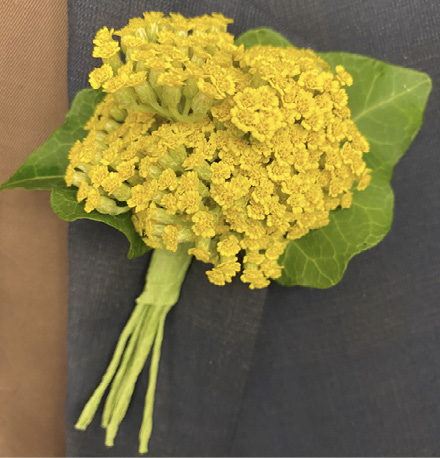
Boutonnieres do not have to be roses, especially when yarrow is in bloom. It is well-suited for less formal occasions when a pop of color is needed on a suit jacket.
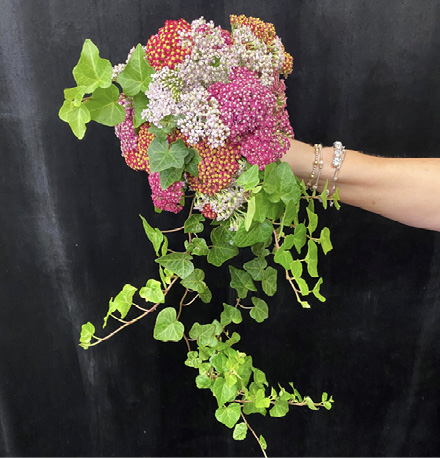
We made a round, hand-tied nosegay of cottage yarrow appear more formal by adding ivy (Hedera helix) cascades. It is appropriate for weddings, but farmer florists should consider such bouquets for other occasions when flowers are presented. Yarrow is often in full bloom when graduations, Mother’s Day, and dance recitals occur. Use this filler flower on its own in its many colors and accent it with ornamental foliage or a ribbon bow for presentational bouquets.
References
Armitage, A., & Laushman, J. (2003). Specialty cut flowers: The production of annuals, perennials, bulbs, and woody plants for fresh and dried cut flowers. Timber Press.
Missouri Botanical Garden. (n.d.). Achillea millefolium. Plant Finder.
North Carolina Extension. (2024). Achillea millefolium. Plant Toolbox.
UMass Extension. (2025). Achillea millefolium. Weed Herbarium.
Publication 4210 (POD-07-26)
By James M. DelPrince, PhD, Associate Professor and Horticulture Specialist; Patricia Knight, PhD, Research Professor; Scott Langlois, Senior Research Associate; and Jenny Ryals, Research Associate, Coastal Research and Extension Center.
The Mississippi State University Extension Service is working to ensure all web content is accessible to all users. If you need assistance accessing any of our content, please email the webteam or call 662-325-2262.
Download
P4210
Cottage Yarrow (Achillea millefolium) for the Farmer Florist
609.09 KB
Departments
Authors
-
 Associate Extension Professor
- CREC-Coastal Research & Ext Center