News Type
Savannah holly performs strong in Southern sites
Published
Updated

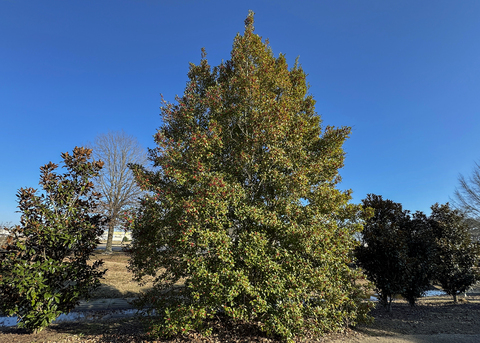
Savannah hollies conclude their peak berry season in March, with bright red berries often remaining on the branches through the end of the month. (Photo by MSU Extension/Eddie Smith)
While it’s easy at this time of year to focus on blooms and the coming spring, there are plants that are solid performers in the garden year-round that should not be ignored.
The Savannah holly is one such plant. In March, these landscape warriors are concluding their peak berry season, with bright red berries often remaining on the branches through the end of the month.
Savannah holly is a crucial winter food source for birds, and they continue to flock to these trees into early spring before some of the other food sources are available.
Savannah holly has long been a favorite in Southern landscapes and for good reason. I recently marveled at these beautiful plants growing at the Magnolia Botanical Gardens at the North Mississippi Research and Extension Center in Verona.
While they are a winter landscape staple, now is the time to plant them, if your landscape lacks these beauties, or prune existing ones, if needed. Heavy pruning is best done in late winter to February or March just before new growth begins.
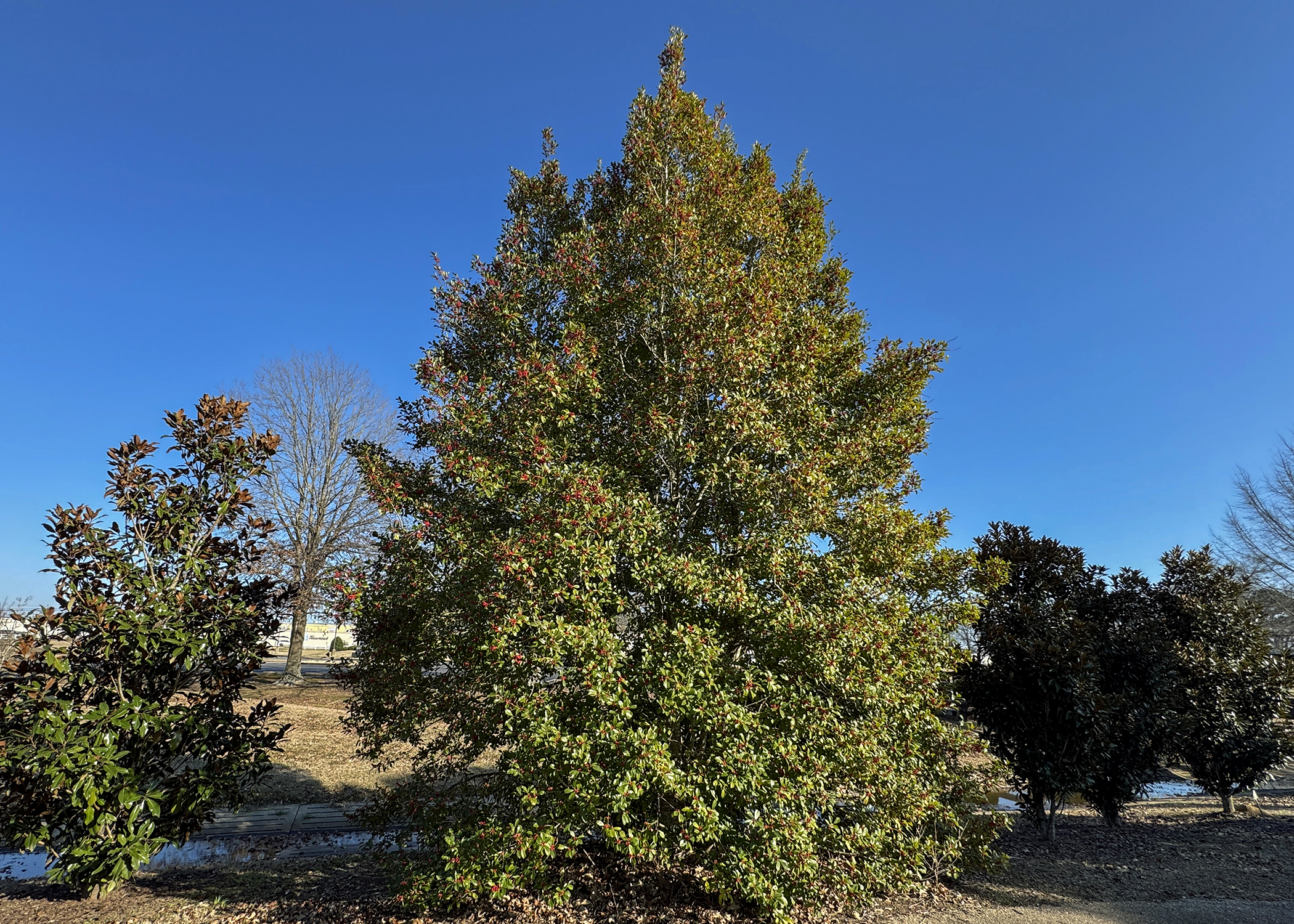
Savannah holly naturally develops a strong, pyramidal shape with little pruning, making it an excellent choice for specimen trees or screens. Light pruning is typically limited to removing dead, damaged or crossing branches, and this can be done anytime it is needed.
From a care standpoint, Savannah holly is well-suited to Southern gardens when planted correctly.
It performs best in full sun to partial shade and prefers well-drained, slightly acidic soil. Good drainage is critical, as standing water leads to root problems and poor overall performance.
When planting, be sure to dig a wide hole, set the tree at the same depth it was growing in the container. Backfill with native soil rather than heavily amended mixes. A layer of mulch helps conserve moisture, moderate soil temperatures and suppress weeds, but keep this pulled back from the trunk.
Once established, Savannah holly is relatively drought-tolerant.
Water young trees regularly their first year, especially during dry spells. In late winter or early spring, a light application of a slow-release fertilizer formulated for acid-loving plants is generally sufficient. Excessive fertilization can lead to lots of leafy growth at the expense of berries.
Like all hollies, only the female plants produce berries, and they require a nearby male plant for pollination. When conditions are right, the reward is a spectacular berry display, assuming the birds don’t get to them first.
Plants like Savannah holly provide dependable structure, brilliant winter color and valuable wildlife benefits into early spring. If you are ever in Verona, I encourage you to stop by the Magnolia Botanical Gardens to check out the beautiful plants growing there.
Images
Savannah holly provides dependable structure and winter color, making it a longtime favorite in Southern landscapes. (Photo by MSU Extension/Eddie Smith)
Contacts
-
 Extension Specialist I
- Extension Programmatic Support