News Type
MSU bunch grapes trials reveal solid performers
Published
Updated

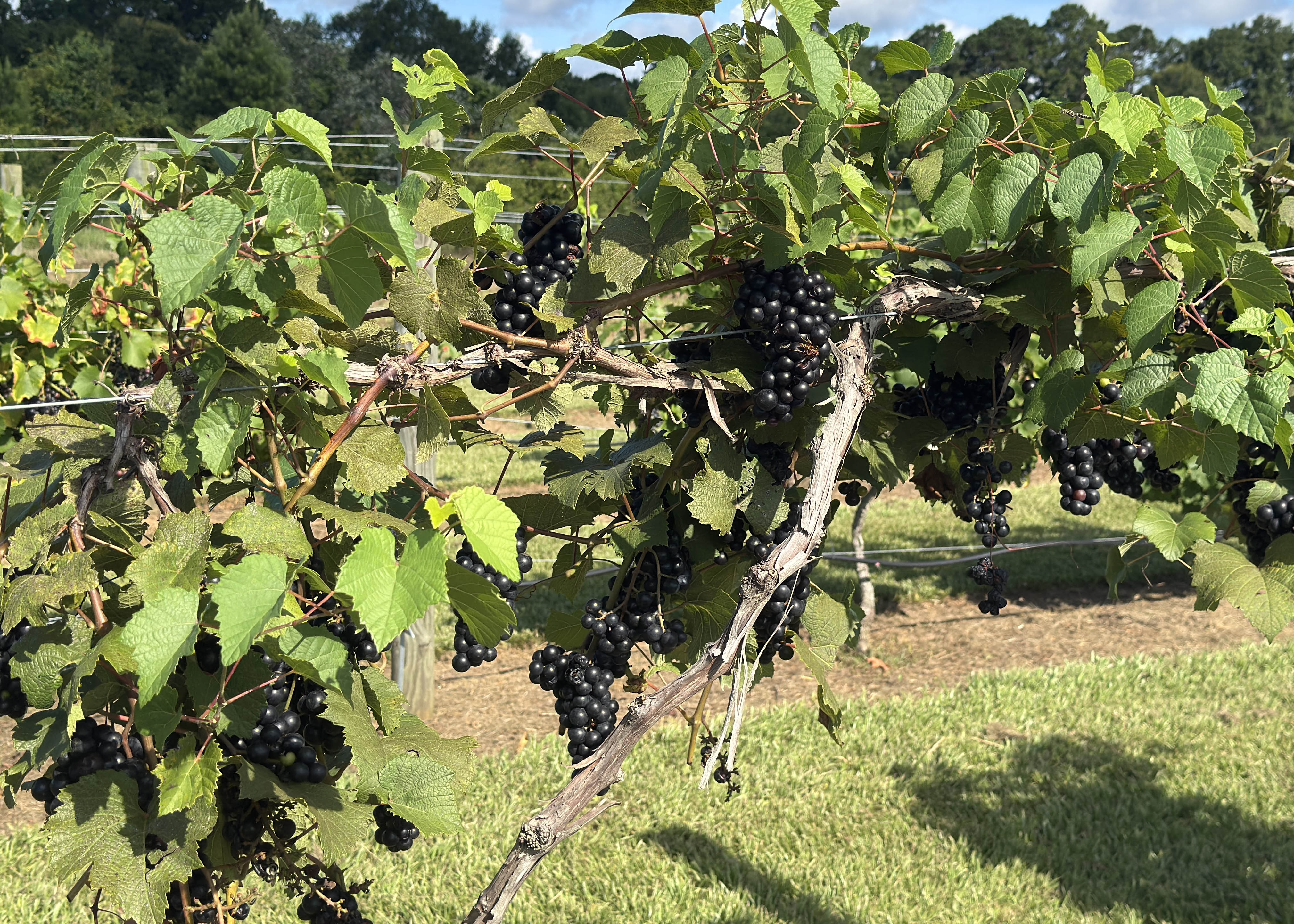
Black Spanish is a time-tested variety appreciated for its ability to produce dependable harvests despite heat and humidity. (Photo by MSU Extension/Eddie Smith)
There is nothing quite like picking fresh grapes straight from the vine. Sweet, juicy and bursting with flavor, they’re one of summer’s great rewards.
But if you’ve ever tried growing bunch grapes in the Deep South, you know they can test even the most experienced gardener.
Our hot, humid climate creates ideal conditions for many fungal diseases, making it difficult for traditional bunch grapes to thrive. That is why selecting varieties well adapted to Southern growing conditions is one of the most important steps toward success.
I recently attended the Summer Bunch Grapes Workshop at the Mississippi State University South Mississippi Branch Experiment Station in Poplarville. Researchers there are evaluating numerous bunch grape varieties to determine which ones perform best under our unique growing conditions.
It was encouraging to see firsthand how well several selections handle the challenges of our climate. The three varieties I’ll mention all produce attractive clusters of medium to large berries.
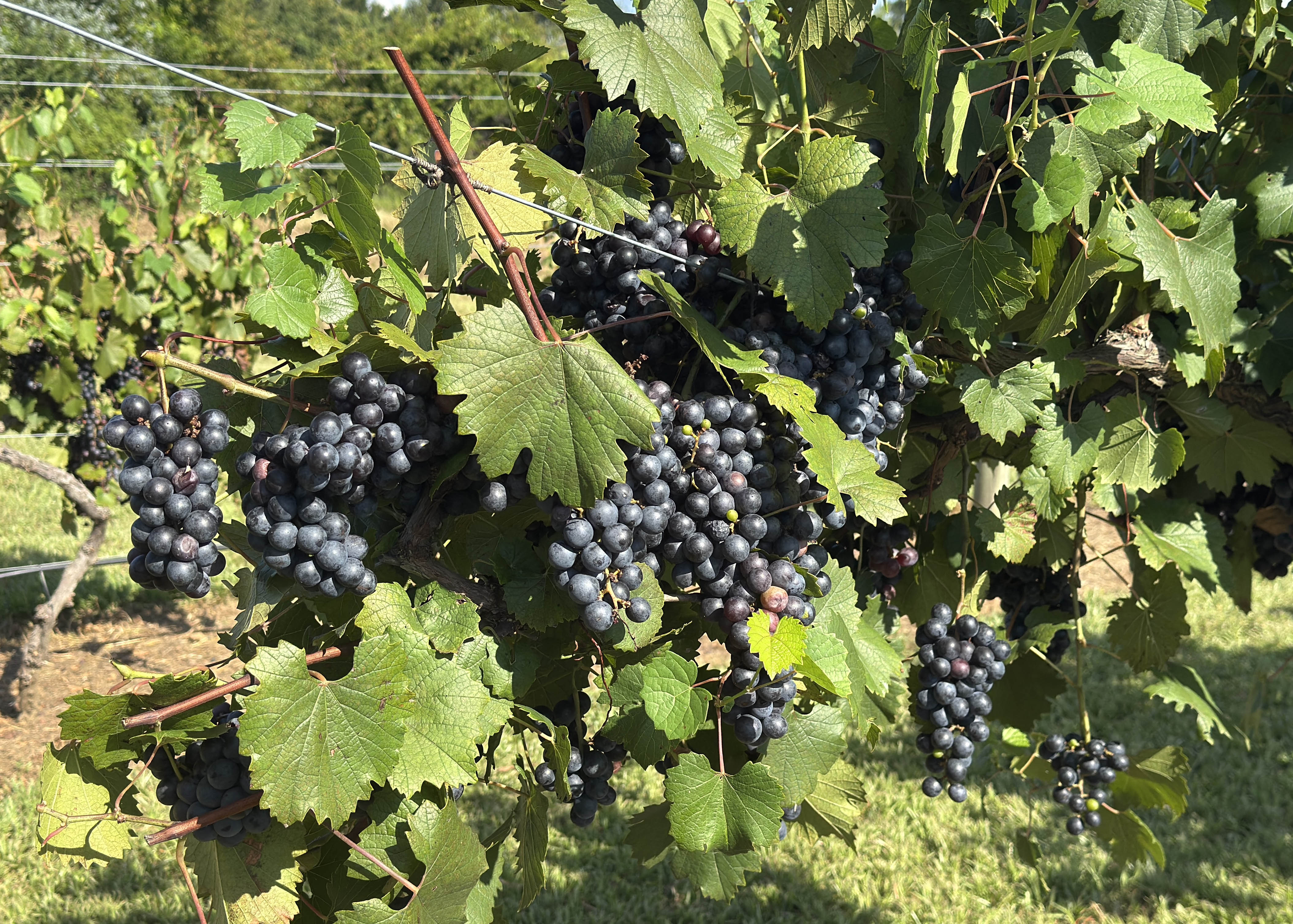
One variety that caught my attention was MidSouth. The vines were vigorous, healthy and loaded with clusters of dark, flavorful grapes.
MSU developed this hybrid specifically for the southeastern United States and released it in 1981. Berries ripen to a deep blue-purple that is almost black, and they are covered with a heavy natural waxy coating, called a bloom, that gives clusters a frosted appearance.
When fully ripe, MidSouth grapes have a rich, balanced flavor with pleasant sweetness, bright acidity and subtle raspberry-like notes that make them enjoyable for fresh eating. MidSouth offers plenty of promise for home gardeners looking to enjoy fresh grapes.
Another standout was Black Spanish, a time-tested variety that is appreciated throughout the South.
Black Spanish grapes offer a refined taste with rich fruity notes of blackberry, black cherry, plum and subtle spice. Although their excellent balance of sweetness and acidity makes them enjoyable for fresh eating, they are best known as one of the South’s premier wine grapes.
Black Spanish has earned its reputation by producing dependable harvests even in years when weather conditions are less than ideal.
I was equally impressed with Lomanto, an old Southern favorite that continues to prove its value.
Lomanto grapes develop a sweet, well-balanced flavor with mild acidity and rich fruity notes reminiscent of blackberry, ripe plum and dark cherry. The fruit develops good sugar levels while retaining enough natural acidity to create a refreshing, well-rounded flavor profile.
Lomanto is one of the most promising bunch grapes for producing quality red wines.
Choosing the right variety is only part of the equation.
Bunch grapes perform best when planted in full sun, receiving at least six to eight hours of direct sunlight each day. Good air circulation is equally important to help reduce humidity around the foliage and minimize disease pressure.
Well-drained soil is essential because grape roots do not tolerate standing water.
Proper pruning is another key to successful grape production.
Grapes produce fruit on new shoots that develop from one-year-old wood. Pruning the vines annually while dormant encourages vigorous growth and helps maintain high fruit quality.
Training vines onto a sturdy trellis also improves sunlight exposure, simplifies maintenance and makes harvesting much easier.
Although bunch grapes require a little more attention than muscadines, research at the MSU South Mississippi Branch Experiment Station demonstrates that growing these delicious grapes is becoming increasingly possible in the South.
Images
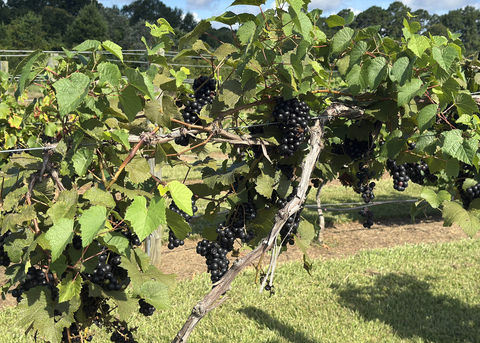
Successfully growing bunch grapes such as these Lomantos in the South begins with selecting the right variety then providing conditions for the vines to thrive. (Photo by MSU Extension/Eddie Smith)
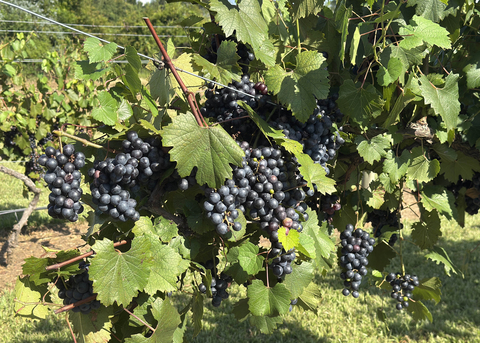
Mississippi State University developed the hybrid MidSouth bunch grape specifically for the southeastern United States and released it in 1981. (Photo by MSU Extension/Eddie Smith)
Contacts
-
 Extension Specialist I
- Extension Programmatic Support