News Type
Ground covers are key tools to finish gardens
Published
Updated

Asian jasmine is a workhorse in Southern gardens, spreading along the soil and forming a dense carpet of foliage. (Photo by MSU Extension/Eddie Smith)
A good landscape is an artful combination of colors, textures and emphasis areas, but there are times when a transition is needed or you want less attention drawn to an area.
Ground covers are useful in places like this, and they are especially handy in shady areas of the landscape where other plants may not thrive as well. Twin Oaks Cottage in Laurel provides good examples of the excellent use of two different ground-covering plants.
Ground covers can cover bare soil, reduce the amount of exposed ground and create a beautiful transition between larger plants such as shrubs and trees. They also can soften the edges of planting beds and help tie different parts of the landscape together.
Let’s first consider Asiatic jasmine or Asian jasmine, which goes by the scientific name Trachelospermum asiaticum.
This ground cover is one of the dependable workhorses in Southern gardens. It is an evergreen, vining ground cover that spreads along the soil and eventually forms a dense carpet of foliage.
Its small, glossy, dark green leaves create a consistent backdrop that allows larger plants and other garden features to stand out. Asian jasmine can be used beneath trees and around larger shrubs where it fills spaces that might otherwise look bare.
Asian jasmine is adaptable to a variety of growing conditions. It grows well in full sun to partial shade and can tolerate considerable shade, although it tends to grow denser and more vigorous when it receives some filtered sunlight.
Prepare the soil well and provide good drainage when planting Asian jasmine. Space plants according to how quickly you want the area to fill in, remembering that this is a vigorous ground cover that will eventually spread.
Once established, it is fairly drought tolerant. Plants will benefit from supplemental irrigation during prolonged periods of hot, dry weather.
Asian jasmine generally requires little fertilization. A light application of a balanced, slow-release fertilizer in spring can encourage healthy growth if the plants need a nutritional boost. Avoid excessive fertilization, which can lead to more growth than you may want.
Remember that Asian jasmine can be vigorous. Give it plenty of room to spread and keep an eye on its growth so it doesn’t wander into areas where you don’t want it. You can occasionally trim the plants to keep them within their boundaries and encourage a dense, uniform appearance.
Now let’s look at ajuga, a low-growing, perennial ground cover that is sometimes called bugleweed.
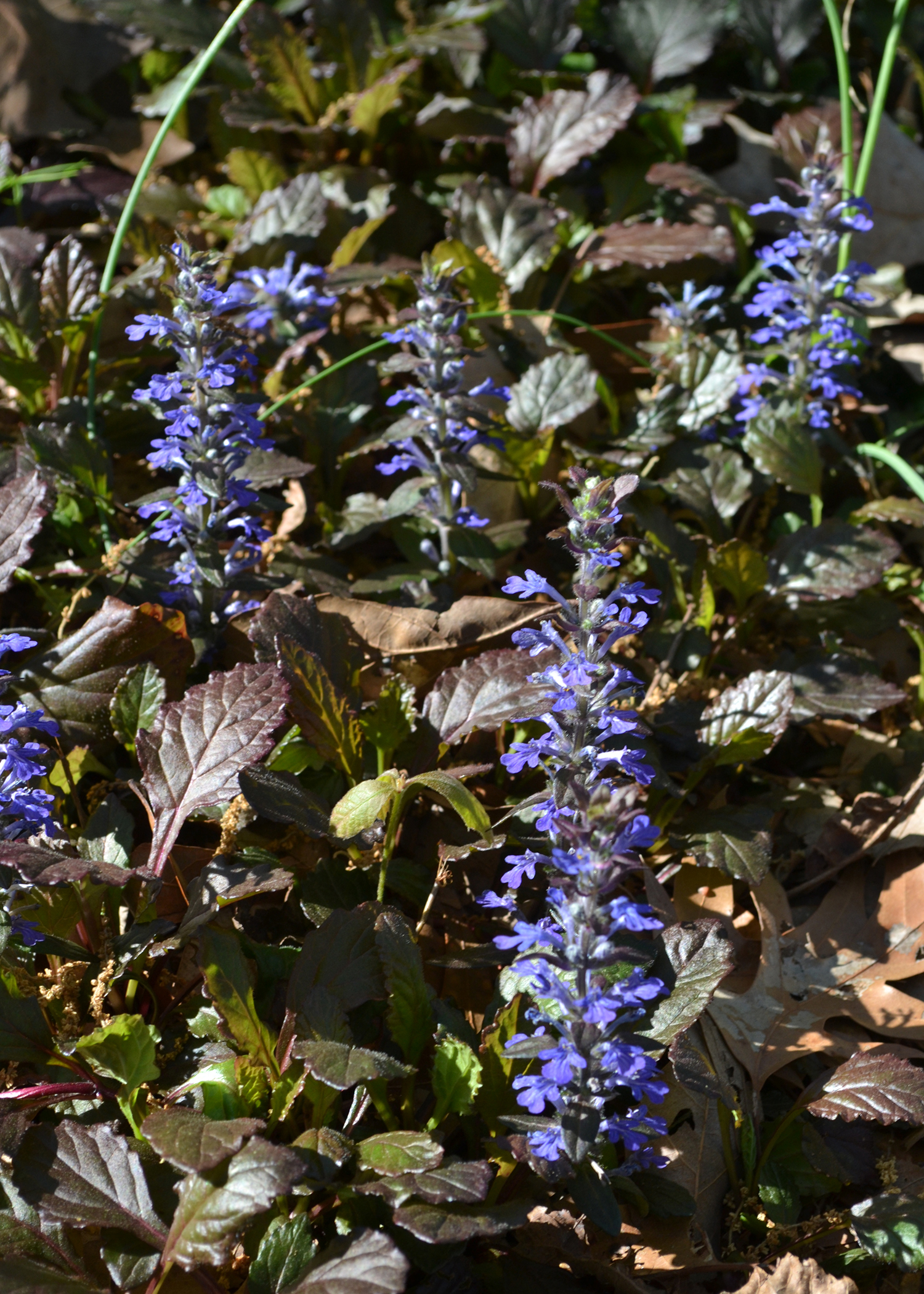
Unlike Asian jasmine which is primarily grown for its evergreen foliage, ajuga adds another dimension to the landscape with its spring flowers.
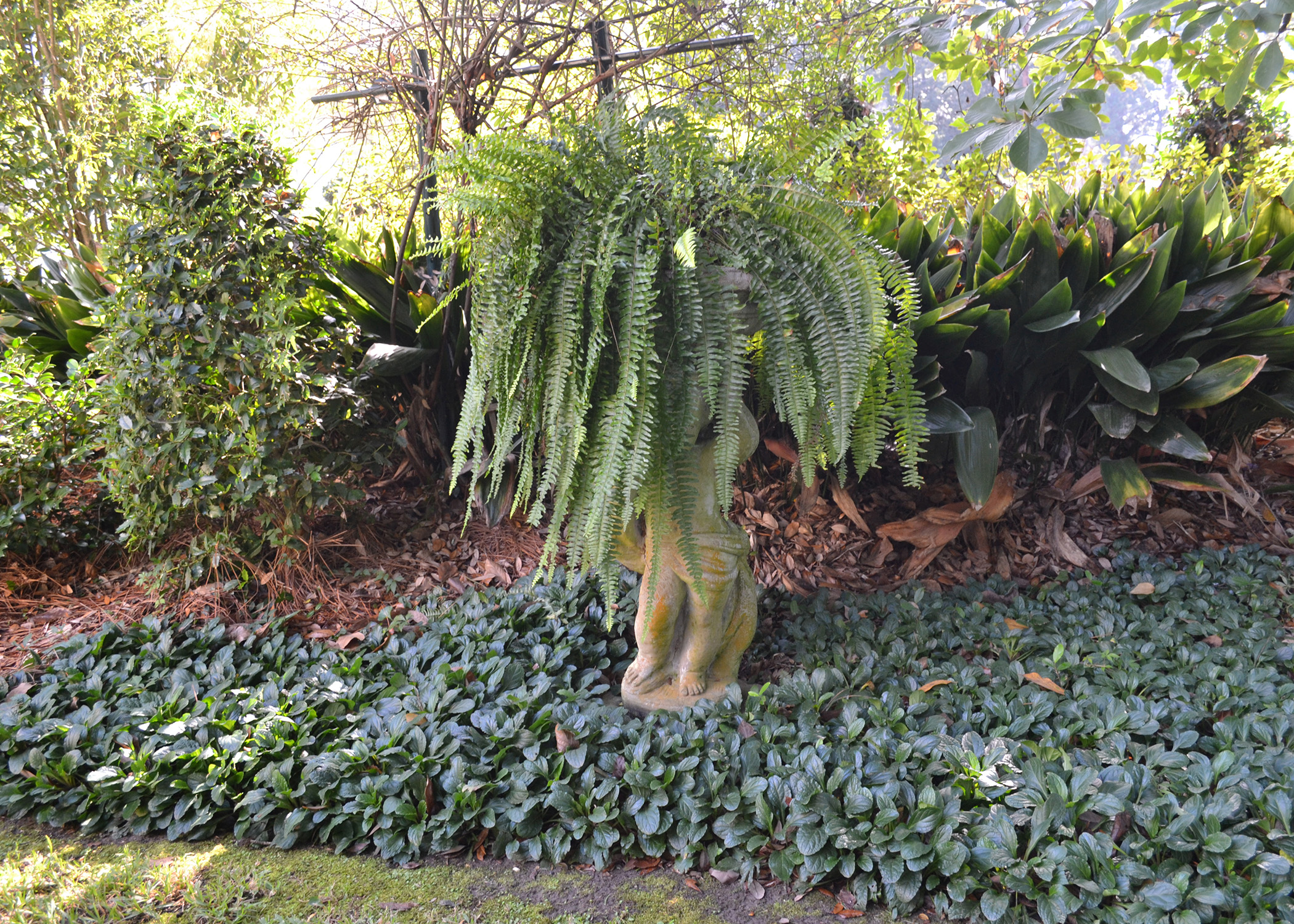
Ajuga produces short spikes of small flowers that rise above the foliage, creating little pops of color close to the ground. The broad, dark green leaves form a lush, low-growing carpet that gives the garden a polished appearance.
Some ajuga varieties offer foliage in shades of burgundy, bronze, purple or combinations of green and cream. These selections give color and texture, even when the plants are not blooming.
Ajuga performs especially well in partial shade and is useful beneath trees, along the edges of garden beds and in locations where taller plants may struggle to fill the space. It can tolerate some morning sun, but intense afternoon sun scorches the foliage, particularly during our hot summers.
For best results, plant ajuga in soil that is rich in organic matter and drains well but retains some moisture. Consistent moisture is important while plants are becoming established, but ajuga is fairly adaptable after that. It generally looks its best when it avoids prolonged drought.
Ajuga spreads by underground stems called stolons, which allow it to gradually form a dense carpet. This makes it excellent for filling spaces, but it also means gardeners must monitor its growth. If it begins spreading beyond its intended area, simply remove the unwanted sections.
You can lift and divide ajuga, which makes it a good plant to share with friends or to use to fill in a different area of your landscape.
When planning your landscape, don’t overlook the plants that grow at your feet. The right ground cover can fill empty spaces, soften the landscape, help conserve soil moisture and provide the foundation that makes everything else in the garden look even better.
Images
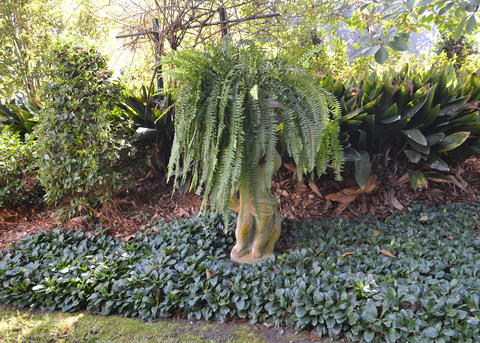
The dark leaves of ajuga form a lush carpet that gives gardens a polished look. Some varieties offer foliage in burgundy, bronze, purple or green and cream. (Photo by MSU Extension/Eddie Smith)
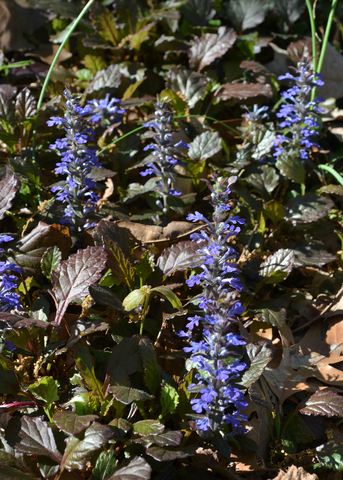
Ajuga adds another dimension to the landscape with its short spikes of small flowers that rise above the foliage in the spring. (Photo by MSU Extension/Eddie Smith)
Contacts
-
 Extension Specialist I
- Extension Programmatic Support