News Type
Yards, landscapes can survive summer drought
Published
Updated

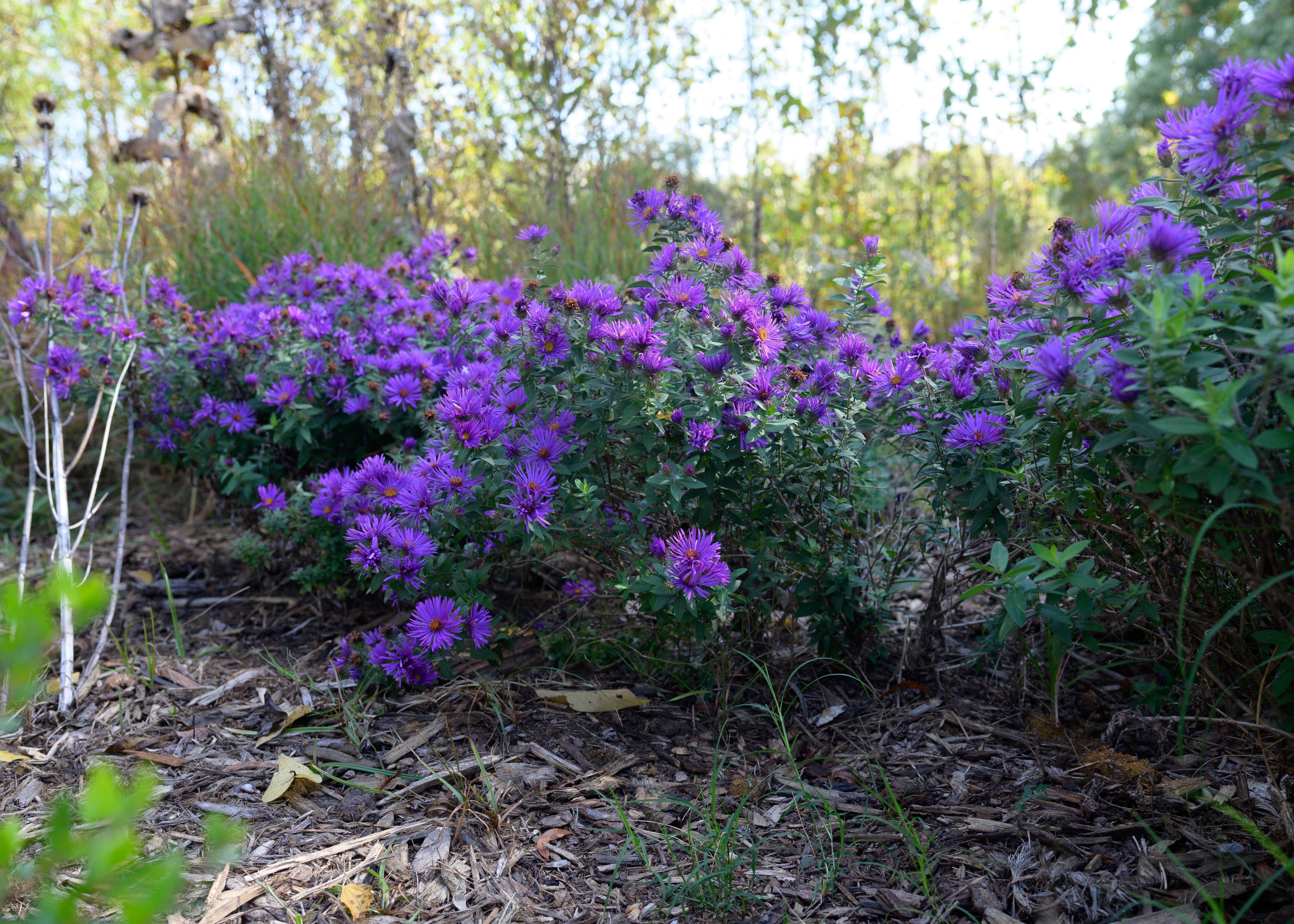
Selecting plants that prefer well-drained soil and can handle heat is key in designing a landscape that can thrive through hot and dry spells. These flowers were blooming Nov. 2, 2026, in the pollinator garden near the Mississippi State University Department of Landscape Architecture and Environmental Design building. (Photo by MSU Extension Service/Kevin Hudson)
STARKVILLE, Miss. -- Although native lawns and designed landscapes in Mississippi are made to handle the heat and extended periods of dry weather, landscapes are showing the stress from this summer’s high temperatures and drought.
Signs of a dry summer show up in plants and grass losing their dark-green color, fading and early-falling leaves and wilted shrubs. Short dry spells that last weeks but less than a few months rarely cause significant plant damage, despite the indications of stress.
Jeff Wilson, horticulture specialist with the Mississippi State University Extension Service, said Mississippi has been experiencing a significant drought, and heat stress adds to the conditions.
“We are in our third consecutive year of heavy drought, so the impacts are compounding,” said Wilson, who works from the North Mississippi Research and Extension Cetner in Verona. “Many plants were already stressed when the drought began this year.”
Many plants can bounce back from a short drought, but others more easily pass a point beyond which they cannot recover.
“Trees and shrubs are resilient, and if we receive abundant winter rains, many times they recover by the next spring,” Wilson said. “Deciduous plants recover more easily, but once an evergreen tree or shrub turns brown, it rarely returns to be a healthy plant.”
Infrequent and deep waterings are the key to preparing a landscape to better handle drought stress, Wilson said.
“It is better to water heavily twice a week than lightly water five times a week,” he said. “Even watering once a week can keep a plant alive.”
In extended periods of drought, Wilson encourages people to set up a sprinkler under the drip line of large trees and heavily water at least once a week during drought periods.
“Large trees are the most costly to replace,” he explained.
Eddie Smith, a gardening specialist and host of MSU Extension’s Southern Gardening, said plants growing near large trees or shrubs must also compete for water with tree roots in a drought.
“Mahonia is an example of a plant that generally performs well in partial to full shade and prefers well-drained soil,” he said. “Once established, many tolerate periods of dry weather, making them useful beneath trees where competition for moistur106e can be a challenge.”
Many landscape plants prefer well-drained soil and can handle heat.
“Designing your landscape around these selections can give gardeners a better chance of success through hot and dry spells,” Smith said.
Dan Jost, an assistant professor in the MSU Department of Landscape Architecture and Environmental Design, is responsible for Smart Landscape efforts in the state. A Mississippi Smart Landscape is good-looking and low maintenance while being an environment that encourages wildlife, uses water wisely and lowers energy costs.
Jost gave some tips on how to design for a future drought and how to manage water in the landscape in ways that limit the amount of water wasted.
“It is usually desirable to choose plants that limit potable water consumption,” Jost said. “This generally comes down to planting native and adapted plants that are appropriate for the amount of sun or shade and soil moisture available, and the expected temperatures and level of dryness found in a given place.”
Other design approaches to making a garden more resistant to drought include mulching beds to reduce water loss and adding compost or other organic matter to help increase a soil’s water-holding capacity.
“Our pollinator garden near the landscape architecture facility on campus was planted last fall, is not irrigated and has had almost no supplemental water since spring,” Jost said. “The garden has made it through dry periods quite well because we mostly chose the right plants for the right place.”
A final consideration in times of drought is being careful when applying water to limit waste. Evaporation rates are lower before 10 a.m. and after 6 p.m., which gives plant roots more time to soak up water.
“Using soaker hoses rather than sprinklers is another way to minimize water lost to evaporation,” Jost said.
Learn more about Mississippi Smart Landscapes at https://extension.msstate.edu/lawn-and-garden/landscape-architecture/sm….
Images
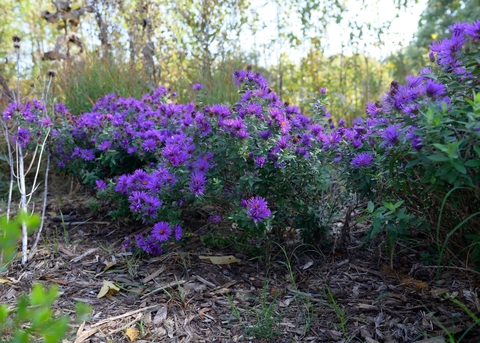
Plants that are given infrequent but deep waterings generally handle drought stress well. These flowers were blooming Nov. 2, 2026, in the pollinator garden near the Mississippi State University Department of Landscape Architecture and Environmental Design building. (Photo by MSU Extension Service/Kevin Hudson)
Contacts
-
 Assistant Professor
- Landscape Architecture
-
 Extension Specialist I
- Extension Programmatic Support
-
 Associate Professor
- North MS Research and Extension Ctr