News Type
Search for needs brings unwanted ants indoors
Published
Updated

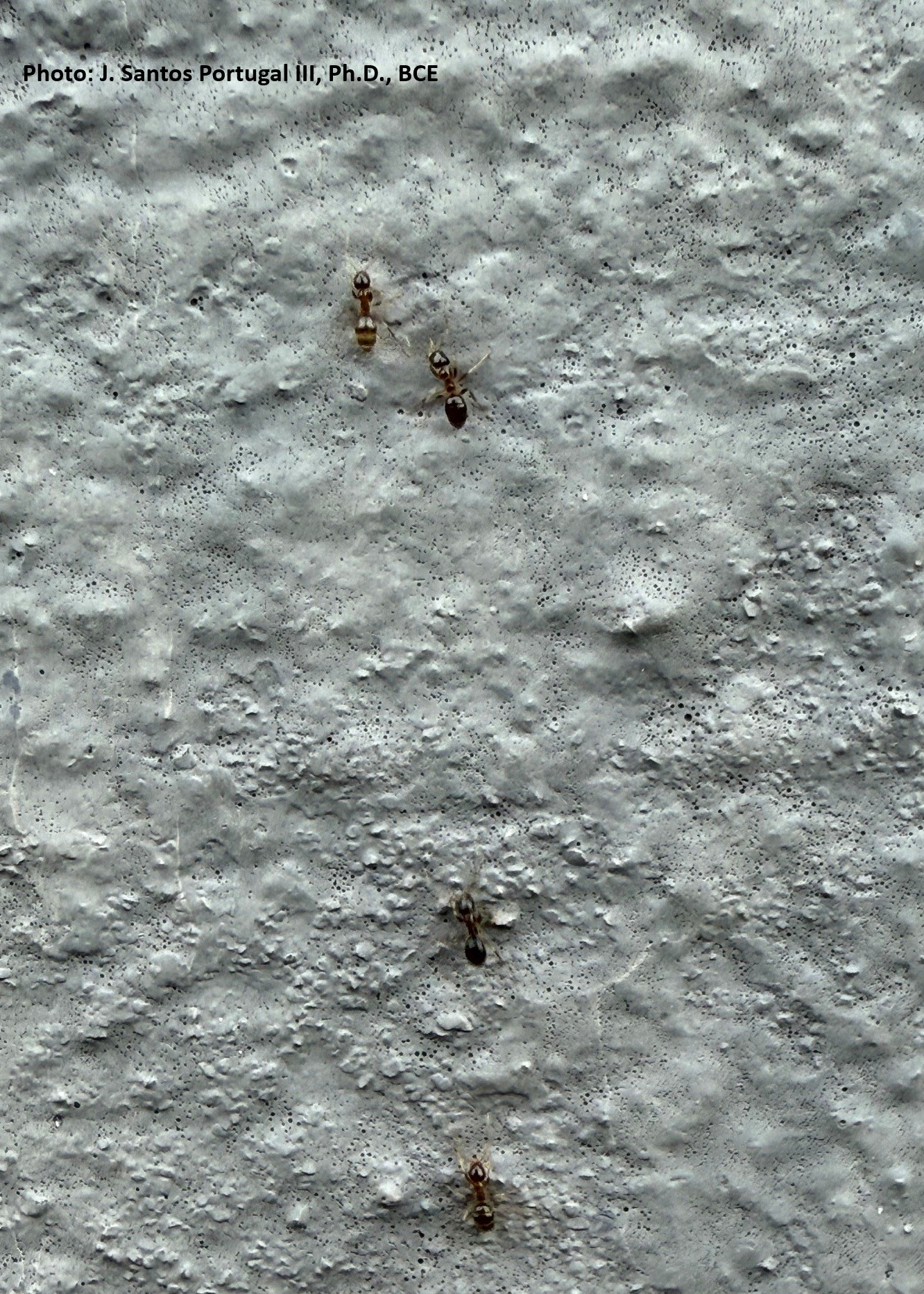
Ant activity starts to build up in the spring as the weather warms. Homeowners can take several steps to keep these pests outdoors. (Photo by MSU Extension Service/Santos Portugal)
STARKVILLE, Miss. -- Mississippi weather gives ants a lot of reasons to try to move indoors for food, water and shelter, and homeowners often have to fight long battles to keep them out.
Santos Portugal, an urban entomologist with the Mississippi State University Extension Service, said ants enter structures for a variety of reasons, but mostly because they are looking for -- or found -- those necessities.
“Ants come in for anything from moisture-damaged wood where carpenter ants or acrobat ants can create a nest, all the way to condensation on pipes for ants to drink water from,” Portugal said. “I have even seen dark rover ants trailing into bathrooms to try and feed on spilled toothpaste.
“Extreme weather outdoors like heavy rains and a long, dry heatwave can also drive ants indoors,” he said.
Ant activity starts to build up in the spring as the weather gets warmer.
“Their activity remains consistent throughout the summer as ants look for water,” he said. “You will often also see a resurgence of ant populations in early fall when it is still warm but not blistering hot outside.”
In Mississippi, multiple species of ants enter structures. Some of the medium-sized to larger species include fire ants, carpenter ants, Argentine ants, odorous house ants and acrobat ants. Smaller ants include dark rover ants and little black ants.
“Since quite a few species can come indoors, identification from size or general appearance alone can often be tricky for most people,” Portugal said.
While no one wants ants indoors, whether or not they are harmful depends on the type of ant.
“A lot of the smaller ones, primarily dark rover ants, are more of a nuisance than anything,” he said. “But sometimes fire ants will make their way indoors, and of course those pose a potential stinging threat.”
Steps taken to keep ants out of the house also help keep other pests outside, too.
“Outdoors, keep wood and debris piles away from the building, and rake back heavy mulch, pine needles or leaves from structures,” Portugal said. “Repair leaking pipes and spigots, repair or replace worn weather stripping under doors and reapply caulk around windows as needed.”
Seal up large gaps on the exterior wall such as gaps around air conditioner pipes entering the structure and identify and replace any obvious moisture-damaged wood on the building. Make sure gutters are not stopped up with leaves or other debris, and trim vegetation so it does not touch the exterior wall.
Cleanliness indoors helps keep out unwanted pests such as ants. Make sure that spills are promptly cleaned and all trash is taken out on a regular basis. Repair any leaky pipes and declutter, clean and vacuum regularly. Address any moisture concerns.
If ants still get indoors, Portugal said there are steps homeowners can take.
“Clean their trails,” he said. “When ants find something tasty, many species will lay down pheromones so that other ants from their colony can find their way there, resulting in a trail of ants. You can use soapy water or a vinegar and water solution to wipe down these trails and remove the pheromones.
“This can keep other ants from trailing in,” Portugal said. “If ants are getting into already opened food on the counter or in the pantry, putting this food in a sealed container can help as well.”
Liquid and gel ant baits are easy to use and readily available in home improvement stores and co-ops. Portugal said most are a sweet bait with a borax-based insecticide that are fairly effective against ants that come indoors.
“If you can, place the bait as close to the trailing ants as possible,” he said. “Remember that ants are attracted to baits, so if you do bait indoors, don’t be surprised if you actually see more ants initially coming to the bait. The numbers will go down as they take the bait back to the colony.
“Granular baits that are labeled for ants can be helpful in combating some species of ant when applied outdoors,” Portugal said. “These are typically used for larger ants like fire and carpenter ants. Targeted sprays of an appropriate, labeled insecticide can be used on the exterior of buildings in areas where ants may be entering the structure.”
Anyone using an insecticide should read, understand and adhere to the product label. If an infestation is difficult to control or severe, consider reaching out to a reputable pest management professional.
Find more information in MSU Extension Publication 2407, Control of Argentine Ants and Odorous House Ants in the Home, or Extension Publication 2443, Control Household Insect Pests.
Images
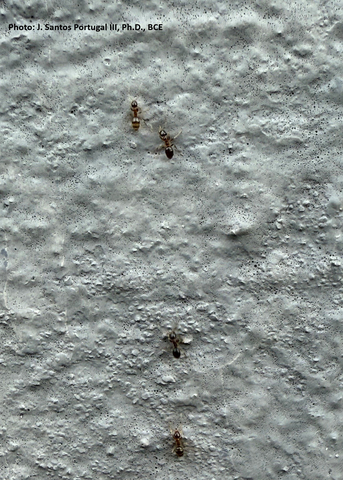
Ants enter structures for a variety of reasons, but mostly because they are looking for things like food, water or shelter. (Photo by MSU Extension Service/Santos Portugal)
Contacts
-
 Assistant Professor
- Agricultural Science & Plant Protec