News Type
Ground-nesting, native bees support agriculture
Published
Updated

Native bees such as this carpenter-mimic leafcutter bee pollinate as much as 80% of many important crops in the state. (Photo by MSU Extension Service/Jeff Harris)
STARKVILLE, Miss. -- While honeybees are important for crops and as a food source for humans, native bees pollinate as much as 80% of many important crops and should be protected as well.
Jeff Harris, bee specialist with the Mississippi State University Extension Service, said the U.S. has about 4,000 species of native bees. Many native bees live in the ground.
“Many of them are struggling to survive in human-inundated landscapes,” said Harris, who is also a Mississippi Agricultural and Forestry Experiment Station researcher. “They need a lot of help, and awareness that they even exist is the first step.”
Many native bees do not sting, and Harris said these native, ground-nesting bees are important pollinators for agriculture.
“For example, the Southeastern Blueberry Digger Bee is a very important pollinator of our commercial blueberries in southern Mississippi,” Harris said. “The blueberry growers are aware of this bee and try to protect nesting areas near their orchards by not mowing or tilling the ground where the bees nest.”
Many farmers encourage nesting in the orchards by offering open grasslands with patchy areas of sandy soil, which is ideal for this bee. Harris said doing this encourages more bees to visit the flowers of their bushes, resulting in higher yields and better fruit quality.
The U.S. Geological Survey, or USGS, which studies the nation’s lands and resources, tracks the efforts of these pollinators as they increase agricultural yields and boost genetic diversity in plants. About 75% of North American plant species require an insect – mostly bees -- to move pollen from one plant to another to effect pollination.
Many native bees are smaller than a grain of rice. Experts estimate hundreds of native bees have not yet been named or described.
“About 20% to 45% of native bees are pollen specialists, meaning that they use only pollen from one species or genus of plants. If that plant is removed, the bee goes away. If bees are removed, the plant doesn’t reproduce,” the website states.
Some native bees are specialists on plants used as food, including squashes, pumpkins, gourds and sunflowers. According to the USGS, native bees are the primary pollinator or significantly supplement the activity of honeybees in almost all crops. Even crops such as cotton and soybeans that don’t need a pollinator have a higher yield if they are visited by bees.
Harris said individuals can contribute to efforts to protect native bees through making and recording their observations of these insects.
“I am a regular user of iNaturalist and different websites that track insects and birds,” Harris said. “They are all fantastic ways for citizen scientists to contribute observational data that can be used by conservationists and others.”
One such organization is the Ground Nesting Bees Community Science Project, or Project GNBee, organized through the Cornell University College of Agriculture and Life Sciences. Launched in June 2023, Project GNBee leads in the research, conservation and applied management of wild bees by bringing together community scientists, researchers and institutions to establish a national monitoring program for ground-nesting bees.
“We work with community scientists to better understand where native bees nest across the landscape and which environmental and management conditions support their populations over time,” said Jordan Kueneman with Project GNBee.
The project invites land managers and the general public to report areas where they observe small holes in the ground with bees actively coming and going.
“By sharing simple observations -- ideally with photos -- participants can help document nesting sites, identify the bee species present on their properties and contribute to research that improves conservation and management guidance for farms and orchards,” he said.
Project GNBee is expanding their efforts to better include farmers, growers, orchardists and other managers working on agricultural lands.
“Many native bees nest directly in the soil, often along field edges, farm lanes, bare patches and lightly disturbed ground,” Kueneman said. “These nesting aggregations are critical for crop pollination, yet they are easily overlooked and rarely documented on working lands.”
To make observations, participants will need to create an iNaturalist account, join the project and tag the project in their observation. Learn more by visiting https://www.gnbee.org.
Images
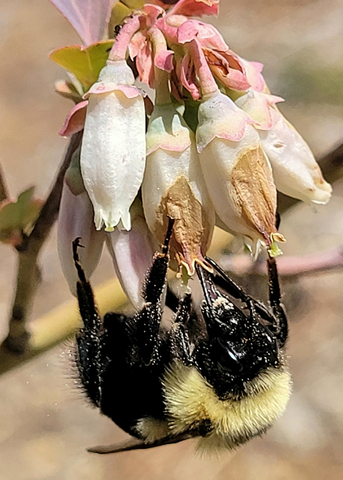
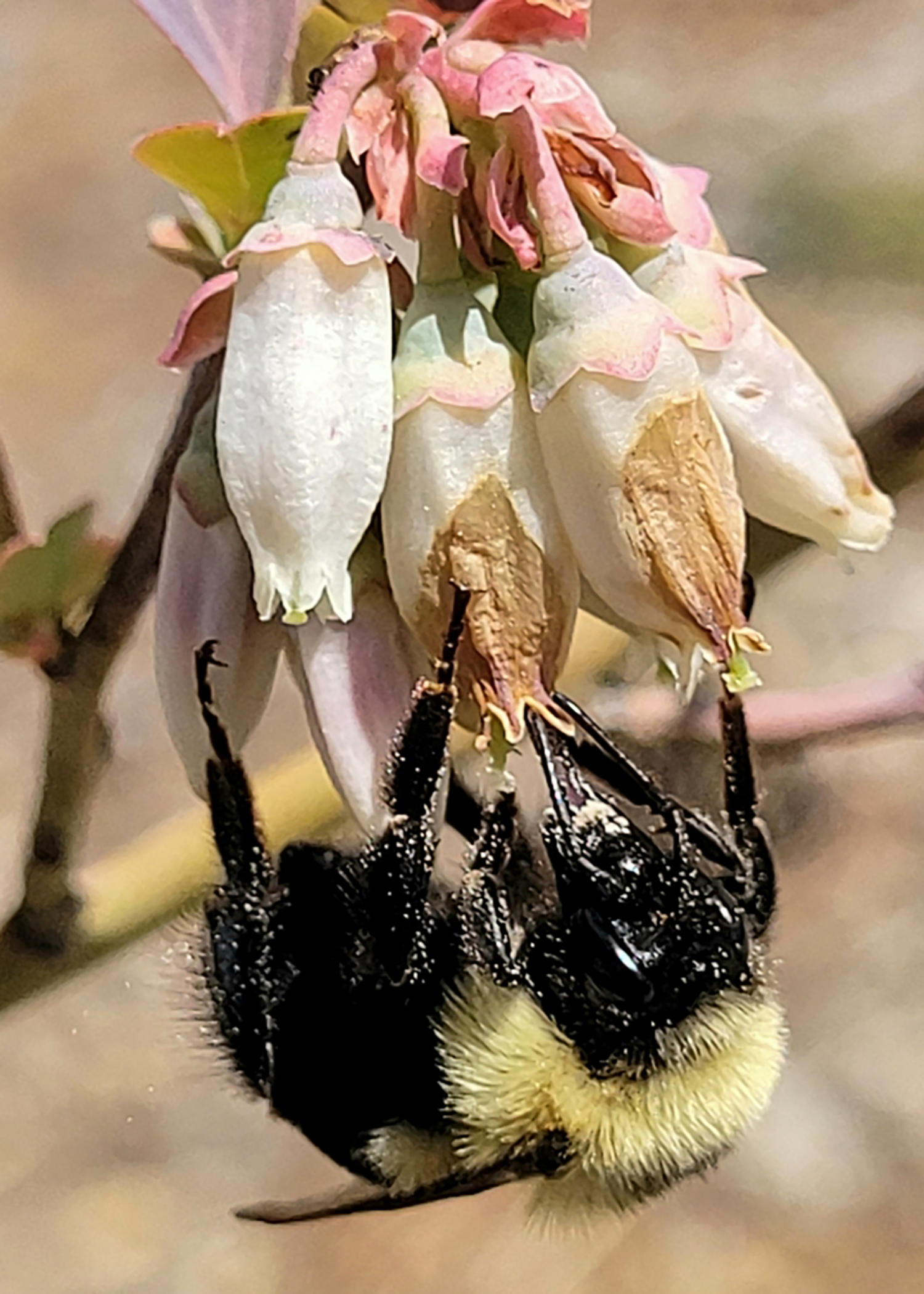
The U.S. has about 4,000 species of native bees, many of which are smaller than a grain of rice. This two-spotted bumble bee is one of the larger species of native bees. (Photo by MSU Extension Service/Jeff Harris)
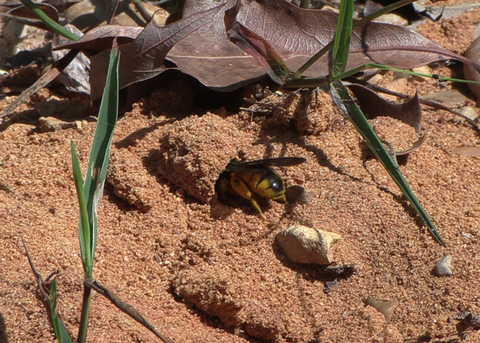
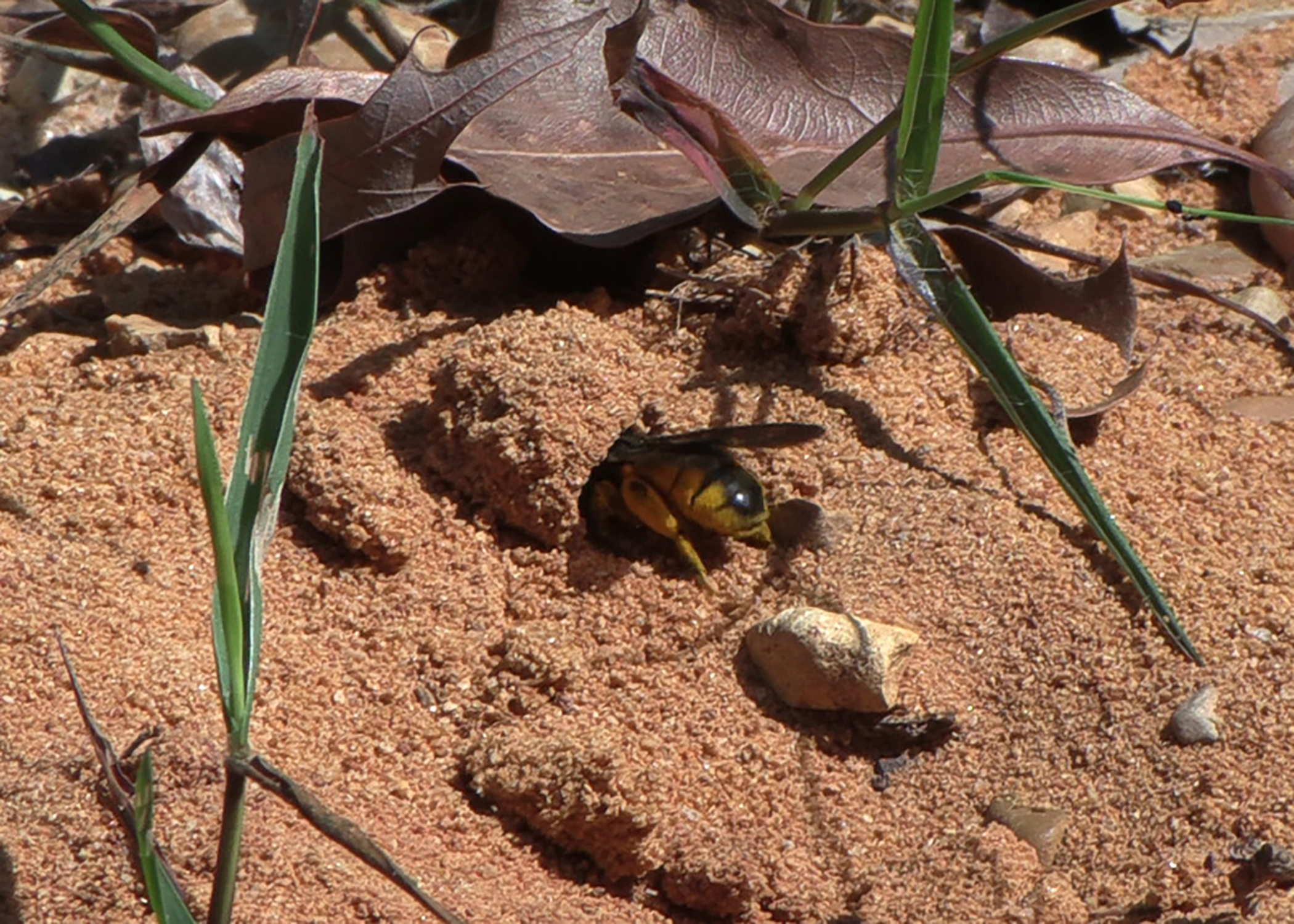
Many native bees such as this giant sweat bee live in the ground. Landowners can encourage nesting by not mowing or tilling open grasslands with patchy areas of sandy soil. (Photo by MSU Extension Service/Jeff Harris)
Contacts
-
 Assoc Extension/Research Prof
- Agricultural Science & Plant Protec