Extension Matters
Volume 12 Number 1
Cooking Up Gold
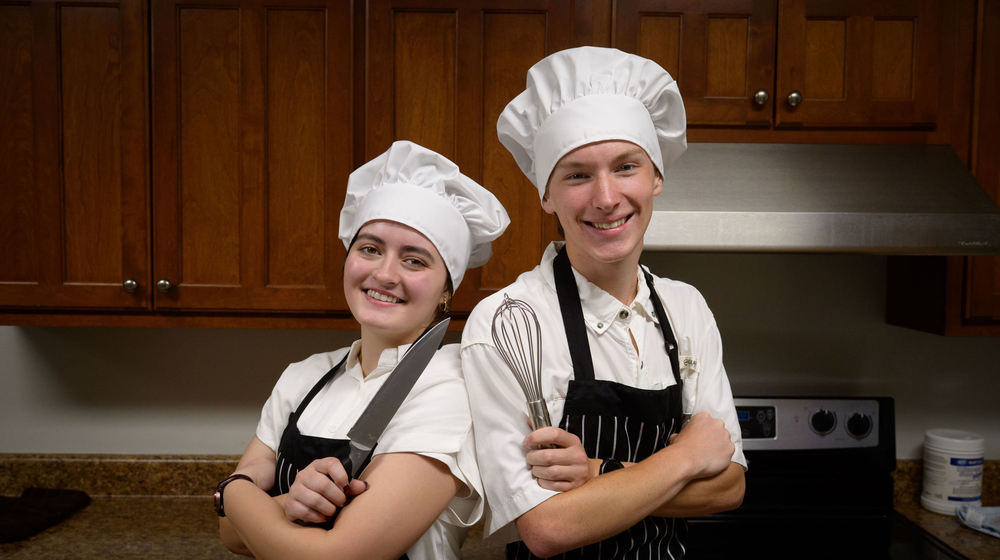
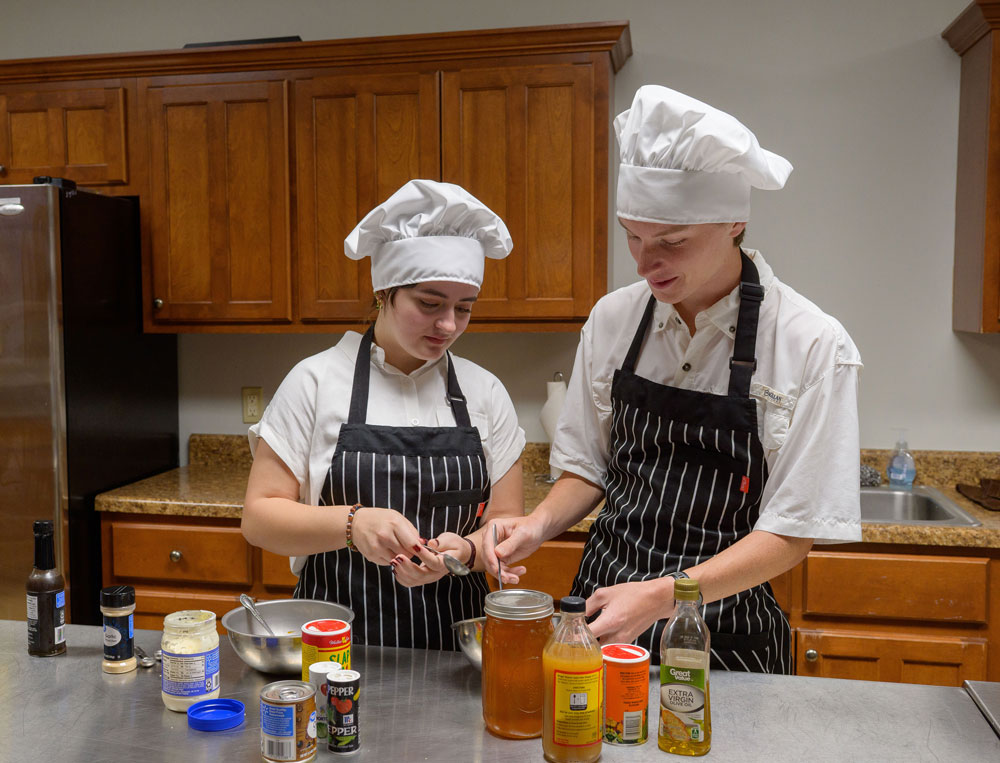
Brooklyn Kilpatrick and Noah Parmer, Pontotoc County 4-H’ers
4-H’ers earn first place in prestigious cooking contest
Story by Susan Collins-Smith | Photos by Kevin Hudson and submitted
For Noah Parmer, cooking is something he’s enjoyed since he was a child.
“It’s something I’ve always done with my mom and my grandmother,” he explains. “It’s relaxing for me.”
So, his entering last summer’s cooking contest at 4-H Club Congress was no surprise to his family, friends, and 4-H agent. Club Congress is an annual event that hosts a variety of contests for members of the Mississippi State University Extension Service youth development organization. But he needed a partner to participate. So, he asked friend and fellow Pontotoc County 4-H member Brooklyn Kilpatrick to join him. The two met in school.
“I’m not really a cook, but I like to hang out with Noah, so I told him I would help him,” Brooklyn states.
Neither of them was thinking about what would happen if they actually won the competition. But the duo brought home first place from Club Congress, which also earned them one of six spots in a prestigious regional cook-off in New Orleans.
On Aug. 3, 2025, Noah and Brooklyn bested teams from Texas, Louisiana, and Georgia in the Great American Seafood Cook-Off: 4-H Edition to take the contest’s coveted first place.
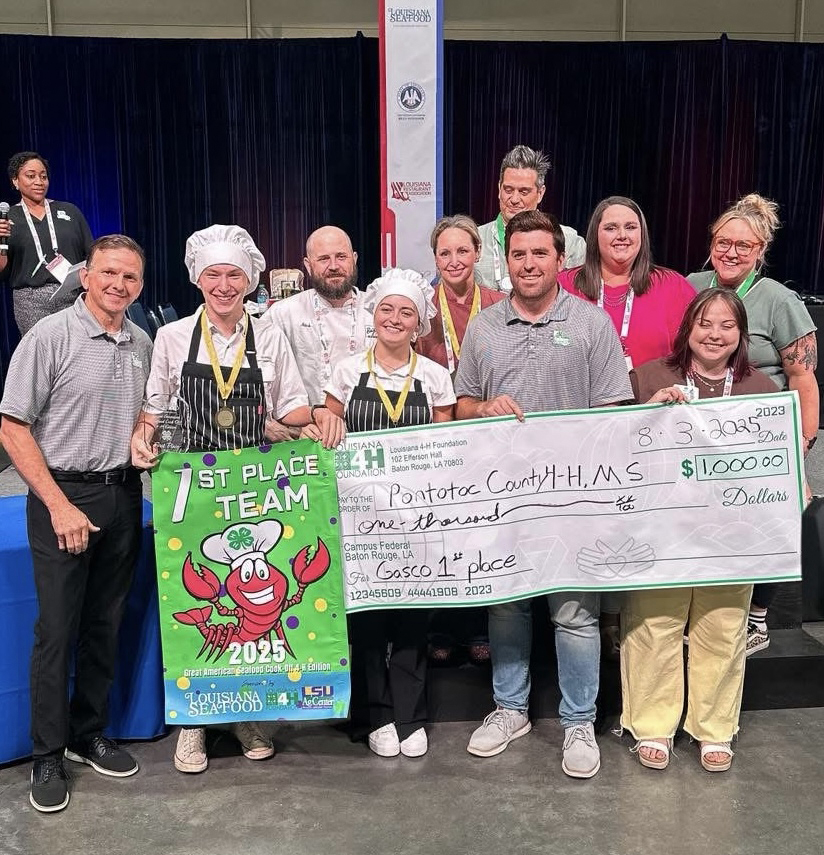
“We were shocked,” Noah says, explaining that awards were given in descending order with the first-place team announced last. “We kept thinking they were going to call our name next, but when they got to second place and it wasn’t us, we knew we had won first place.
“I just couldn’t believe it. None of us could,” he laughs. “It was really exciting.”
It was a tough contest, but they were well-prepared.
“We were the only team with two contestants,” says Laura Reed, MSU Extension 4-H agent in Pontotoc County. “All the other teams had three to four members. Even though we’d spent two and a half months practicing and getting ready, it’s still a lot of pressure for a team of two.”
Noah and Brooklyn had only one hour to prepare, cook, and plate three dishes for the judges. Their dishes—Mississippi Catfish Bread, Creole Garden Salad, and Fresh Fruit Salad—showcased ingredients local to Pontotoc and surrounding counties.
The main dish featured Mississippi farm-raised catfish and is a well-loved Kilpatrick family recipe. The cheeses they used were sourced from two local dairies—one of them where both Parmer and Kilpatrick families’ dairy cows are milked. Their dishes also included vegetables from several Pontotoc gardens, peaches from a local orchard, and honey from the hives at the MSU Extension office.
Their dishes were even plated on McCarty Pottery, courtesy of Brooklyn’s mom.
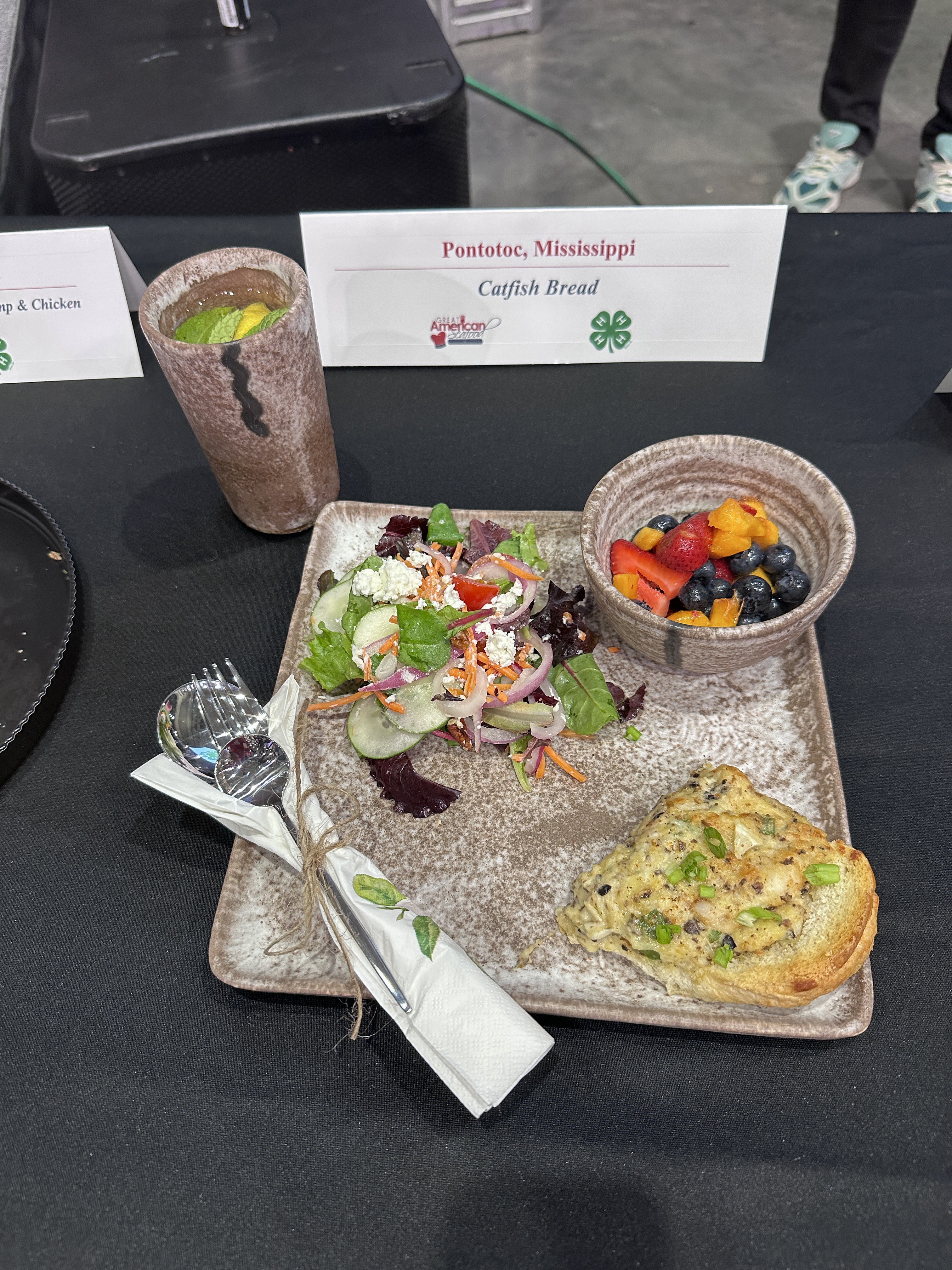
“The focus on local ingredients was something the judges praised them for during the awards ceremony,” Reed says. “They talked about how much they loved the personal ties to the dish.”
Each team’s dishes were judged by a panel of five. Three judges were professional chefs. The fourth was from 4-H National Headquarters, and the fifth was a former 4-H’er. Contestants presented their dishes to the judges and gave a two-to-five-minute speech about their dishes, along with other information, including food safety.
Cooking is just one 4-H project area the two enjoy. Both Noah and Brooklyn are active in the organization, participating in 4-H leadership activities and the dairy cattle project.
“I’ve been in 4-H since I was very young. I joined as soon as I was old enough,” Brooklyn says. “My family has been involved with 4-H and Extension and the county fair activities at least as far back as my grandfather.”
Noah is relatively new to 4-H, joining about three years ago after some encouragement from Brooklyn.
“This wasn’t something I’d ever done, but Brooklyn talked me into joining,” he says.
Both say 4-H is a great experience and point out the organization has given them multiple opportunities to travel, meet new people, and make new friends—all while learning numerous leadership skills, responsibility through caring for their show animals, and cooking skills, just to name a few.
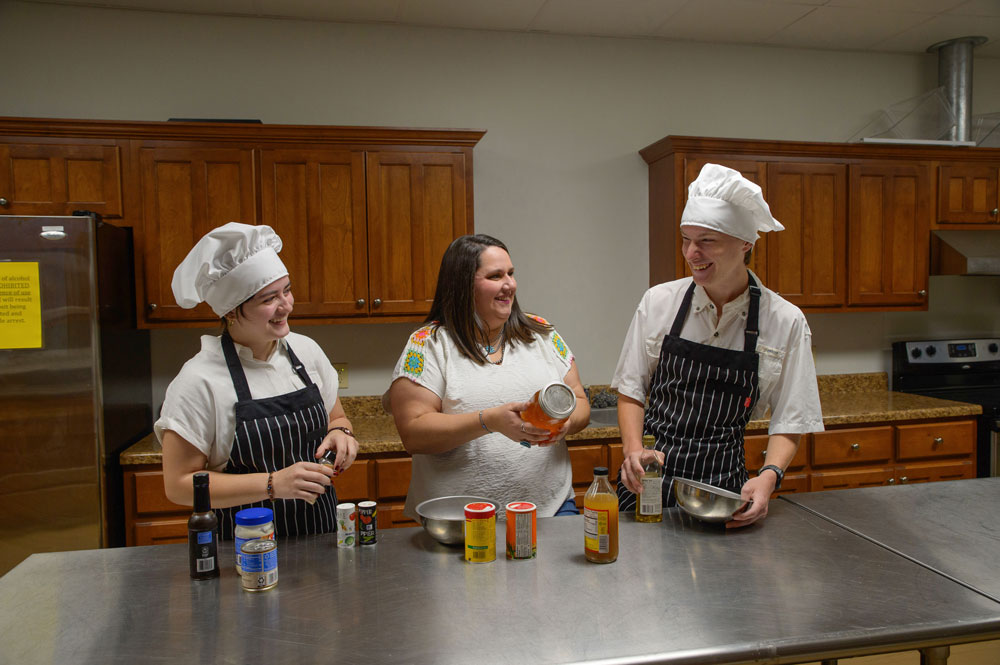
The organization is one of the best ways for young people to explore what interests them and gain confidence in themselves, Reed says.
“4-H is different from other extracurricular activities in many ways,” she emphasizes. “But the biggest one, in my opinion, is that we don’t just focus on one or two things. 4-H is for everyone, no matter what their interests. Sometimes we can even help them find those interests or help them develop new interests.”
Reed says she’s seen 4-H benefit young people in many ways—from skill building to networking.
“From watching a younger 4-H’er working hard at archery practice and shooting her first bullseye to seeing children gain the confidence to start cooking for their families.
“I’ve even seen a senior level 4-H’er make connections that led to her receiving college visits and scholarships. No matter the project area, 4-H gives youth the confidence they need to reach their goals,” Reed concludes.
Authors
-
 Extension Associate II
- Agricultural Communications