P4066
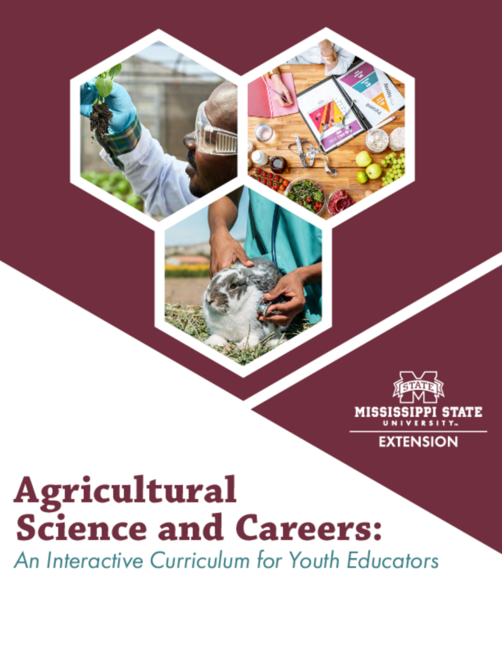
Agricultural Science and Careers: An Interactive Curriculum for Youth Educators
Download the full publication by selecting the publication image in the right column. Accompanying materials are available for download under "Related Files."
This curriculum was developed because the level of agricultural knowledge and the interest in agricultural careers have been declining among youth. The agricultural sector is employing fewer workers, so youth are less likely to be connected to adults working in agriculture. At the same time, agricultural jobs are becoming more specialized and less visible to the public eye. Thus, today’s youth—and even many parents and educators—are not aware of the variety of agricultural career pathways. This lack of awareness may be especially common in communities that tend to have less access to educational and career opportunities. However, people of all backgrounds and skill sets are needed to help solve complex societal and environmental challenges relating to producing food, fuel, and fiber for the world. Therefore, intentional education is essential for encouraging all youth to consider
pursuing personally and financially rewarding careers in agriculture.
Between November 2021 and September 2025, this curriculum was used to teach more than 6,500 students across the state. Results from pre-test and post-test surveys demonstrated the effectiveness of the curriculum at increasing students’ interest in agriculture. Given these positive results, we hope other educators can use and adapt this curriculum to teach more students about agriculture and its careers.
The following modules are included in this curriculum:
- Module 1: The Importance of Agriculture
- Module 2: Plants and Animals in Agriculture
- Module 3: Soils and Agriculture
- Module 4: Water Resources in Agriculture
- Module 5: Food Science and Agriculture
- Module 6: Agricultural Careers
Educators can download supplementary materials (career cards, participant questionnaires, slides, editable PowerPoint of the slides, and worksheets) located under "Related Files." These materials are also included in the full publication.
For answers to specific questions, please contact state Extension specialists or your local Extension office.
This publication was produced with support from Mississippi NRCS under award NR204423XXXXC116.
The information given here is for educational purposes only. References to commercial products, trade names, or suppliers are made with the understanding that no endorsement is implied and that no discrimination against other products or suppliers is intended.
Publication 4066 (11-25)
By Mary Tinuola Osho, Extension Associate III, Delta Research and Extension Center; Tsz Him Lo, PhD, Assistant Extension/Research Professor, Delta Research and Extension Center; Beth Baker, PhD, Associate Extension Professor, Wildlife, Fisheries, and Aquaculture; Leslie Burger, PhD, Associate Teaching Professor, Wildlife, Fisheries, and Aquaculture; Mary Love Tagert, PhD, Extension Professor, Agricultural and Biological Engineering; Peyton Johnson, Extension Associate III, Delta Research and Extension Center; and Drew Gholson, PhD, Associate Professor and Extension Irrigation Specialist, Delta Research and Extension Center.
The Mississippi State University Extension Service is working to ensure all web content is accessible to all users. If you need assistance accessing any of our content, please email the webteam or call 662-325-2262.
Download
P4066
Agricultural Science and Careers: An Interactive Curriculum for Youth Educators
6.18 MB
Authors
-
 Asst Extension/Research Prof
- Delta Research and Extension Center
-
 Assoc Professor & Assistant Di
- Wildlife, Fisheries & Aquaculture
-
 Extension Professor
- Ag & Bio Engineering