News Type
Shade-loving plants enrich landscapes
Published
Updated

Holly fern is a beautiful evergreen plant that does exceptionally well in part shade and shade, bringing texture, color and structure to the area. (Photo by MSU Extension/Eddie Smith)
Some of the most challenging areas in a landscape are those that receive very little sunlight.
It can be difficult to find plants that thrive beneath large trees, along the north side of a home or in the shade of buildings. Asking them to also provide year-round interest while growing in the shade is an extra challenge.
Fortunately, there are several beautiful evergreen plants that do exceptionally well in part shade and shade, bringing texture, color and structure to these areas.
Three of my favorite plants that can transform a shady corner into an attractive garden are holly fern, mahonia and Gold Dust aucuba.
Holly fern gives a lush, tropical woodland feel to the landscape. It gets its name from glossy, leathery leaflets which resemble the familiar leaves of a holly. Unlike the delicate, feathery appearance of many ferns, holly fern’s substantial foliage gives it a distinctive presence.
The deep green fronds create a beautiful contrast with lighter colored plants. They remain attractive throughout the year in our Southern landscapes. Holly fern works especially well beneath trees, along shaded walkways or tucked into woodland gardens.
For best results, plant holly fern in partial to full shade with moist, well-drained soil rich in organic matter. Although it appreciates consistent moisture, good drainage is important to keep the roots healthy. Once established, holly fern is dependable and low-maintenance.
Another excellent choice is mahonia.
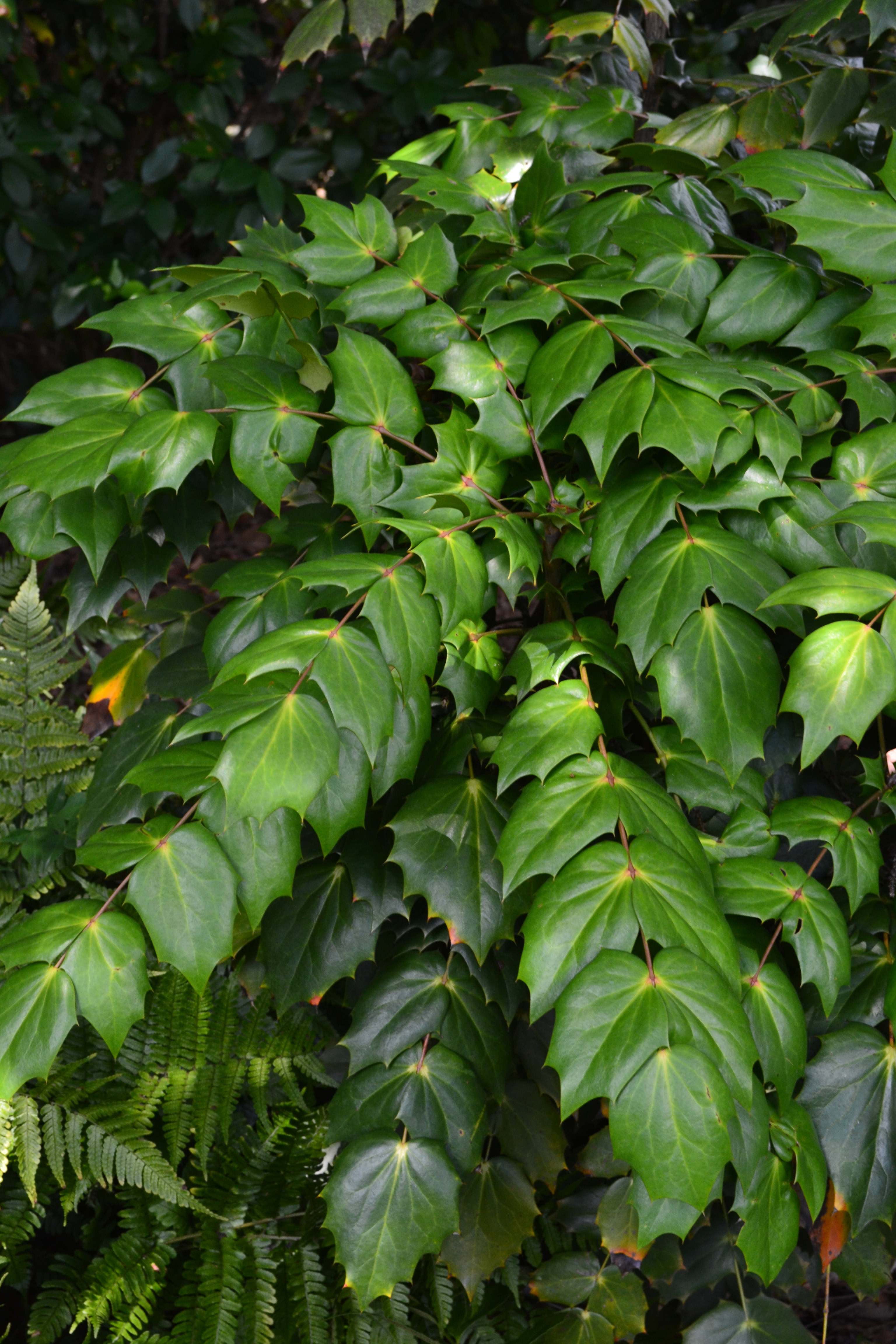
Depending on the species, mahonia leaves may be large and bold or composed of multiple spiny, holly-like leaflets. These distinctive leaves give the plant a somewhat rugged character that works beautifully in naturalized areas and woodland gardens.
There are several mahonia selections that offer different growth habits, foliage shapes and sizes. Some types produce clusters of bright yellow flowers, often during the cooler months, followed by blue or blue-black berries that add another season of interest. What they all share is attractive evergreen foliage and an architectural appearance.
Mahonia generally performs well in partial to full shade and prefers well-drained soil. Once established, many tolerate periods of dry weather, making them useful beneath trees where competition for moisture can be a challenge. Because growth habits vary among species, select one that fits the space available in your landscape.
If you want to add a little golden color to your shady garden, take a look at Gold Dust aucuba.
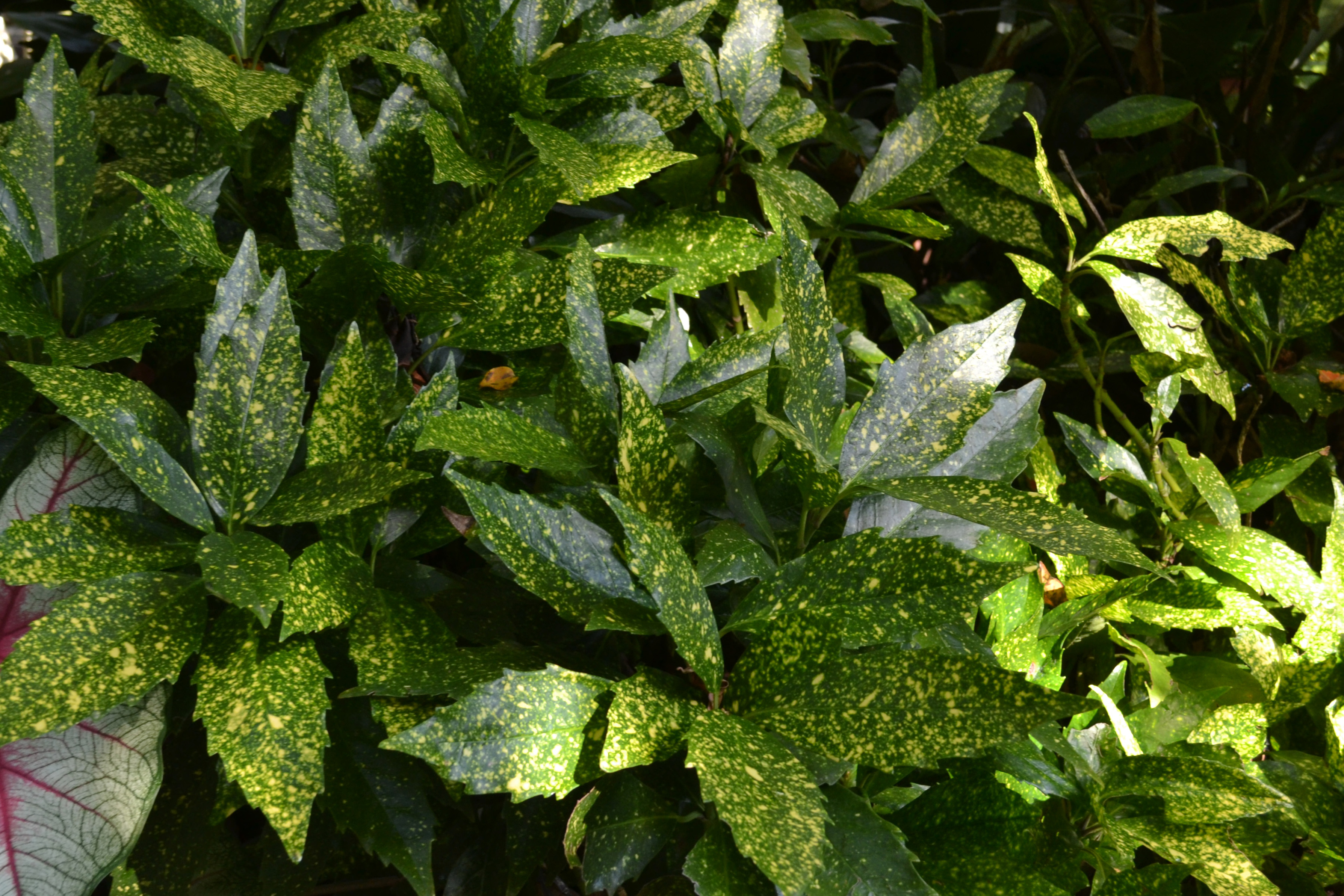
This evergreen shrub is hard to miss, thanks to its large, glossy green leaves sprinkled with golden-yellow spots. The markings look as though someone dusted the foliage with gold, creating a bright, cheerful effect in areas where colorful flowers may be difficult to grow.
Gold Dust aucuba is especially valuable because its foliage provides color throughout the year.
It works beautifully as a foundation plant, in a woodland garden or as a backdrop for smaller shade-loving plants. Its bold leaves create an interesting contrast with the finer textures of ferns and other shade-loving perennials.
Aucuba thrive in partial to full shade and prefer rich, well-drained soil with regular moisture during establishment. It is particularly useful in protected locations where other shrubs may struggle with limited sunlight. Avoid planting it where intense afternoon sun can scorch the leaves and diminish its appearance.
The next time you look at a shady area in your yard and wonder what will grow there, consider these three evergreens. With the right selections, those shady spaces can become some of the most beautiful and interesting parts of your landscape.
Images
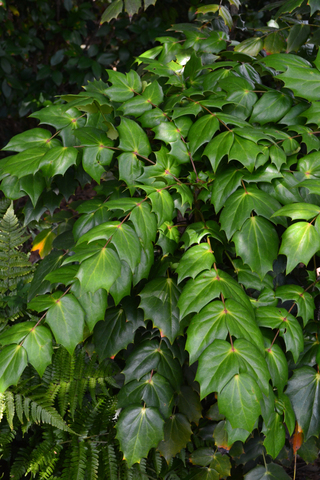
There are several mahonia selections that offer different growth habits, foliage shapes and sizes, so select one that fits your landscape. (Photo by MSU Extension/Eddie Smith)
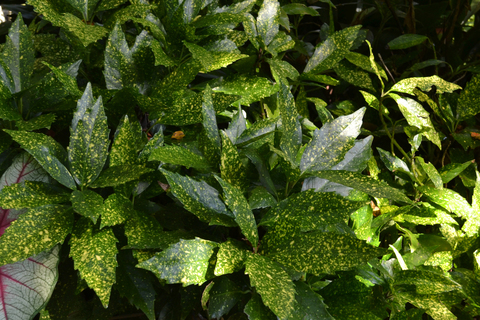
The glossy green leaves sprinkled with golden spots make Gold Dust aucuba hard to miss. This plant has foliage that provides color throughout the year. (Photo by MSU Extension/Eddie Smith)
Contacts
-
 Extension Specialist I
- Extension Programmatic Support