News Type
Sansevieria is a stylish house plant for everyone
Published
Updated

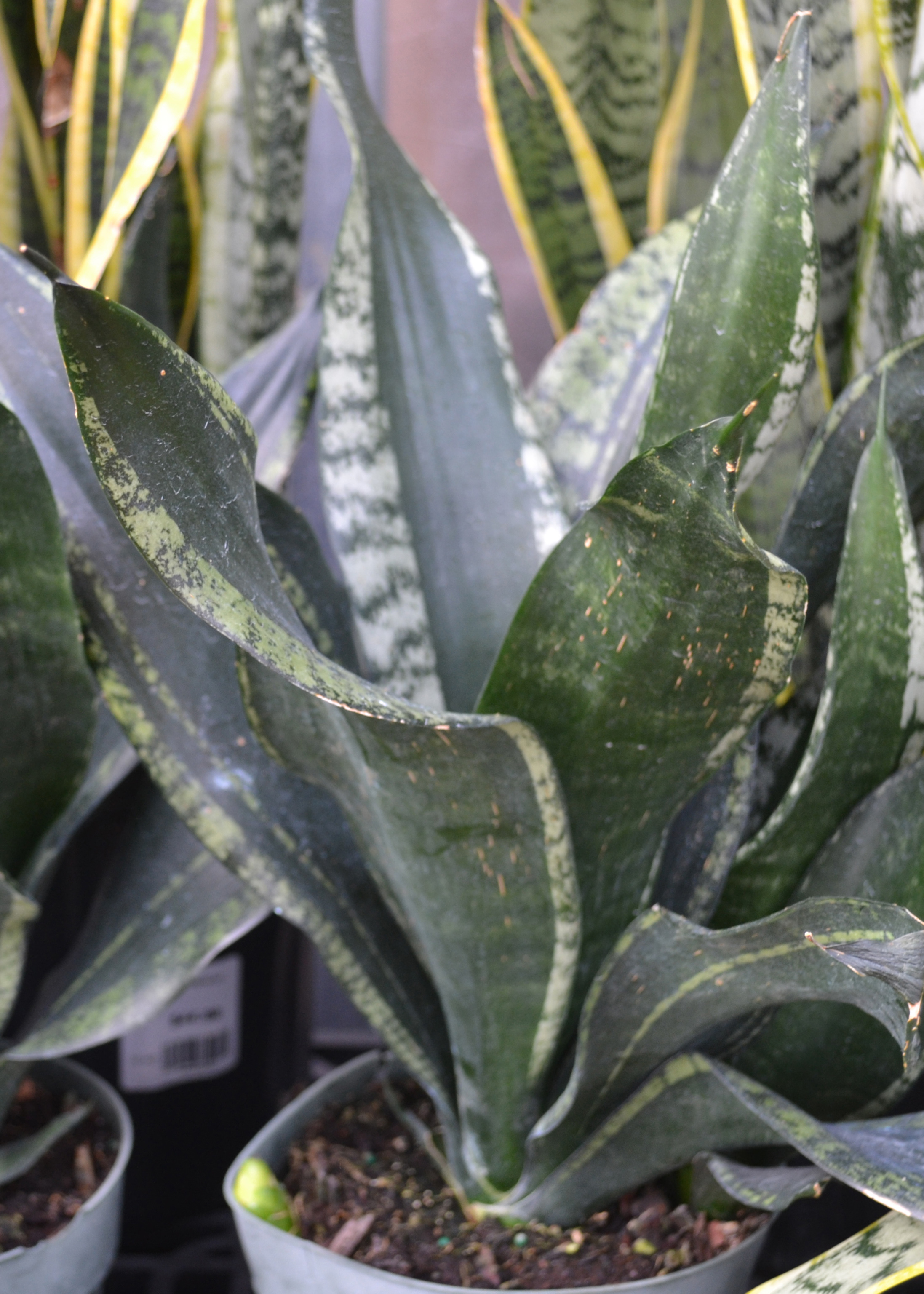
Golden Flame thrives even in low light conditions, making it a great choice for any room that doesn’t get much natural sunlight. (Photo by MSU Extension/Eddie Smith)
This time of the year, I really lean on houseplants to keep my indoor spaces attractive and full of life.
One of the most dependable and stylish houseplants I recommend is Sansevieria, commonly known as snake plant or mother-in-law’s tongue. Though widely recognized as Sansevieria, its current genus name is Dracaena trifasciata. With dozens of varieties available, there is a Sansevieria for every home and every level of gardener.
These are durable plants.
To give you an idea of what I mean, my mother has a Sansevieria that is almost as old as me. It has survived moves, changing light conditions and the occasional missed watering, and it is still growing strong today. That kind of longevity is hard to beat in a houseplant.
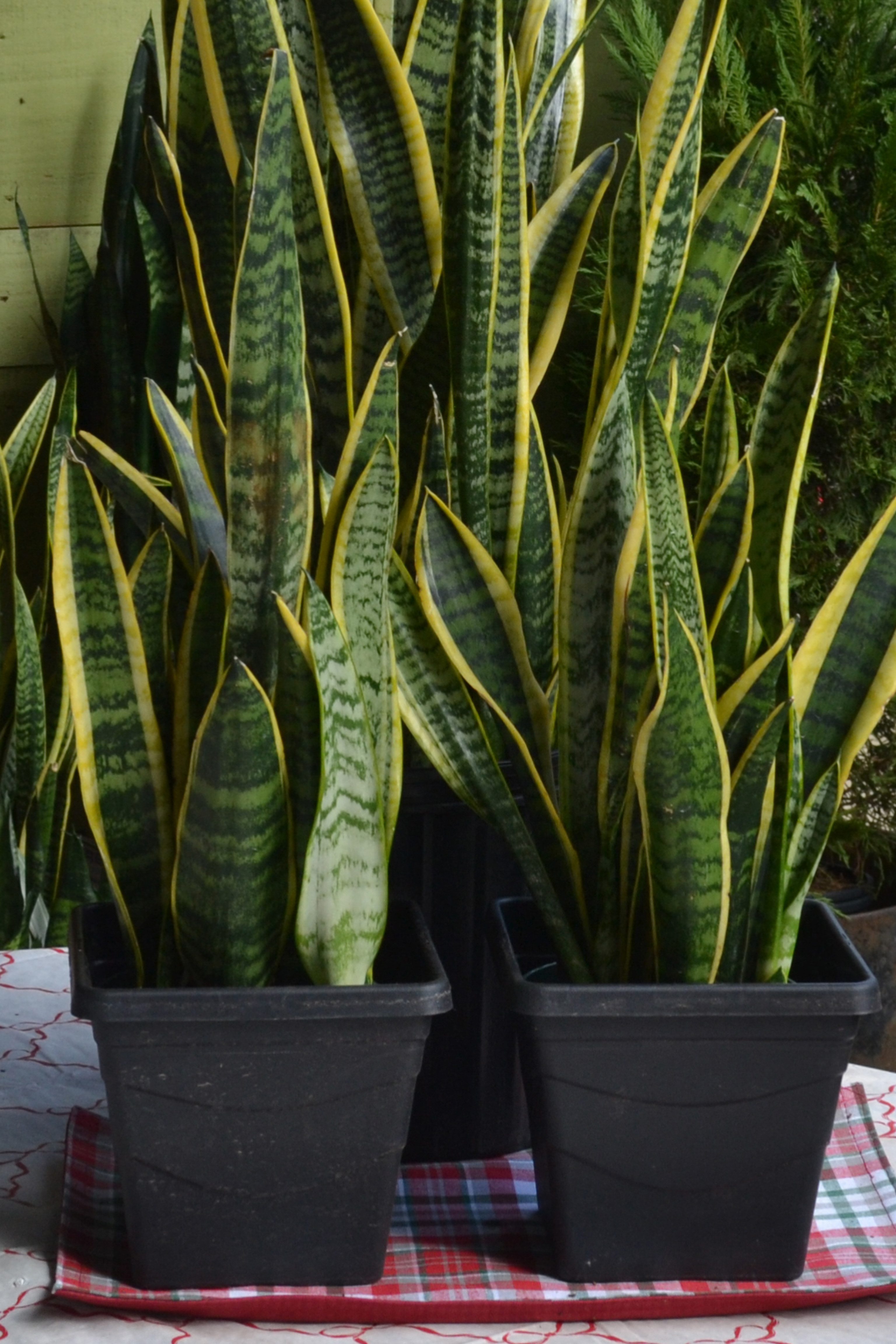
One of my go-to favorites is Sansevieria Laurentii, a classic snake plant with tall, upright green leaves edged in golden yellow.
This selection will brighten up a corner or add strong vertical structure to a room. Laurentii tolerates a wide range of light conditions from low light to bright, indirect light, but its colors look best with a little extra light.
If you want bold color indoors, consider Golden Flame.
The leaves of this striking variety emerge with rich golden-yellow centers. They mature thick and arching, bringing warmth and brightness even in low light conditions. This makes Golden Flame a great choice for offices, bedrooms or any room that doesn’t get much natural sunlight.
For a modern and sophisticated look, I often suggest Silver Flame.
Its broad leaves have a soft silvery sheen with deep green edges, giving the plant a clean, contemporary feel. It pairs beautifully with modern décor and is a cool-toned contrast to other houseplants. Like other Sansevierias, it prefers bright, indirect light but adapts well to less-than-perfect conditions.
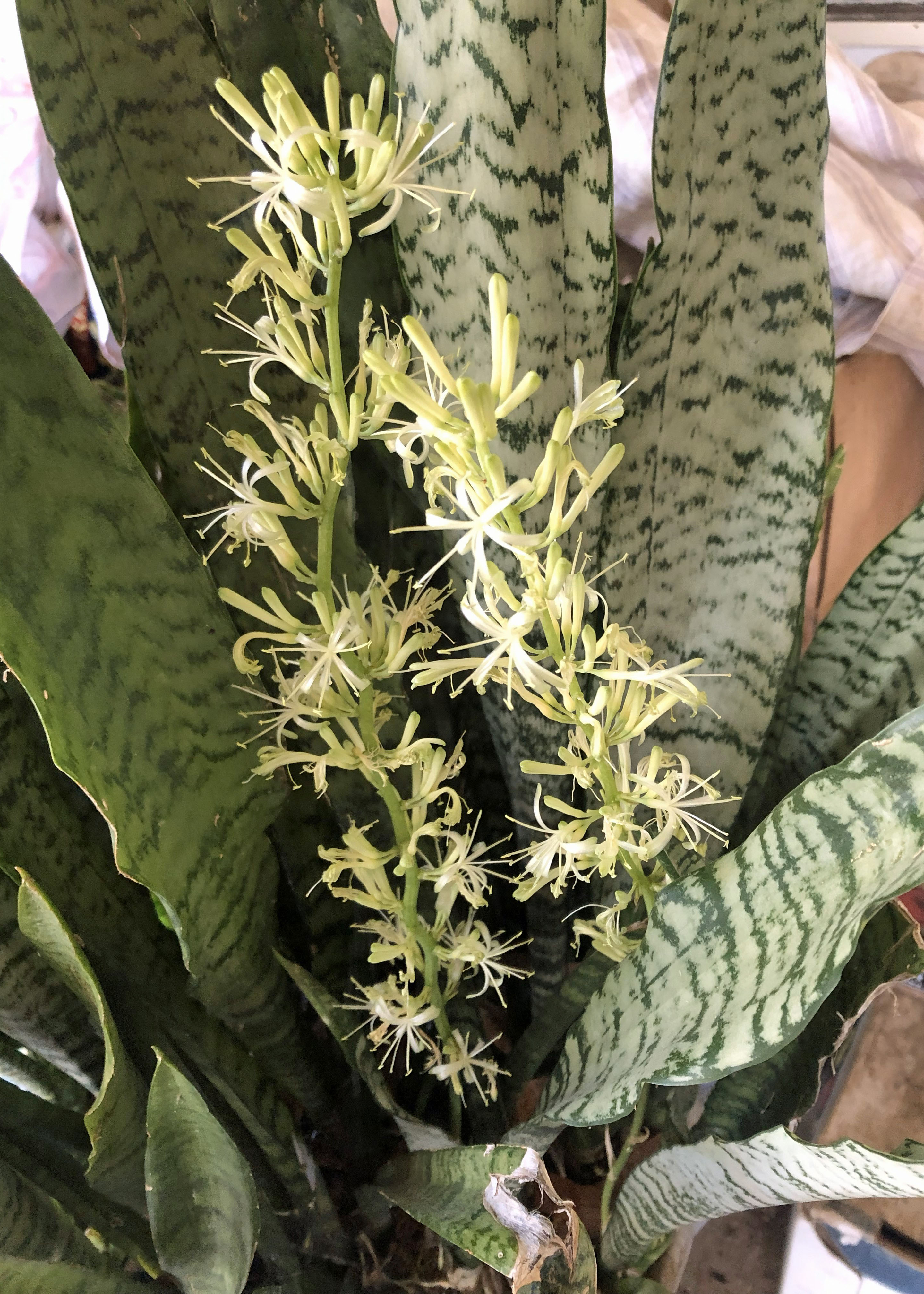
Many gardeners are surprised to learn that these plants actually bloom.
When a Sansevieria flowers, it sends up a tall stalk from the base of the plant, topped with small, star-shaped blooms usually creamy green to white in color. These flowers are often pleasantly fragrant, especially in the evening, and they may produce sticky droplets of nectar along the flower stalk.
Blooms typically occur on mature, well-established plants, often in winter to early spring. Sansevierias are more likely to flower when they are slightly root-bound and growing in bright, indirect light.
What really makes Sansevierias houseplants all-stars for me is their durability. These plants store moisture in their thick leaves, allowing them to handle missed waterings with ease.
I plant my Sansevierias in well-draining potting mixes such as those blended for a cactus or succulent. Always use containers with drainage holes. I let the soil dry completely between waterings, since overwatering is the quickest way to run into problems with these plants.
Sansevierias thrive in typical indoor temperatures, and I’ve found they do best between 60 and 85 degrees. They tolerate dry indoor air well, but should be kept away from cold drafts or chilly windows during the winter months.
As an added bonus, Sansevierias are known for their air-purifying qualities.
They absorb common household toxins and improve overall air quality. What is especially interesting is that Sansevierias release oxygen at night, unlike many other plants that do this primarily during the day. This makes them beneficial in bedrooms, home offices or other spaces where clean air is especially appreciated.
You can move Sansevierias outdoors once temperatures are consistently warm and nighttime lows stay above 55 degrees. Keep them in protected areas in bright shade or filtered sunlight. While they can tolerate some morning sun, direct afternoon sun scorches the leaves, so protection is important. Areas under a patio, porch or open tree canopy work well.
Whether kept indoors year-round or enjoyed outside during the warmer months, Sansevieria varieties remain some of my top choices for stylish, easy-care houseplants. The fact that they can be enjoyed for years, sometimes even decades, to come is an added bonus.
Images
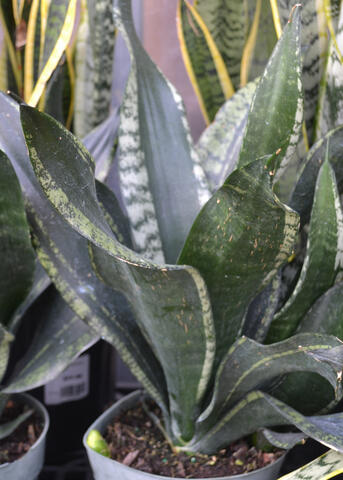
The broad leaves of Silver Flame Sansevieria have a silvery sheen, giving the plant a clean, contemporary look. It pairs beautifully with modern décor and is a cool-toned contrast to other houseplants. (Photo by MSU Extension/Eddie Smith)
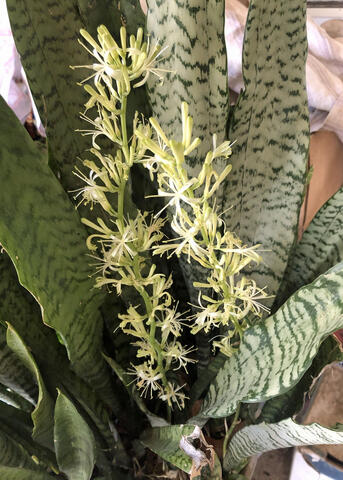
This blooming Sansevieria is decades old and has survived moves, changing light conditions and the occasional missed watering. (Photo by MSU Extension/Eddie Smith)
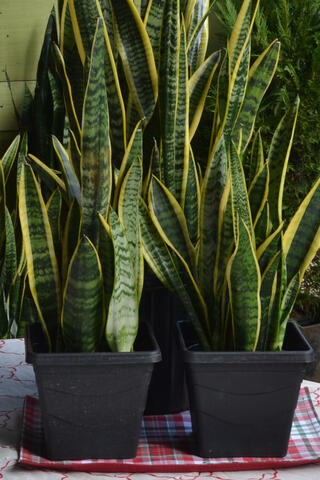
Sansevieria Laurentii is a classic snake plant with tall, upright green leaves edged in golden yellow. It will brighten up a corner or add strong vertical structure to a room. (Photo by MSU Extension/Eddie Smith)
Contacts
-
 Extension Specialist I
- Extension Programmatic Support