News Type
Flowering quince is an easy landscape addition
Published
Updated

Flowering quince is a deciduous shrub that blooms on bare wood when most of the landscape is still gray. (Photo by MSU Extension/Eddie Smith)
One winter-blooming shrub that feels familiar and comforting to me is the flowering quince. This plant quietly becomes part of the family landscape, showing up year after year without ever demanding much attention.
My grandmother’s flowering quince has been growing for more than 30 years, and every January and February, it stops me in my tracks with its brilliant red blooms. In 2016, I took my first photo of its flowers, trying to capture something I had admired since childhood.
Flowering quince, known scientifically as Chaenomeles speciosa, has an old-fashioned charm that fits perfectly in Southern gardens.
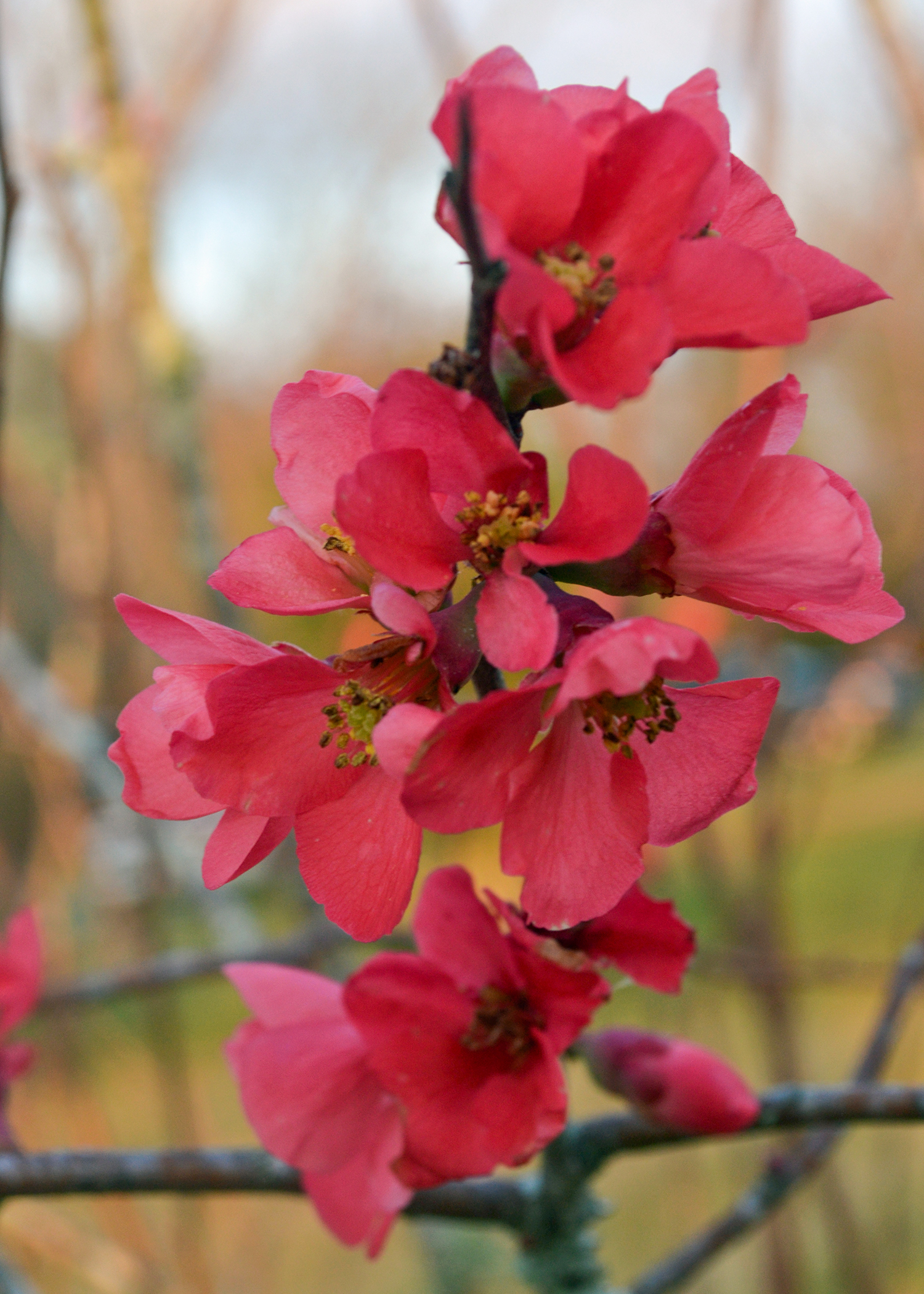
It is a deciduous shrub with arching, sometimes thorny branches, and it blooms on bare wood when most of the landscape is still gray and quiet. Those bright flowers are most often red, but some are pink, coral, peach or white. They seem to almost glow in the winter light.
There’s something special about seeing color in the garden when you least expect it.
One of the reasons flowering quince has earned a permanent place in many Southern yards is that it is very easy to grow. I’ve seen firsthand that it does not need pampering.
Full sun creates the best flower show, but it also performs in light shade, especially in our hot summers. Flowering quince prefers well-drained soil, but is surprisingly adaptable, tolerating less-than-perfect conditions once established.
It handles dry spells well, though I always say a little extra water during long droughts never hurts.
When it comes to feeding, keep things simple.
A light application of a balanced, slow-release fertilizer in late winter or early spring is plenty. Older plants like my grandmother’s often do not need much supplemental nutrition at all.
A layer of mulch around the base helps hold moisture and keeps weeds down, and it gives the shrub a finished, cared-for look without a lot of effort.
Timing makes all the difference with pruning.
Flowering quince blooms on old wood, so prune your shrub right after it finishes flowering to avoid cutting off next year’s blooms.
I recommend removing a few of the oldest branches near the ground every year or two, as this thins out any crowded growth. Pruning is not about shaping it into something formal; it’s about letting the plant breathe and keeping it healthy.
Pests and diseases are rarely a serious issue with flowering quince, and deer tend to leave it alone. Its thorny branches can even serve as a natural barrier if you need one.
This is the kind of shrub you plant once and then simply enjoy for years to come.
Every winter, when my grandmother’s flowering quince bursts into bloom yet again, I’m reminded that the best garden plants are often the ones tied to memories. For me, flowering quince is a tradition, a reminder of family and a promise that brighter days are always just around the corner.
Images
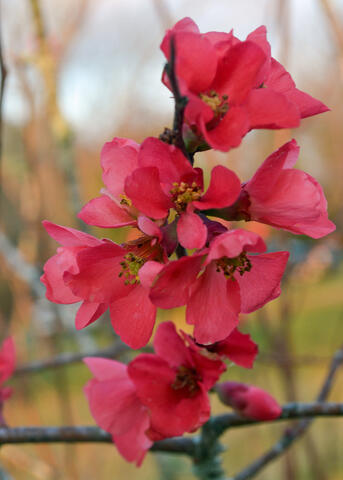
The bright blooms of flowering quince are most often red, and they almost glow in the winter light. (Photo by MSU Extension/Eddie Smith)
Contacts
-
 Extension Specialist I
- Extension Programmatic Support